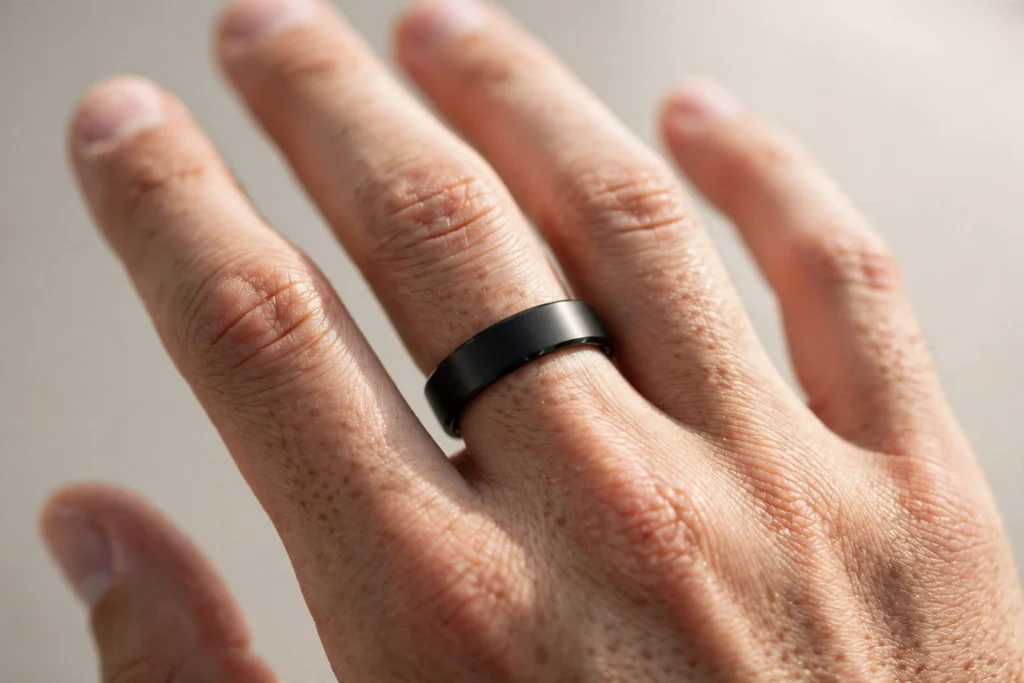
A smart ring packs sensors into a band you wear on your finger. Green and infrared lights shine into your skin to read your pulse and blood oxygen, while a motion sensor tracks movement and sleep. The ring stores its readings and sends them to your phone by Bluetooth, where an app turns them into sleep scores and step counts.
Key Takeaways
- A smart ring is a small health tracker worn on a finger, with no screen of its own.
- Optical sensors measure heart rate and blood oxygen by shining light into the skin.
- An accelerometer tracks movement, steps, and sleep stages.
- Data syncs to a phone app over Bluetooth, usually Bluetooth Low Energy.
- Smart rings are wellness gadgets, not medical devices; their readings are estimates, not diagnoses.
What is inside a smart ring?
A smart ring looks plain outside, but the inner band hides a surprising amount of hardware: an optical heart-rate sensor, a three-axis accelerometer, a temperature sensor, a small battery, a Bluetooth chip, and a little memory. Some add a blood-oxygen sensor and a gyroscope, all sealed inside a shell of titanium or ceramic.
The finger suits these sensors: the skin underneath is thin and blood vessels sit close to the surface, so a small sensor gets a clear reading without pressing hard. That is one reason rings can track heart rate around the clock, including overnight.
Fitting matters: if the ring is too loose, the sensors lose contact and readings get patchy. Most makers send a plastic sizing kit so you can try a dummy ring for a day or two first.
How does a smart ring measure heart rate?
The main trick is photoplethysmography, usually shortened to PPG. The ring flashes a green LED into your skin many times a second. Blood absorbs green light, so as your heart beats, the light bouncing back from the tiny vessels under the skin rises and falls, and the ring counts those changes to work out your heart rate.
Infrared light is used alongside green light to estimate blood oxygen, since oxygen-rich and oxygen-poor blood absorb it differently. The result is an estimate, not a clinical measurement, and it works best when you are still — movement, cold hands, and a loose fit can make the numbers jump around.
The ring samples in short bursts rather than constantly: every few minutes by day, more often at night when you are still and the data is cleaner. That is why the most reliable figures tend to be the overnight ones, such as resting heart rate.
How does a smart ring track sleep?
Sleep tracking uses the same sensors plus movement data: the accelerometer notices when you stop moving, and the heart-rate sensor watches your pulse slow and steady. Together, they let the ring guess when you fell asleep and woke up, and roughly how much of the night was light, deep, or REM sleep.
No wearable can match a sleep lab: a ring cannot measure brain waves, so its sleep stages are educated guesses. What it does well is show patterns over weeks.
How does a smart ring count steps?
Step counting comes from the accelerometer, the same sensor found in a phone, smartwatch, or fitness tracker. It measures acceleration in three directions, looks for the repeating rhythm of walking, and filters out random hand movements like typing.
Because the ring sits on your finger, it can miss steps if your hands are still, for example when pushing a shopping trolley. A ring gives a general picture of how active you are, not an exact count.
How does a smart ring send data to your phone?
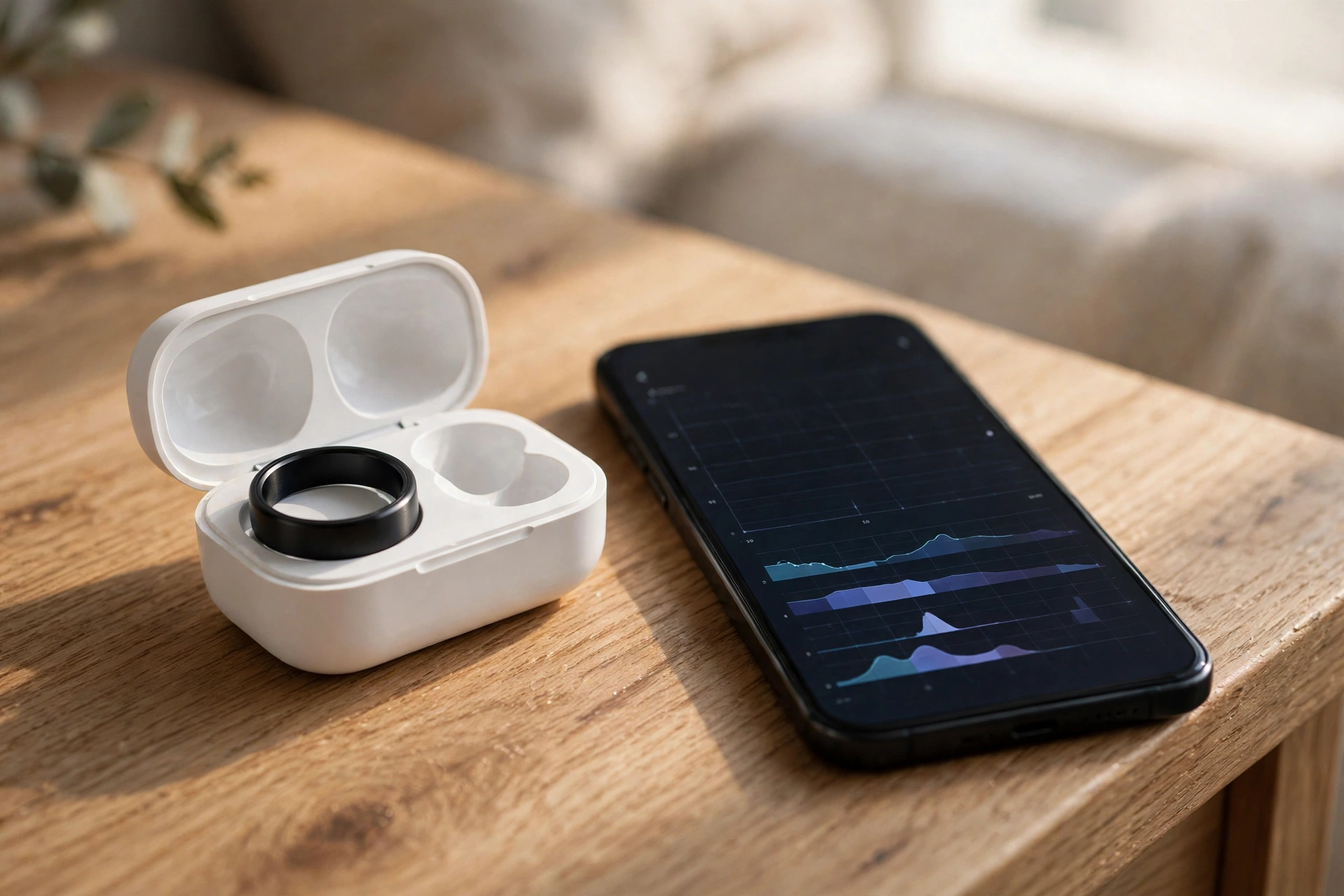
A smart ring has no screen, so your phone does the talking. The ring stores readings in its own memory, then passes them to the app over Bluetooth Low Energy, which sips battery. Most rings sync when you open the app.
Keeping the radio off most of the time is a main reason a ring can run for days. The chip wakes up, sends a small bundle of readings, and goes back to sleep, while the app turns raw data into sleep scores and charts. If the connection drops, the ring keeps recording and sends the backlog later.
How does the battery last so long?
A smart ring’s battery is tiny, yet most rings run for four to seven days. Three things make that possible: no screen, the biggest battery drain in any wearable; sensors that sample in bursts; and Bluetooth Low Energy.
When the battery runs low, you charge the ring wirelessly on a small case or cradle, often over USB-C, and a full charge usually takes under two hours.
What are the limits of a smart ring?
A smart ring is good at trends and poor at single readings: one night of odd data means little, while three weeks of rising resting heart rate means more. Cold hands weaken the light signal, tattoos can block the sensor, and a ring that fits in summer may fit differently in winter.
A ring also cannot measure blood pressure reliably, diagnose sleep apnoea, or replace a medical check. If it flags something odd, talk to a clinician rather than trusting the gadget alone. Use it as a long-term diary of your body: quiet, automatic, and most useful when you look back over a month.

FAQs
Do I need a subscription to use a smart ring?
It depends on the brand: some rings include the full app free, while others charge a monthly fee for detailed scores and trends. Check before you buy — the subscription can cost as much as the ring over a couple of years.
Can a smart ring replace a smartwatch?
Not entirely. A ring tracks sleep, heart rate, and activity well and is far more comfortable overnight, but it has no screen, so it cannot show notifications or handle contactless payments. Many people wear a ring for sleep and a watch for the daytime.
Is a smart ring accurate?
It is reasonably accurate for resting heart rate and sleep duration, and less reliable for step counts and single blood-oxygen readings. Accuracy improves with a good fit and consistent wear, as the app learns your baseline.
Can I wear a smart ring while swimming?
Most rings are water resistant enough for swimming and showering, but check the maker’s rating first, and rinse the ring after a swim.
How do I choose the right size?
Use the maker’s sizing kit and wear the dummy ring for at least 24 hours, including overnight. Fingers change size through the day, so a ring that feels right in the morning may feel tight by evening. When in doubt, size up.
Conclusion
A smart ring turns your finger into a quiet measuring station: light sensors read your pulse and blood oxygen, and Bluetooth passes it all to your phone. It will not replace a doctor or a smartwatch, but it is one of the least intrusive ways to track sleep and recovery. If you are curious, start with a sizing kit and check the app’s free features before you spend anything.