This article is general information only. It is not medical advice, and it does not replace professional help. If you are struggling, please speak to a qualified health professional or a crisis helpline in your country.
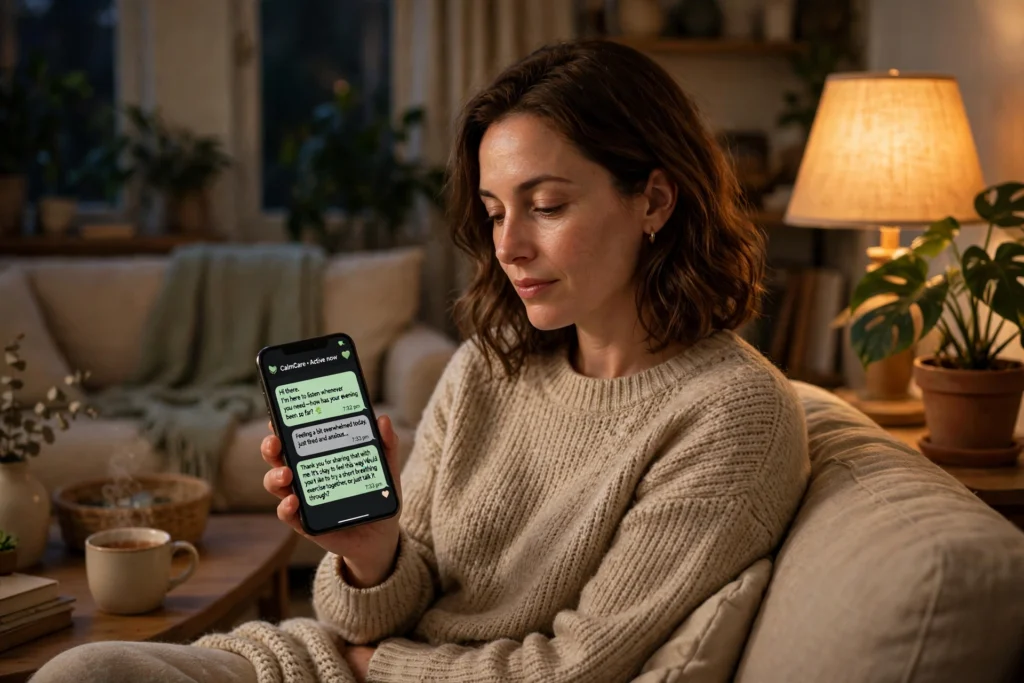
AI mental health support uses chatbots, mood tracking, and screening tools to offer help between therapy sessions. It can listen at any hour, spot patterns in how you feel, and point you towards useful resources. It cannot diagnose you, replace a therapist, or understand you the way a person can.
Key Takeaways
– AI mental health tools offer chat support, mood tracking, and short screening questionnaires.
– They help most between therapy sessions, late at night, or while waiting for professional help.
– They can spot patterns, such as low mood lasting weeks, but cannot diagnose a condition.
– Privacy varies between apps — check what data is stored before opening up.
– In a crisis, call a human helpline or emergency service, not a chatbot.
What does AI mental health support actually do?
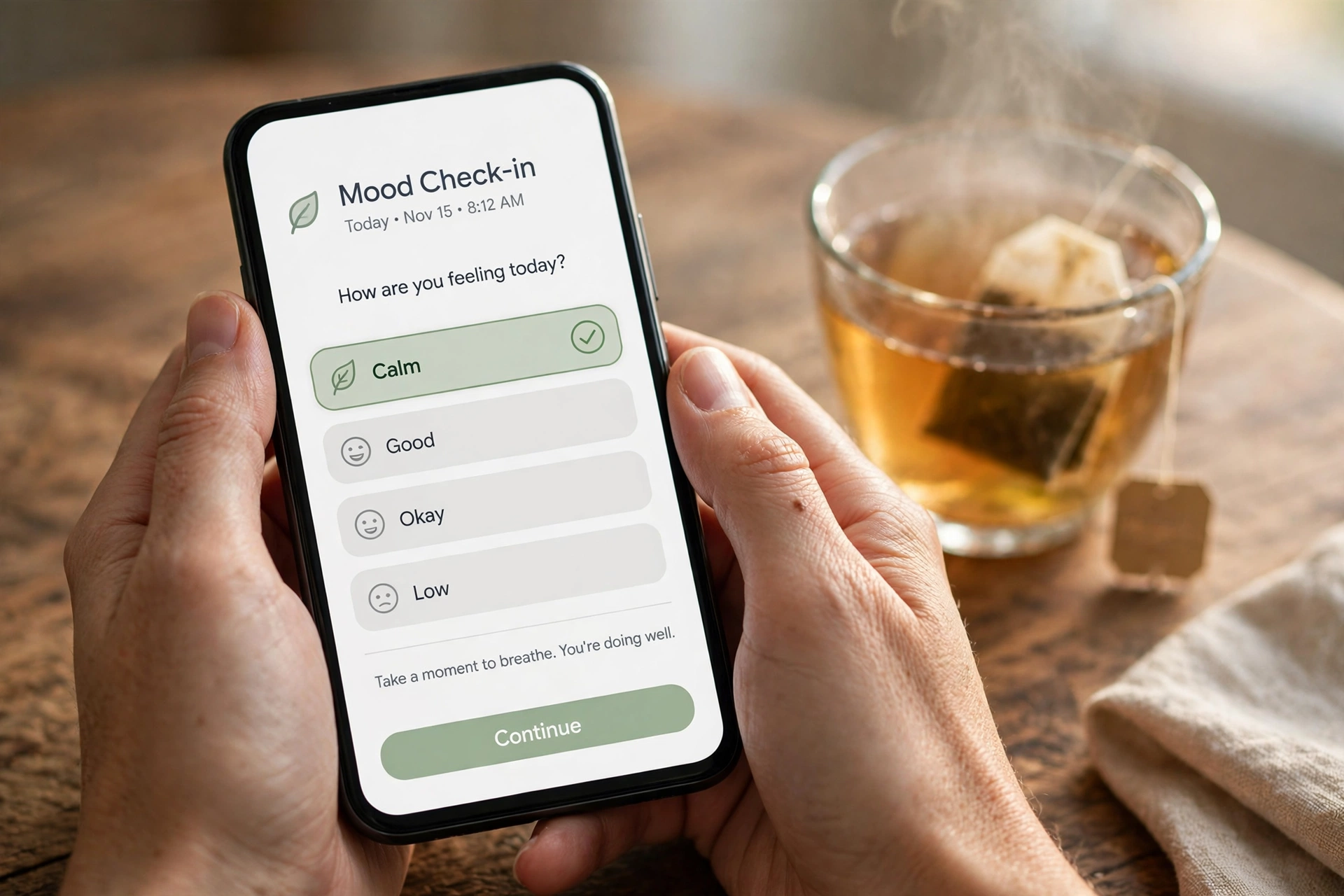
Most of these tools fall into three groups. First, chatbots that talk with you and suggest coping exercises such as slow breathing or reframing a worried thought. Second, mood-tracking apps that ask you to log how you feel each day, then show the pattern over weeks — a dip every Sunday evening, say, or better sleep after a walk. Third, screening tools: short questionnaires that flag when someone’s answers suggest they should talk to a professional. What AI adds is availability: a chatbot is there at 2 a.m. when a friend is asleep and a clinic is closed.
How do mental health chatbots work?
Most mental health chatbots are language models trained to hold supportive conversations, often guided by therapy frameworks such as cognitive behavioural therapy. When you type that you feel anxious about work, the chatbot recognises the theme, asks a follow-up question, and offers a small exercise — perhaps writing down the worst-case thought and testing whether it holds up. The better ones are careful about their limits: they avoid giving a diagnosis, encourage professional help when certain words appear, and share crisis contacts when someone mentions self-harm. That safety net is not foolproof: a chatbot can miss an unusually phrased warning sign, or give a bland reply when someone needs a human voice.
Can AI spot a mental health problem early?
Some systems analyse speech patterns or word choice and look for changes linked with depression or anxiety in studies. Others combine questionnaire answers about sleep, appetite, and energy into a score suggesting whether professional help is worth seeking.

The honest version is that these tools can raise a flag, not make a call. A screening result that says “you may benefit from talking to someone” is a nudge, not a diagnosis. Real diagnosis needs a trained clinician, a conversation, and context about your life. AI can help someone reach that conversation sooner — especially people who might never book an appointment — but results should be shared with a professional, not treated as an answer.
What about mood tracking and wearables?
Log your mood once or twice a day, add a note about sleep or exercise, and after a few weeks the app can show you what tends to lift you and what tends to drag you down. A watch that tracks sleep and heart rate can feed into the same picture: short nights followed by low-mood days, for example. But checking your mood score ten times a day can turn self-care into self-surveillance. Use these tools lightly: a quick daily check-in and a weekly look at the pattern.
Where does AI mental health support fall short?
AI does not know your history unless you tell it, and even then it forgets between sessions unless the app is designed to remember. It cannot read body language, hear the wobble in a voice, or notice that you went quiet at a particular question. It has no genuine empathy — it produces sentences that sound caring, which is not the same thing. Many tools are also trained mostly on English and on data from wealthier countries, so they can misunderstand cultural expressions of distress, and scripted exercises can feel thin for trauma or complex conditions. None of this makes the tools useless. It makes them a starting point, not a destination.
Is your data safe with a mental health app?
It depends on the app. Some store your conversations on their servers, some share anonymised data with advertisers or researchers, and a few keep everything on your device. Check the privacy policy for what is stored, whether chats train the company’s models, and whether you can delete your data. Avoid sharing identifying details in a chatbot conversation, and prefer apps from known health organisations or ones a clinician recommends. If a free app’s business model is unclear, remember: if you are not paying, your data may be the product.
FAQs
Can an AI chatbot replace a therapist?
No. A chatbot can offer coping exercises and a listening ear at any hour, but it cannot diagnose, build a real therapeutic relationship, or respond to a crisis like a trained professional. It works best alongside human support, not instead of it.
Are AI mental health apps free?
Many offer a free basic version with paid features on top. Free does not always mean private, so check how the app handles your data first.
Can AI tell if someone is depressed?
AI can flag patterns often linked with depression, such as changes in sleep, speech, or mood over time. That is a screening signal, not a diagnosis. Only a qualified clinician can diagnose depression.
Is it safe to tell an AI chatbot how I feel?
It can be reasonably safe with a reputable app, but your words may be stored on company servers. Avoid sharing identifying details, and in a crisis contact a human helpline instead.
What should I do if an AI tool suggests I need help?
Take it seriously and talk to a health professional, a trusted person, or a helpline. A screening flag is a starting point for a real conversation, and getting help early usually makes support simpler.
Conclusion
AI mental health support works by being there when people are not: a chatbot at midnight, a mood tracker that spots a slow slide, a screening tool that nudges someone towards help sooner. Used lightly and honestly, these tools can genuinely help. But they are supports, not substitutes — they cannot diagnose, they cannot truly empathise, and they cannot replace a human being who listens and cares.
If you are curious, try one reputable mood-tracking app for two weeks, logging your mood once a day. Then bring what you notice to a real conversation — with a friend, a counsellor, or your doctor — and tell them you are using the tool. That combination, a small daily habit plus a human being, is where AI mental health support earns its place.
Further reading: the National Institute of Mental Health explains how technology is used in mental health treatment, and the World Health Organization’s guidance on ethics and governance of AI for health sets out the standards these tools should meet. Related posts on this site include What Is Artificial Intelligence?, machine learning, AI chatbots, and AI hallucination.