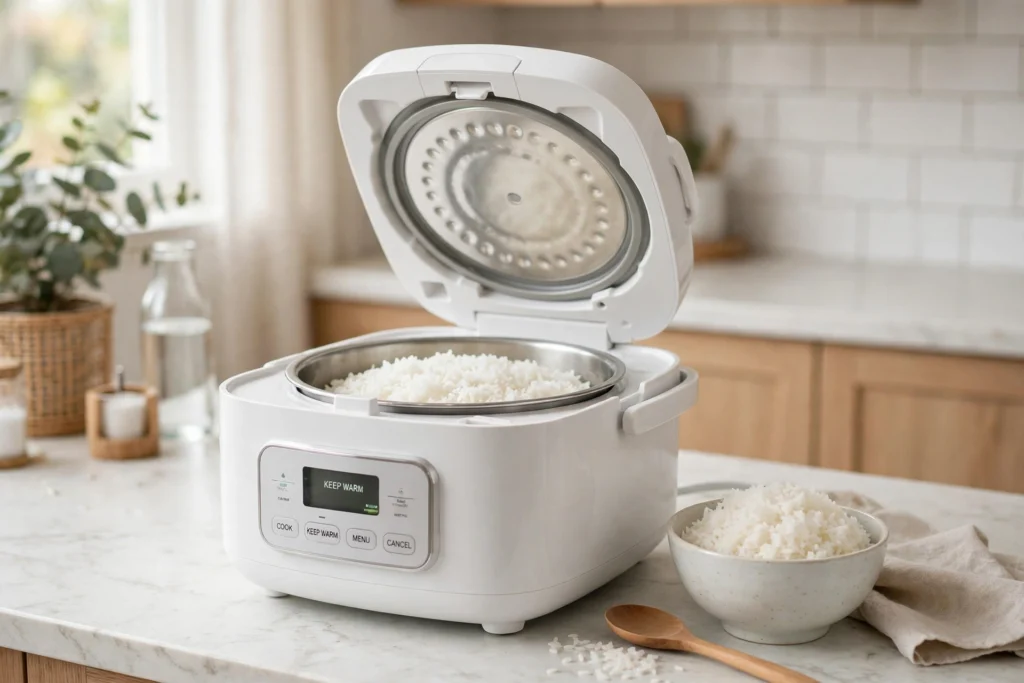
A rice cooker works by heating water and rice in a sealed inner pot until the water is absorbed, then a temperature sensor notices the pot getting hotter than boiling water and switches to a gentle keep-warm mode. That one trick — watching temperature, not the clock — is why the rice comes out right almost every time.
Key Takeaways
- A heating plate under the inner pot boils the water and steams the rice.
- A spring-loaded sensor in the middle of the plate watches the pot’s temperature.
- While water is still boiling, the temperature stays near 100°C, so the cooker keeps cooking.
- Once the water is gone, the pot heats past that point and the sensor flips the cooker to keep-warm.
- Rinsing the rice, measuring water with the pot’s markings, and resting the rice for ten minutes all improve the result.
What is inside a rice cooker?
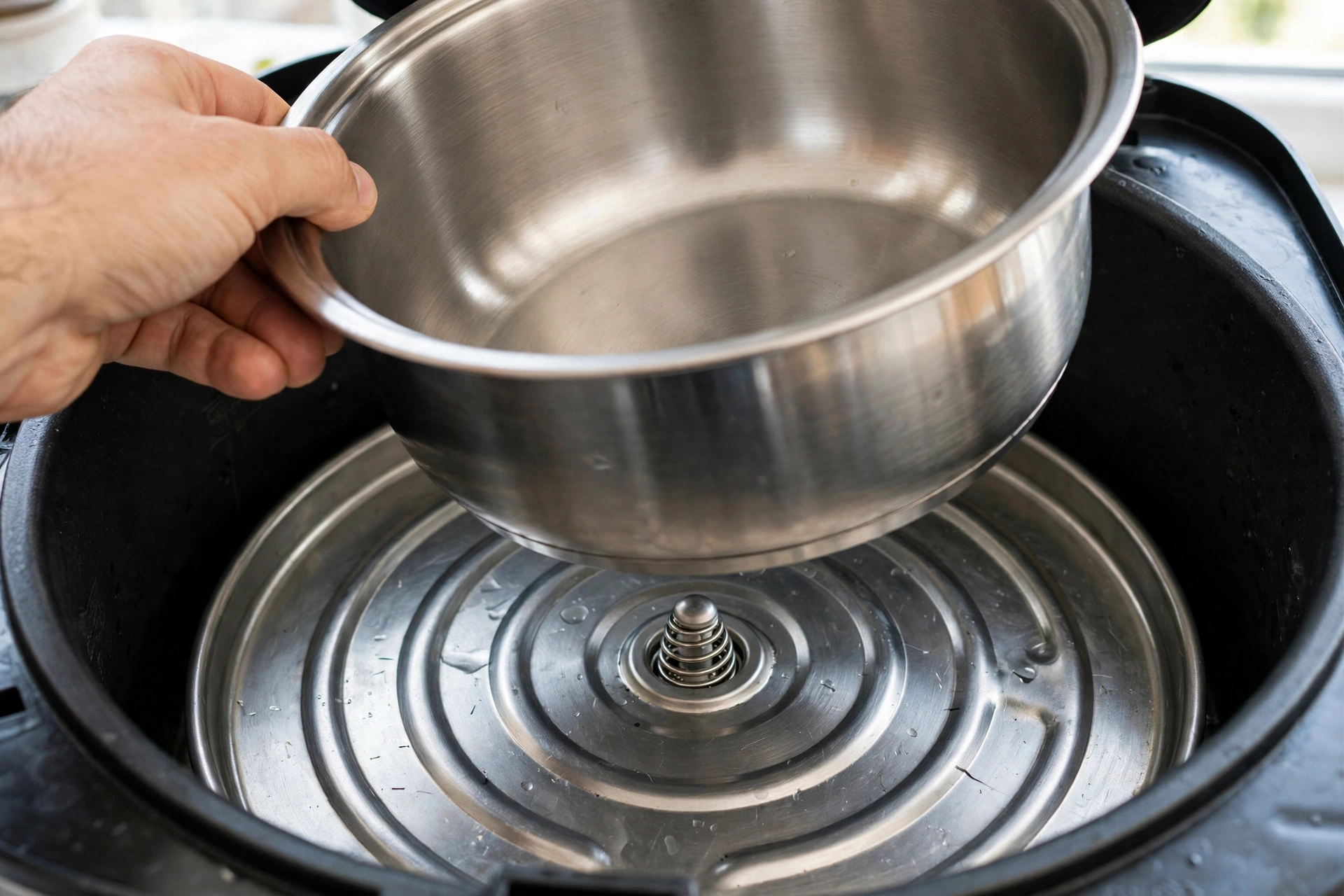
Lift the lid and you’ll find just a few parts, and each one has a job. The outer body holds everything together and insulates the heat. Inside sits a removable inner pot, usually aluminium or stainless steel with a non-stick coating, with water-level markings printed on its wall. Under the pot is a flat electric heating plate, and in the centre of that plate there’s a small spring-loaded button — the temperature sensor that does most of the thinking.
The lid traps steam, keeps the temperature even, and stops the top layer drying out while the bottom finishes cooking. Many lids have a small steam vent so pressure doesn’t build up. Fancier models add a display and settings for brown rice or porridge, but the core idea is the same in every cooker.
How does a rice cooker know when the rice is done?
This is the clever part, and it doesn’t involve a timer at all. When you press the cook switch, the heating plate warms the inner pot and the water inside starts to boil. As long as liquid water is present, the temperature at the bottom of the pot can’t climb much above 100°C, because the extra heat goes into turning water into steam. The rice slowly soaks it up and swells. Once there’s no water left to boil away, the temperature at the bottom of the pot starts to rise quickly, and the sensor feels it. In a simple cooker, it’s a thermostat with a magnet: at around 100°C the magnet holds the switch down, but once the temperature passes a set point, the magnet loses its grip and the switch pops up — that’s the click you hear, as the cooker drops to a low keep-warm heat.
So the cooker never really “knows” the rice is cooked the way a person would. It knows the water is gone, and in a well-measured pot, those two things happen at almost the same moment — which is why the water ratio matters: too much water and the rice turns to mush; too little and the grains stay hard.
What happens during the keep-warm stage?
After the switch flips, the heating plate doesn’t turn off completely. It stays at a low power, holding the rice at roughly 60–70°C — warm enough to serve, but gentle enough that the rice doesn’t scorch. The trapped steam keeps working too, finishing the last bit of cooking.
This is also why most manuals tell you to leave the lid closed for about ten minutes after the click. The rice is still settling: moisture spreads evenly from the wetter grains at the bottom to the drier ones at the top, and the texture firms up. Open the lid straight away and you often get rice that’s wet underneath and dry on top. Keep-warm is meant for hours, not days, though — rice left warming for very long dries out, and cooked rice shouldn’t sit warm indefinitely. If nobody is eating it within a few hours, cool it and refrigerate it instead.
How is a rice cooker different from a pot on the stove?
On the stove, you’re the sensor. You watch the pot, adjust the flame, and guess when the water is gone. A rice cooker simply automates that watching: it holds a steady heat, seals in steam, and reacts to temperature changes faster than a person peeking under a lid.
That reliability is the real appeal: press a button, walk away, and trust dinner to look after itself.
How do you get the best results from a rice cooker?
Start by rinsing the rice. A quick rinse or two in cold water washes off loose surface starch, which is what makes rice sticky and gummy. Drain it well, then add water up to the marking inside the pot that matches the number of cups you used — those lines are calibrated for that cooker, so they’re more reliable than a generic ratio.
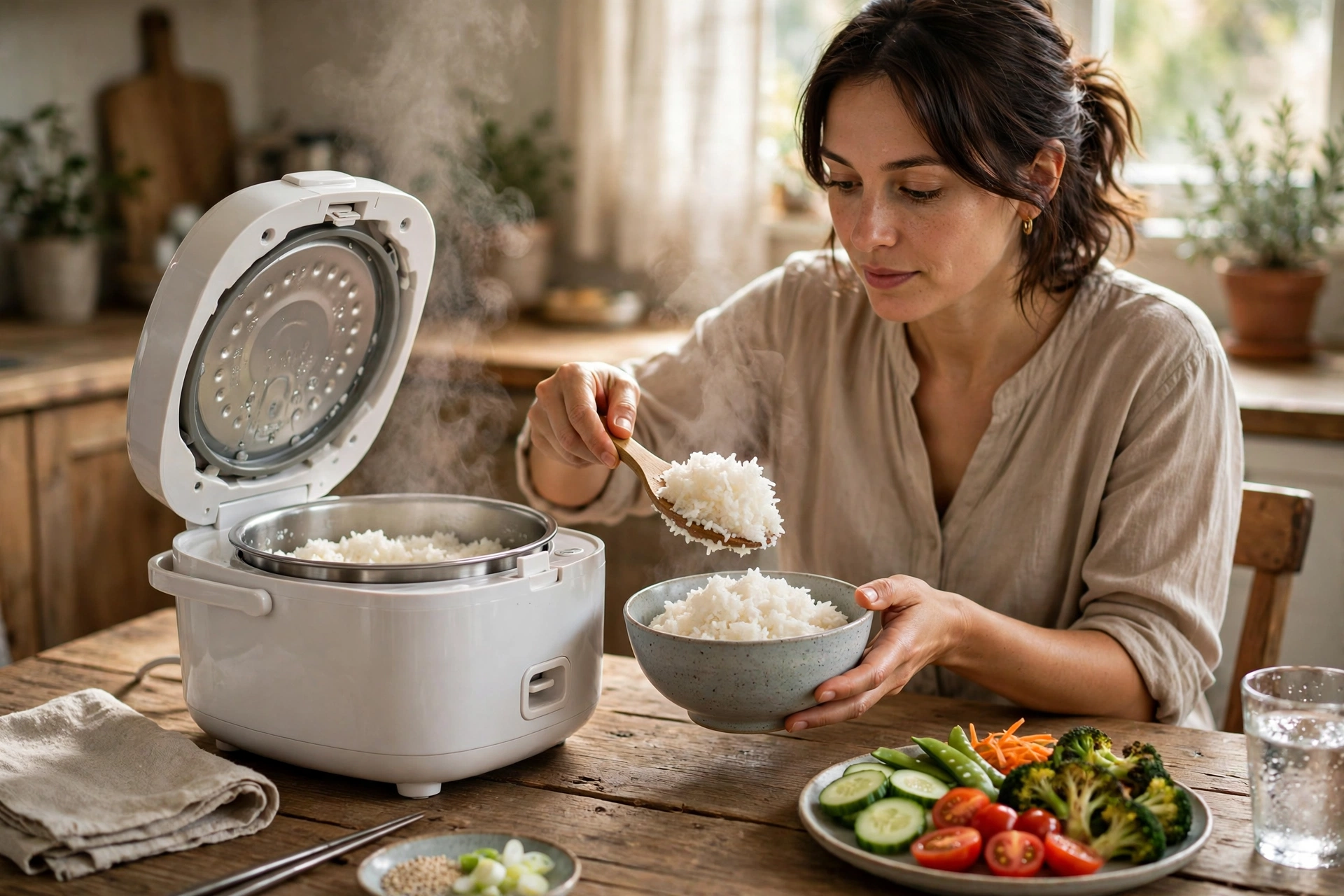
Don’t stir the rice while it cooks, and don’t lift the lid to check. Once it clicks to keep-warm, leave it alone for ten minutes, then fluff the rice with a spatula or the paddle that came with the cooker. Fluffing separates the grains and lets the last of the steam escape, so the rice stays light instead of clumping.
If your rice keeps coming out wrong, check the basics before blaming the cooker. Old rice absorbs water differently from fresh rice, and brown rice needs more water and time than white rice. Also, make sure the bottom of the inner pot is clean and dry and sits flat on the heating plate — a grain of rice trapped underneath can tilt the pot just enough to confuse the sensor.
FAQs
Can I cook brown rice in a rice cooker?
Yes. Brown rice needs more water and longer than white rice, because the bran layer slows down how fast water soaks in. Most cookers have a brown rice setting; on a basic model, soak the rice for 30 minutes first.
Why does my rice stick to the bottom?
A thin golden crust is normal in some cookers, but heavy sticking usually means too little water, a damaged non-stick coating, or the pot not sitting flat on the plate. Rinsing the rice and letting it rest after cooking both help.
Is it safe to leave rice in the cooker on keep-warm overnight?
It’s not a good idea. Cooked rice shouldn’t sit warm for many hours — it dries out and can become unsafe to eat. Cool leftover rice quickly and refrigerate it, then reheat it thoroughly before serving.
Do I need to rinse rice before cooking?
Rinsing isn’t essential, but it improves the texture. It washes away loose starch that makes rice sticky, so the grains come out separate and fluffy. If you like softer, stickier rice for sushi, skip it or rinse just once.
How long does a rice cooker take?
A basic white-rice cycle usually takes 20 to 30 minutes, plus about ten minutes of resting. Brown rice or larger amounts can stretch that to 45 minutes or more.
Conclusion
A rice cooker is a simple idea executed well: heat water and rice in a sealed pot, watch the temperature, and switch to keep-warm the moment the water runs out. No timers, no guesswork, and no hovering over the stove. To get the most from yours, rinse the rice, measure water with the pot’s own markings, leave the lid closed for ten minutes after it clicks, and clean the pot and plate regularly. Try that routine with your next batch — the difference should be obvious on the first spoonful.
Further reading: If you like countertop appliances that do one job well, see how an air fryer works, how an electric kettle works, how an induction cooktop works, and how a pressure cooker works. For the science behind the appliance itself, see the Wikipedia article on rice cookers, and for practical technique, Cook’s Illustrated explains how to use a rice cooker.