
AI detect fraud systems by comparing each new transaction with what normal behaviour usually looks like. When a payment breaks the pattern — a strange location, an odd hour, or an amount that doesn’t fit — the system gives it a risk score. High scores get blocked or sent to a person for a closer look, often within seconds.
Key Takeaways
- Fraud detection AI spots behaviour that doesn’t match a person’s usual patterns.
- It weighs many small signals at once, such as location, device, amount, and timing.
- A flagged payment is not confirmed fraud — most flagged payments still need a human to decide.
- The same ideas protect card payments, bank transfers, and online accounts.
- Knowing how the checks work helps you avoid false alarms and react faster when a real alert arrives.
How does AI spot a suspicious transaction?
Think of it like a bank clerk who has watched you shop for years. If you usually buy groceries near home on a Saturday morning, a sudden purchase of expensive electronics in another country at 3 a.m. would raise an eyebrow. Fraud detection AI does the same thing, only it watches millions of transactions and notices far subtler changes.
Every payment carries a trail of details: the amount, the time, the place, the device, and how it compares with your recent history. The AI turns those details into a risk score, a rough measure of how unusual the payment looks. Low scores pass through without a pause, while high scores trigger extra checks, a text message, or a temporary hold.
What makes this different from a fixed set of rules is that the system keeps learning. A simple rule might block every payment above a set amount, which would annoy plenty of honest shoppers. A trained model, by contrast, can tell the difference between your once-a-year holiday booking and a purchase that genuinely doesn’t fit your habits. That is the same idea behind machine learning in general: the system improves as it sees more examples of what normal and abnormal look like.
What signals does fraud detection AI look at?
No single clue proves fraud, so these systems weigh dozens of signals together. Some of the most common ones are location and timing — a payment from a city you have never visited, or two payments from places far apart within minutes, looks odd. A new phone, an unfamiliar browser, or an unusual connection adds risk too, as does an amount much larger than usual or several quick purchases in a row.
Merchant type matters as well: some categories attract more fraud than others, so the system treats them with extra care. Even behaviour patterns feed in — how fast you move through a checkout, and whether the purchase follows your usual routine.
On their own, most of these signals mean very little. You might genuinely be travelling, using a new phone, or buying a gift. It is the combination — several unusual things happening at once — that pushes a score high enough to act on.
How does AI learn what fraud looks like?
Most fraud detection systems learn from labelled examples: past transactions marked as genuine or fraudulent. The model studies those examples and finds the patterns that separate one group from the other. This is supervised learning, the same approach used in many other kinds of AI, and it works best when the training data is large, varied, and kept up to date.
Alongside that, many systems use anomaly detection. Instead of studying fraud directly, the model builds a picture of normal behaviour and flags anything that drifts too far from it. This helps with new kinds of fraud that nobody has labelled yet, because the system doesn’t need to have seen the exact trick before — it only needs to notice that something doesn’t fit.
Both approaches need regular retraining, because fraud changes constantly: when one trick stops working, the people behind it try another.
What happens after AI flags a payment?
A flag is the start of a process, not a final verdict. First, the payment is paused or slowed down while the system checks further. Then extra verification is usually requested — a text with a code, a push notification asking you to confirm, or a call from your bank. For the trickiest cases, a human reviewer checks the details the AI used and decides whether to approve or block the payment.
Finally, the outcome feeds back into the model. Whether the payment was genuine or fraudulent, that result becomes another example the system learns from, so it stops bothering the same honest customers over the same kind of flag.
Why do honest payments sometimes get blocked?
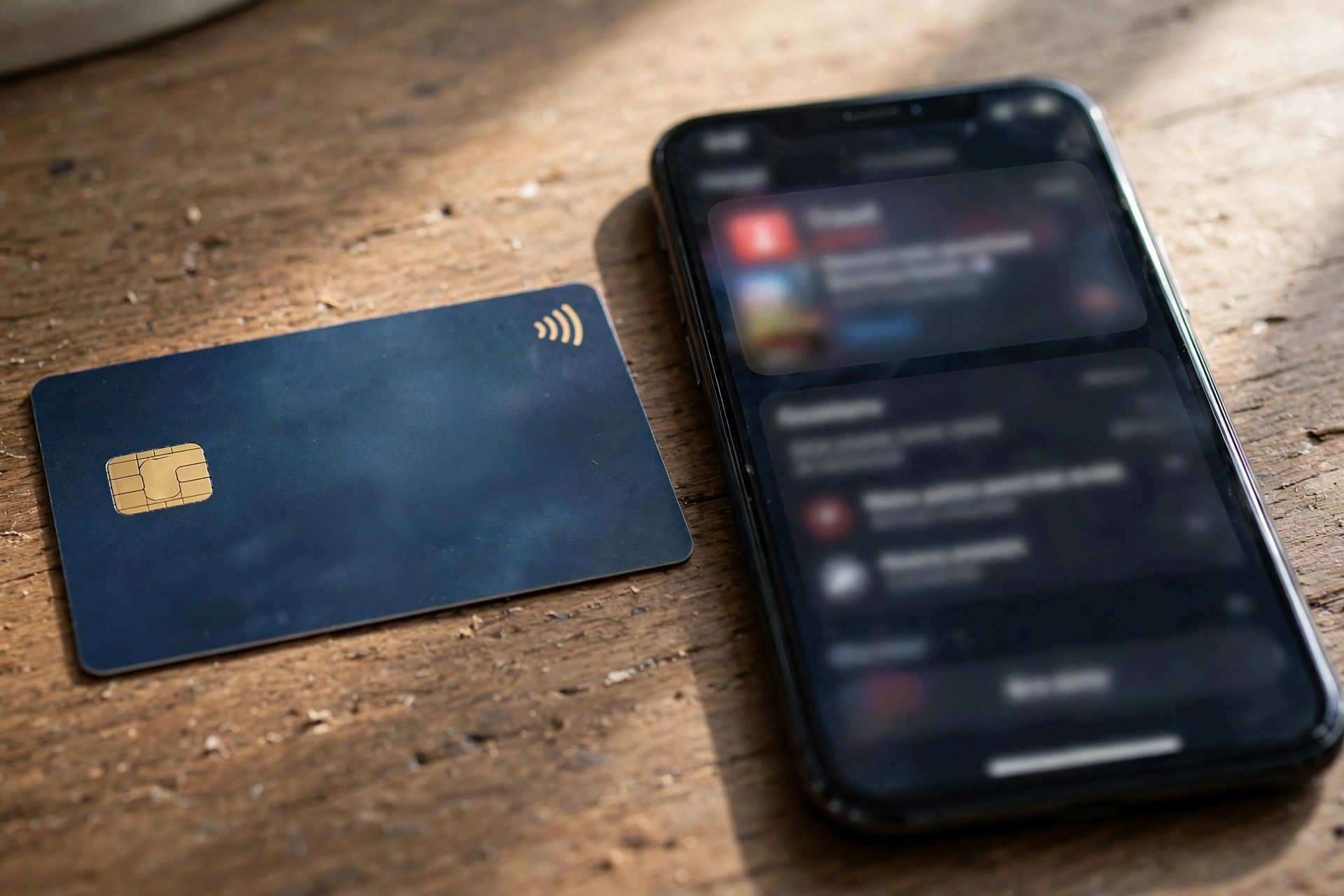
If your card has ever been declined while you were doing nothing wrong, you have met a false positive. They happen because the signals that suggest fraud also show up in perfectly normal life. Travelling abroad, buying from a new shop, using a different device, or making a bigger purchase than usual can all look suspicious to a model that only knows your past behaviour.
Companies accept some false positives because the alternative is worse: letting fraudulent payments through costs them money and erodes trust. Even so, a blocked payment is frustrating, and repeated false alarms can push people to switch banks or abandon a purchase. That tension is why teams tune their models carefully, trying to catch more fraud without blocking more honest customers.
A few simple habits cut down on false alarms. Letting your bank know you are travelling, keeping your contact details up to date, and answering verification messages promptly all help the system tell your real behaviour apart from a stranger’s.
Where does AI fraud detection fall short?
Fraud detection AI is a useful guard, not a guarantee. New tricks can slip through: if a fraud pattern is genuinely new, the model may have no reason to flag it until enough examples exist. Criminals also adapt — once a check becomes well known, they change their approach to stay under the threshold.
Biased or thin data causes mistakes too. If the training data over-represents some groups of customers and under-represents others, the model can treat some people unfairly. And the system can’t judge intent: it sees behaviour, not motives. A payment can look strange for innocent reasons, and a careful fraudster can make a payment look ordinary.
None of this means the technology is useless — it catches a great deal that humans alone would miss. It means the AI works best as part of a wider safety net, alongside human reviewers, clear reporting channels, and customers who check their statements.

What can you do when your card is flagged?
Start by reading the message carefully. Banks usually explain why they paused a payment and what they need from you. Confirming a genuine purchase through the official app, or by calling the number on the back of your card, is normally enough to release it. Never confirm a payment through a link in an unexpected message — contact your bank directly instead.
If the payment really wasn’t yours, report it straight away. The sooner your bank knows, the sooner it can block the card, reverse the charge where possible, and add the case to the examples its fraud systems learn from. Check your recent statements for other unfamiliar payments too.
A short note on scope: this article is general information about how fraud detection technology works. It is not financial advice, and it can’t cover your bank’s exact rules, which vary. For anything about your own account, your bank’s fraud team is the right place to ask.
Frequently Asked Questions
Does AI block my payment, or does a person?
Usually both, in sequence. The AI scores the payment and decides whether to let it through, ask for extra checks, or send it to a human reviewer. The final call on a difficult case is normally made by a person, not the model alone.
Can fraud detection AI read my messages or see what I buy in detail?
It works with transaction details — amounts, times, locations, devices, and merchant categories — rather than reading your private messages. What it sees is governed by your bank’s privacy policy and the data rules in your country, so the exact picture varies.
Why did my payment get flagged when I was just on holiday?
Travel changes several signals at once: a new location, unfamiliar shops, different spending patterns, and possibly a new SIM or device. Any one of those is normal, but together they can push a risk score over the line. Telling your bank about travel plans in advance usually helps.
Is AI fraud detection the same as the spam filters in my inbox?
The ideas are related — both systems learn from examples and score new items for risk — but they look at different signals. Spam filters study message content and sender history, while fraud detection studies payment behaviour. Both still need human judgement for the borderline cases.
Will AI ever stop fraud completely?
Probably not. Fraud detection keeps improving, and it catches far more than manual checks alone could, but fraudsters keep changing tactics too. The realistic aim is to make fraud harder, rarer, and quicker to catch — not to remove it entirely.
Conclusion
AI detects fraud by learning what normal looks like and noticing when a payment breaks the pattern. It weighs location, device, amount, and timing together, scores the risk, and hands the uncertain cases to people who can judge them properly. It isn’t perfect — honest payments still get flagged, and new tricks still slip through — but as one layer in a wider safety net, it catches far more than rules or human checks could manage alone.
The practical next step is simple: check your statements regularly, keep your bank’s contact details current, and answer verification requests through the official app rather than through links in messages. The better the information your bank has about your real behaviour, the better its systems can tell you apart from someone pretending to be you.