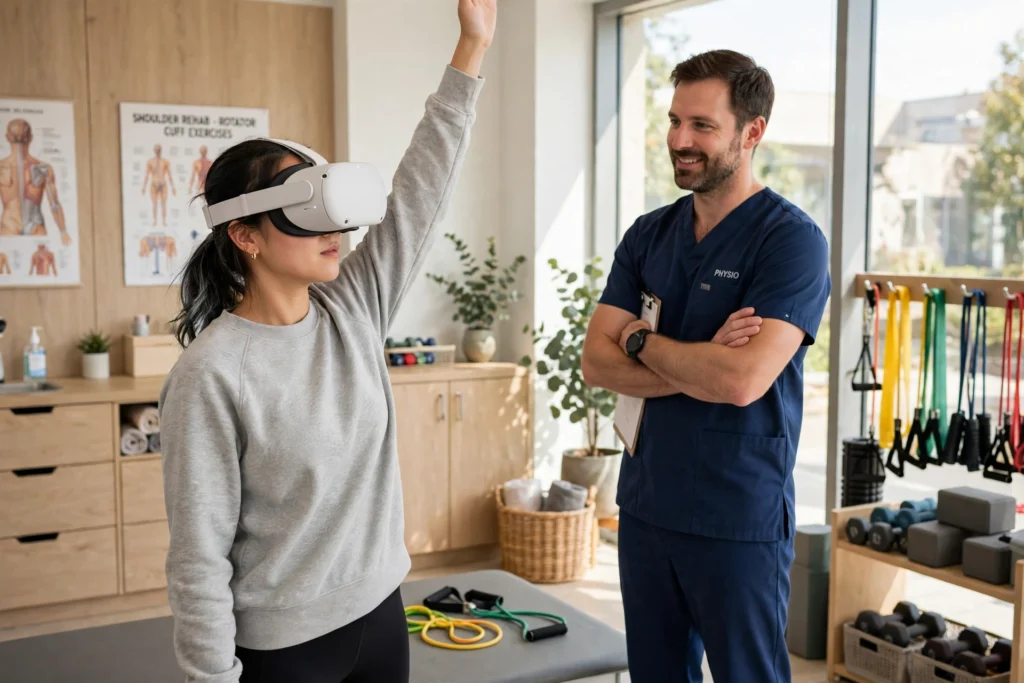
VR physical therapy turns ordinary rehab exercises into guided sessions inside a headset. You wear a VR headset, follow on-screen prompts, and the system tracks how far you reach, how steadily you stand, and how smoothly you move — then your therapist reviews the results.
Key Takeaways
- A headset and motion tracking turn rehab exercises into guided, measurable sessions.
- It works best for balance, range of motion, strength, and coordination.
- Sessions are short and supervised, with difficulty rising as you improve.
- It does not replace a physiotherapist — the headset guides, the therapist plans.
- Check with your clinician first if you have dizziness or a recent injury.
This article is general information, not medical advice. If you are recovering from an injury or surgery, talk to your physiotherapist or doctor before starting any new exercise.
What is VR physical therapy?
VR physical therapy is rehabilitation where patients practise prescribed exercises inside a virtual environment. The headset shows you a task — reach for a floating ball, hold a stretch — and sensors record what your body does.
It sits inside the wider field of virtual reality therapy, which also covers anxiety and pain — our guide to VR therapy covers that side. Physical therapy is the movement half: rebuilding strength, flexibility, balance, and coordination after an injury or operation.
Rehab exercises are repetitive, and repetition gets boring — people skip sets or stop coming. A virtual task gives the same movement a visible goal, so you do the reps your therapist asked for.
How does a VR physio session actually work?
Your therapist picks exercises for your recovery stage and sets the difficulty: how high to reach, how long to hold, how fast the targets appear. Then you put on the headset.
Most sessions use a standalone headset and two hand controllers, the kit in our guide to how VR headsets work. The headset tracks your head, the controllers track your hands, and some systems add foot or waist trackers. Most setups are wireless, so you move freely in a cleared space.
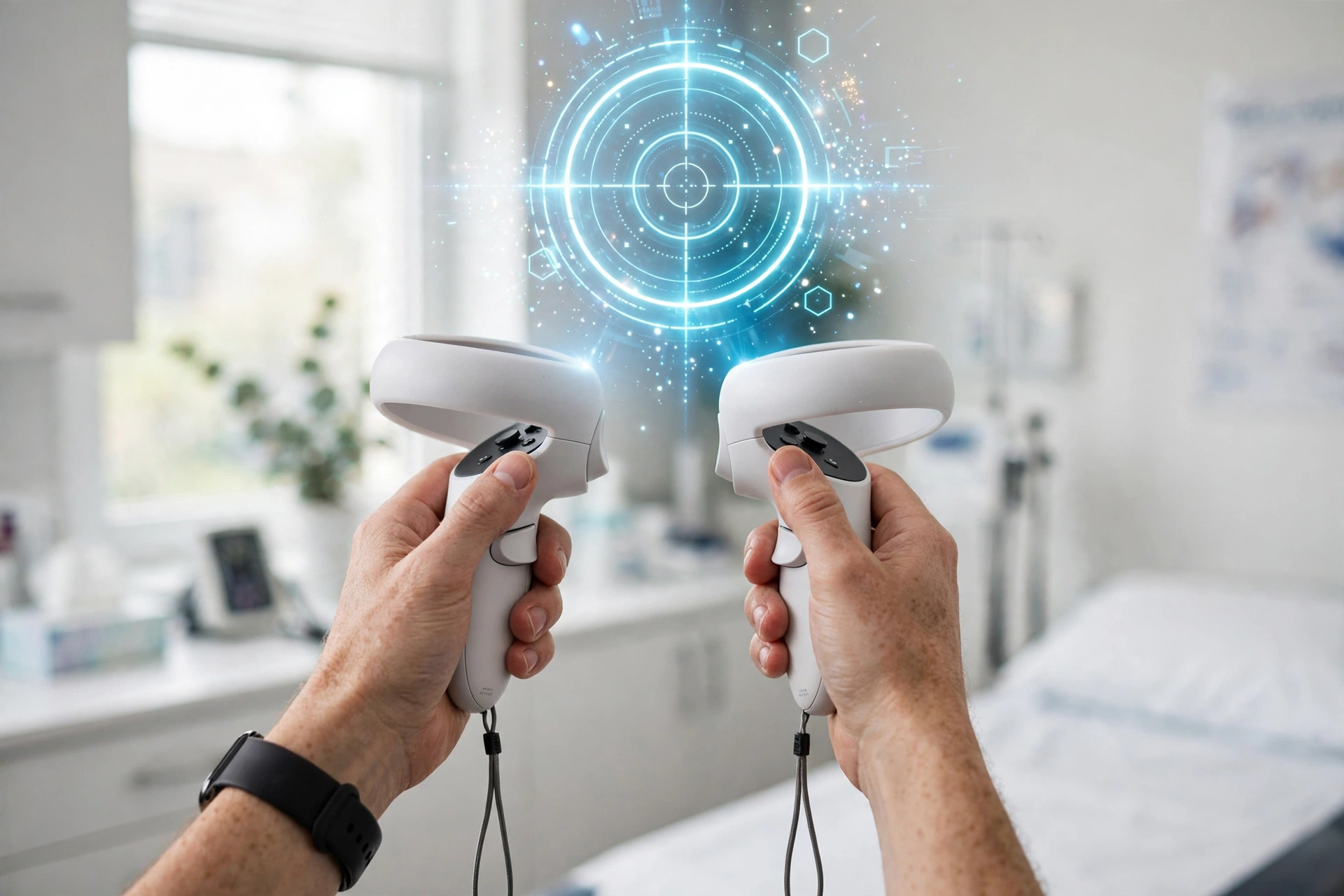
During the exercise you see your progress in real time. Reach further than yesterday and the system notices; wobble during a balance drill and it gives you a wider target or slower pace. Your therapist watches on a tablet, seeing the same numbers — range of motion, speed, left-right symmetry — and steps in if a movement looks wrong. Sessions usually last 15 to 30 minutes inside the headset, with breaks.
What kinds of exercises work well in VR?
The best VR exercises are the ones where a clear visual goal makes the movement easier to understand. For example:
Reaching and range of motion. After a shoulder or elbow injury, reaching is often the hardest part. In VR, reaching for a shelf or catching a slow ball gives you a reason to stretch further each time — and the system measures how far you got.
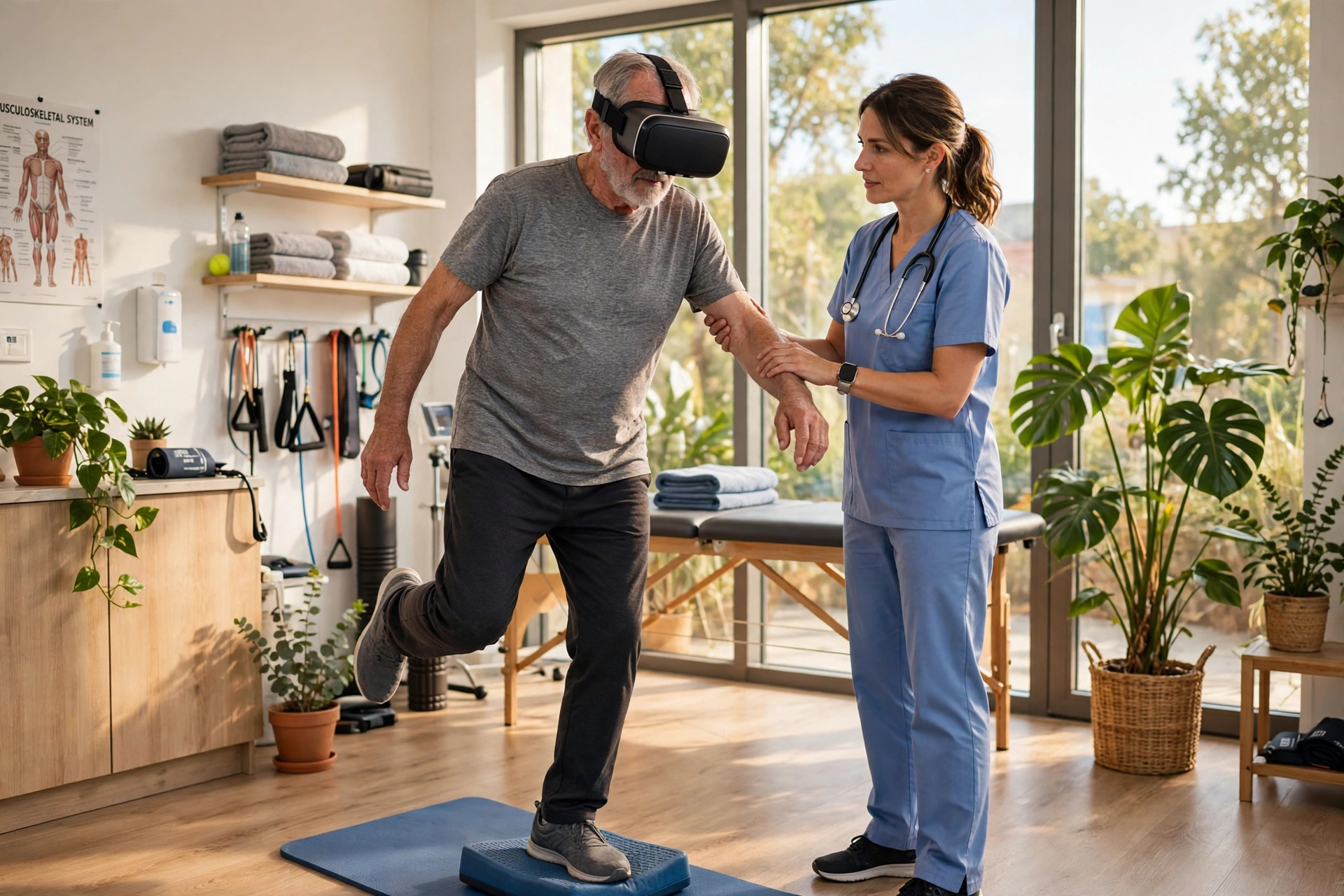
Balance and standing. Balance drills might ask you to shift your weight to steer a virtual boat, or stand still while the scene gently moves. The therapist raises the challenge in small, safe steps.
Hand and finger work. After a hand injury or a stroke, small movements matter most. Controllers, or headsets that track your bare hands, turn finger exercises into picking up virtual objects.
Not every exercise suits VR. Heavy resistance work and hands-on stretching still happen the old-fashioned way.
How does VR track movement and measure progress?
This is where VR earns its place in a clinic. A normal physio session relies on the therapist’s eye. VR adds numbers to that judgement.
The headset and controllers track position many times a second, giving the therapist a record of how far you reached, how long you held a position, and whether one side is working harder than the other. Over weeks, those numbers show whether you are improving or stuck — and the plan can change based on evidence.
There is a limit. The headset tracks what it can see: head, hands, sometimes feet. It does not measure muscle strength, and it cannot tell whether you are compensating — using your back to help a weak shoulder, for example. That is why a therapist stays in the room.
Is VR physical therapy safe?
For most people, yes, when it is supervised and the space is prepared.
The biggest risk is balance. You cannot see the real room with the headset on, so a cluttered floor or loose cable becomes a trip hazard. Clinics clear a space and keep someone beside you. At home, clear the room first and keep a chair or wall within reach.
Motion sickness is the other common problem, especially in fast-moving scenes. Our guide to VR motion sickness explains why it happens and what helps: short sessions, slow scenes, and stopping as soon as you feel unwell.
Be extra careful with severe balance problems, a history of seizures, recent eye surgery, or inner-ear conditions. After a fresh injury or operation, the exercises need a clinician’s approval — VR makes a movement more fun, but not safe if your body is not ready.
What are the limits of VR physical therapy?
VR is promising, but the evidence is still building — most studies so far are small, and results vary between conditions. Headsets are heavy, and wearing one for more than half an hour can be uncomfortable. A headset can only track what its cameras see; it cannot replace a hands-on assessment.
None of that makes VR useless. It makes it a complement: a way to make the repetitive part of rehab more engaging and measurable, while the therapist does the skilled work around it. Think of it as a smart exercise tool rather than a cure.
FAQs
Who is VR physical therapy for?
It is used after strokes, joint replacements, and sports injuries, and by older adults working on balance. Your clinician decides if it fits you.
Does VR physical therapy hurt?
It should not. Discomfort should stay mild and brief. Sharp pain, dizziness, or nausea mean stop and tell your therapist.
How long is a VR physio session?
Usually 15 to 30 minutes inside the headset, as part of a longer clinic visit. Shorter, regular sessions work better than one long one.
Do I need to buy a headset?
Not necessarily. Most VR physio happens in a clinic with the clinic’s equipment. Home programmes should be prescribed and monitored by your therapist.
Is VR physical therapy better than normal physiotherapy?
No clear evidence says it replaces traditional physiotherapy. It can make rehab more engaging and give better progress data, and works best alongside normal treatment.
Conclusion
VR physical therapy takes the exercises you would do anyway and puts them inside a world that tracks, measures, and rewards them — helping motivation and giving your therapist real numbers.
If you are curious, ask your physiotherapist whether VR is available at your clinic and whether it suits your recovery. Try one supervised session before buying anything.
For a broader picture, see our guides to how VR headsets work and how VR fitness turns exercise into a game.
You can also read how virtual reality itself is defined.