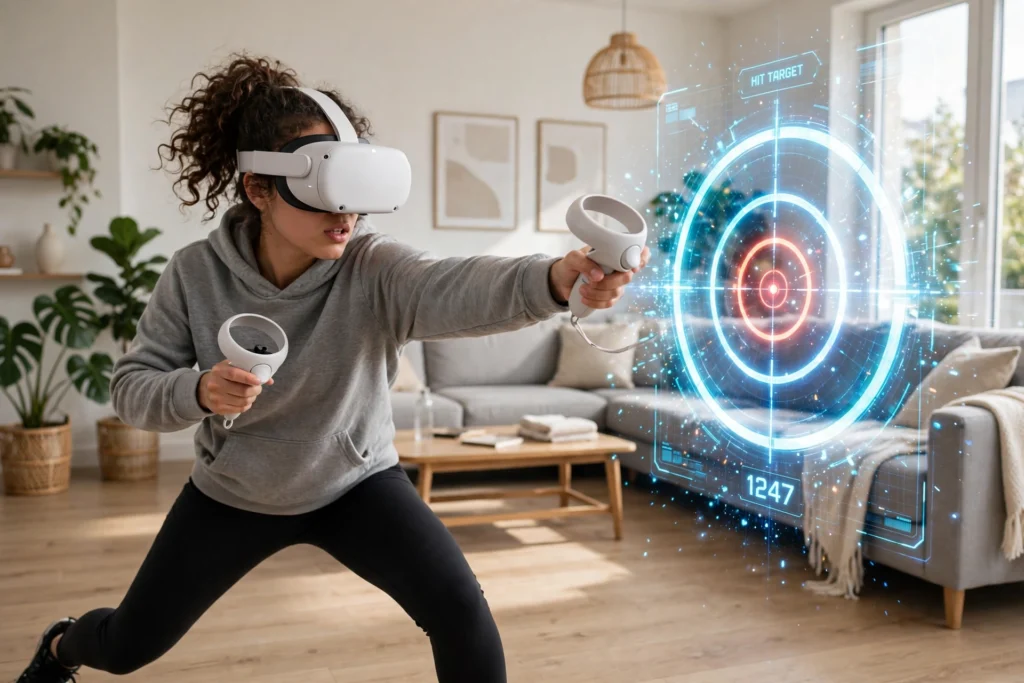
VR boxing turns your living room into a boxing gym. You wear a VR headset, hold a controller in each hand, and punch at virtual targets, bags, and opponents in front of you. The headset tracks your hands in real time, so every jab, cross, and hook lands on something you can see.
Key Takeaways
- VR boxing uses a headset and two hand controllers to track your punches in a virtual ring or gym.
- Most apps mix rhythm games, bag work, and coached workouts, so you can train without a real opponent.
- Punches are scored on speed, timing, and accuracy, which makes progress easy to see week by week.
- You need about 2 by 2 metres of clear floor space, and the wrist straps should always be on.
- It is a genuine cardio workout, but it does not teach you how to take a punch or spar safely.
How does VR boxing track your punches?
A VR headset watches your hands through cameras built into its front. The two controllers carry small sensors the cameras follow, so the app knows where your fists are and how fast they are moving. When you throw a jab, the movement becomes a punch in the virtual world within a few milliseconds — fast enough that the hit feels connected to your arm.
Most apps also judge the direction and force of each punch. A straight jab scores differently from a looping hook, and a soft tap counts for less than a full, committed punch. Some apps add haptics, a short buzz in the controller, when your glove connects. It is not the same as hitting a real bag, because nothing stops your fist, but the sound, the flash, and the vibration make each punch feel real enough to keep you swinging.
What does a VR boxing workout actually look like?
A typical session starts with a short warm-up: the coach on screen asks you to bounce on your toes, throw a few slow jabs, and loosen your shoulders. Then the main workout begins. Targets fly towards you in time with music, and you hit them with the matching hand. Some rounds are pure rhythm, like a boxing-themed music game. Others put you in front of a heavy bag that swings when you hit it, or an opponent who bobs, weaves, and throws punches you have to slip or block.
Between rounds, the app shows your stats: punches thrown, clean hits, your longest streak, and an estimate of calories burned. A 20 to 30 minute session is enough to leave most people sweating, and because the workout is a game, many people keep going longer than they would on a treadmill.
Do you need special equipment for VR boxing?
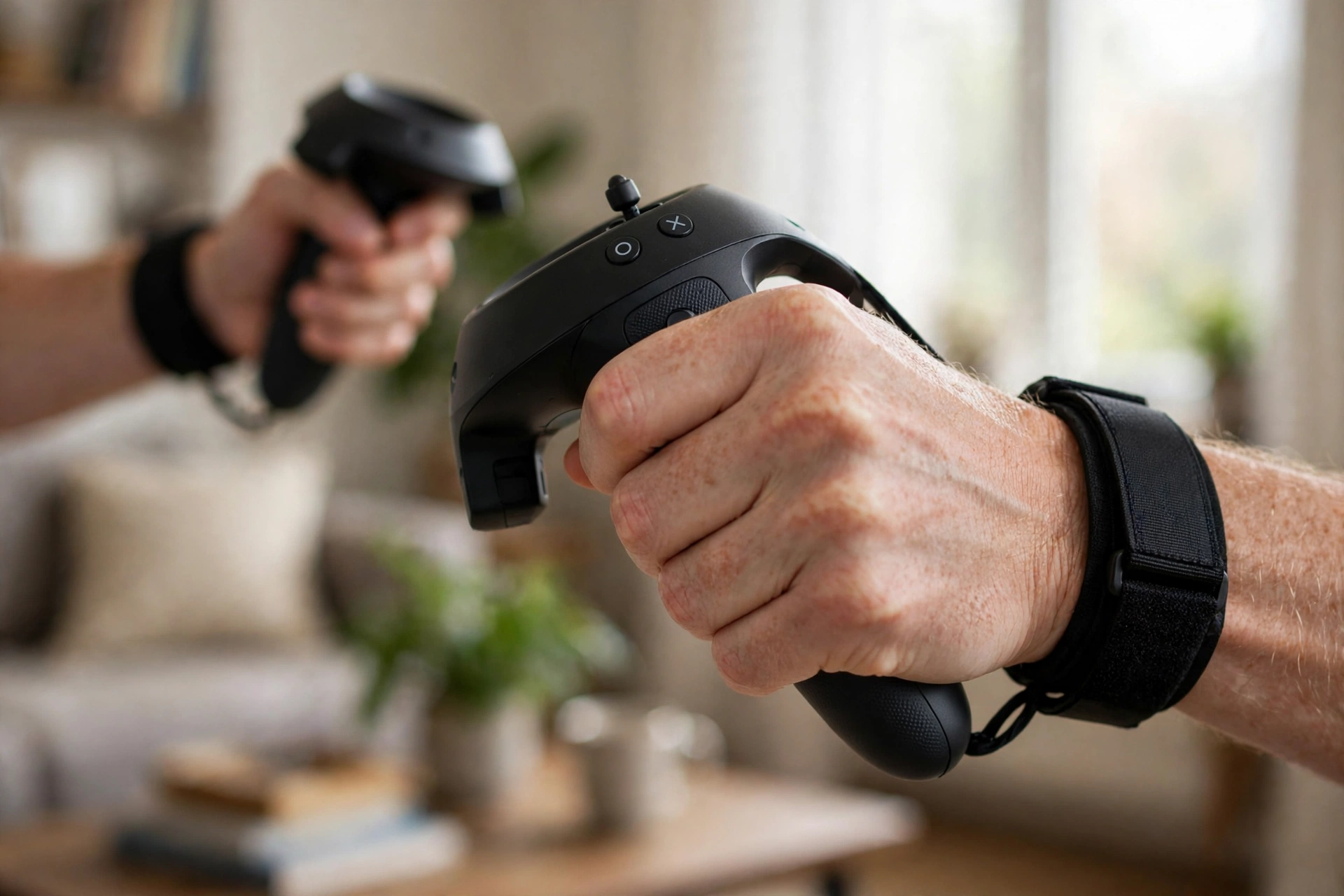
You do not need a real boxing bag, gloves, or a gym membership. The core kit is a standalone VR headset and its two controllers — the same gear used for most other VR games. Most popular boxing apps run on standalone headsets such as those in the Meta Quest range, and they are built on the same virtual reality technology behind all VR games. Some people add extras once they are hooked: hand wraps under the controller straps, a sweat-resistant face cover, or a fitness mat to mark the centre of their play space. None of these is required for a first session.
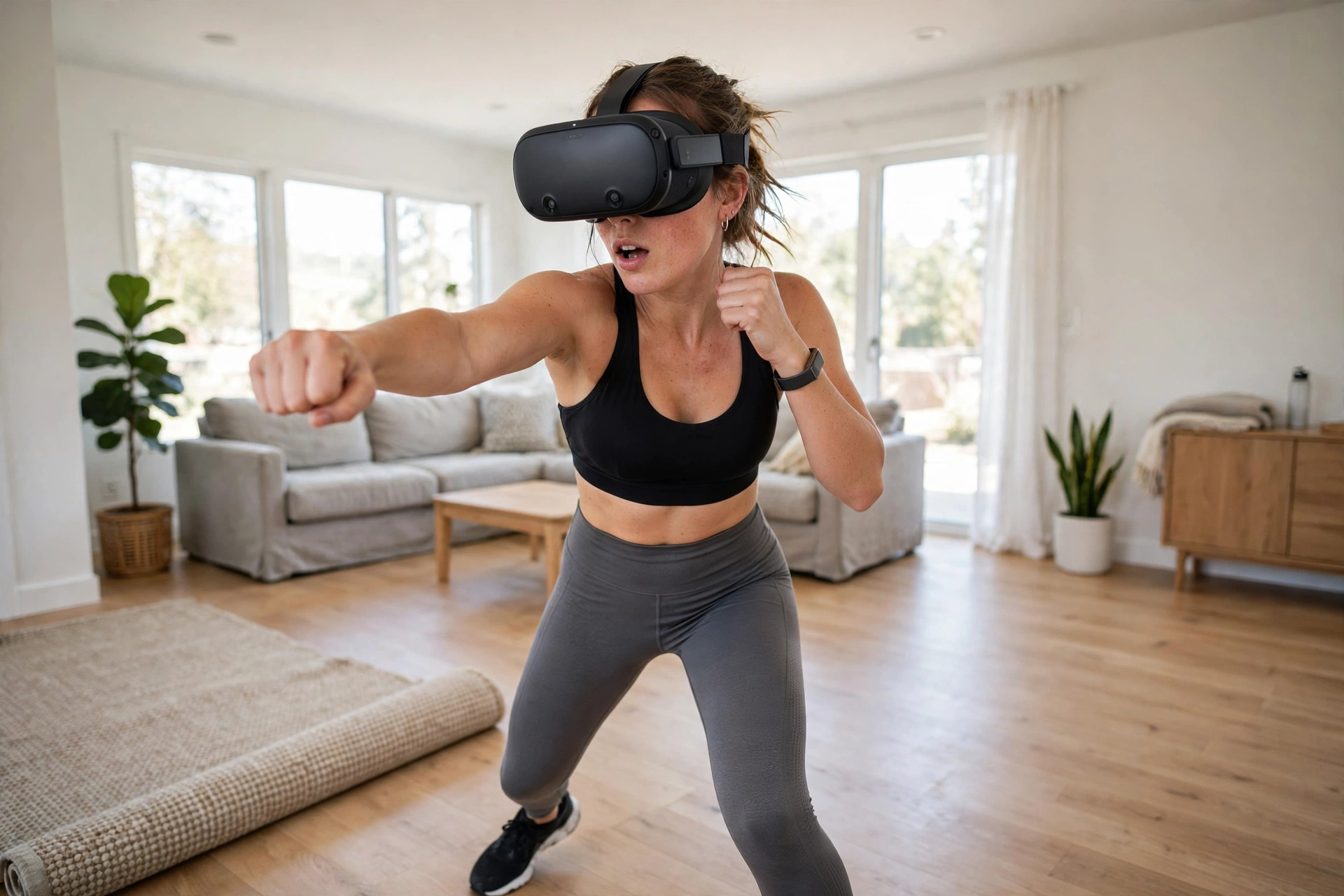
What matters more is space. Boxing needs more room than most VR games because your arms extend and your feet move. Clear at least 2 by 2 metres, push the coffee table aside, and roll up any loose rug — a rug edge underfoot is a classic way to lose your balance mid-combination. The headset’s guardian boundary warns you if you drift towards a wall, but it cannot move the furniture for you. Set it up before your first round, and keep pets and small children out of the room while you play.
Can VR boxing teach you real boxing skills?
Partly. VR boxing is good for the parts of boxing that are about movement: footwork, head movement, keeping your guard up, and throwing punches in combinations. Regular play builds coordination, timing, and stamina, and many people find their jab-cross rhythm improves after a few weeks. If you already box, it can add extra conditioning between gym sessions, much like other VR sports training.
What it cannot teach is the rest of the sport. There is no impact, so you never learn what it feels like to hit — or be hit by — a real bag or a real person. Your punches meet no resistance, which can quietly teach you to overextend your arms. And no app can coach your form the way a person standing beside you can. Treat VR boxing as fitness training with boxing flavour, not as a replacement for a coach, a bag, or a real gym.
Is VR boxing a good workout?
Yes, for most people. Boxing in VR is mainly cardio with a strength element: your arms work constantly, your legs stay active as you step and squat, and your core engages every time you twist into a punch. Players often reach heart rates in the same range as a brisk run, and because the game keeps score, it is easy to push a little harder each session. It is also low impact on the joints compared with running, since there is no pavement pounding.
That said, it is not a complete fitness programme on its own. It does not load your legs the way squats do, and it does not build upper-body strength the way resistance training does. Use it as one part of a routine: a few VR boxing sessions a week for cardio, plus strength work and stretching on other days. If you have a heart condition, a balance problem, or a recent injury, check with a doctor before starting, and begin with short sessions. This article is general information, not medical advice.
How do you stay safe while boxing in VR?
Safety in VR boxing is mostly about the room and your own limits. First, the space: clear floor, no trip hazards, and the guardian boundary set before you start. Second, the straps: always wear the controller wrist straps, because a controller slipping from a sweaty hand can fly across the room. Third, your body: warm up, take breaks between rounds, and stop if you feel dizzy, sick, or unusually short of breath. Motion sickness is less common in boxing apps than in games that move you artificially, but it can still happen.
A few smaller habits help too. Keep water and a towel within reach so you do not have to take the headset off mid-workout. Wipe the headset’s face cushion after each session, since sweat builds up fast. And if you wear glasses, use the headset’s glasses spacer or prescription lens inserts rather than squeezing your frames inside.
FAQs
What equipment do I need for VR boxing?
You need a standalone VR headset and its two hand controllers. No bag, gloves, or gym membership is required. Optional extras include a sweat-resistant face cover, hand wraps, and a fitness mat to mark your play space.
How much space do I need for VR boxing?
Aim for at least 2 by 2 metres of clear floor space, with furniture, rugs, and trip hazards moved out of the way. Set up the headset’s guardian boundary before your first round and keep other people out of the room while you play.
Does VR boxing burn calories?
Yes. A 20 to 30 minute session is a solid cardio workout, and many players reach heart rates similar to a brisk run. The exact calories depend on your weight, effort, and session length, so treat in-app estimates as a rough guide.
Can beginners learn boxing from VR alone?
VR boxing can teach footwork, timing, combinations, and fitness, but it cannot teach impact, defence against a real opponent, or sparring. It is a great starting point and a useful training aid, but a real coach is still the way to learn the full sport.
Is VR boxing safe for your eyes and balance?
For most healthy adults, short sessions are fine. Take breaks, stop if you feel dizzy or sick, and avoid playing if you have a balance problem or a condition that affects your eyesight without first asking a doctor.
Conclusion
VR boxing works because it turns exercise into a game you want to keep playing. The headset tracks your head and hands, the controllers turn your punches into hits, and the scoreboard keeps you pushing through one more round. It will not make you a boxer on its own, but it can make you fitter, faster, and more coordinated — and it is a lot more fun than staring at a wall on a treadmill.
If you are curious, start small: clear a space, put the wrist straps on, and try a ten-minute beginner session. If you enjoy it, add a second session later in the week and see how your score improves. For the wider picture, our guide to how VR fitness works covers the other workouts worth trying.