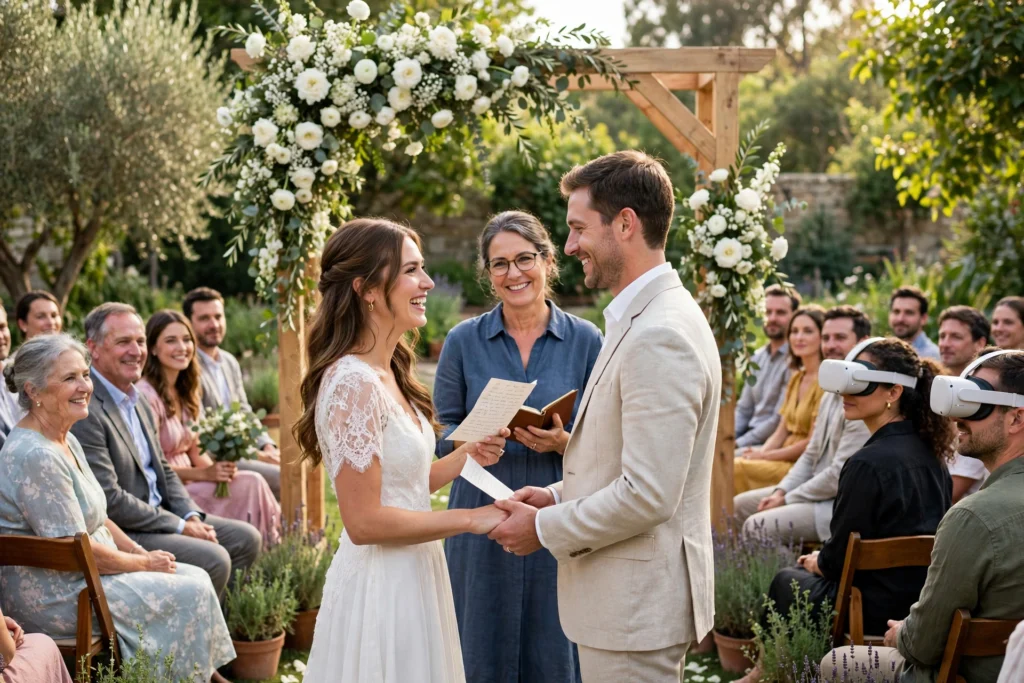
VR weddings let guests attend a wedding ceremony from anywhere by wearing a virtual reality headset. A 360-degree camera or a virtual venue streams the ceremony live, so remote guests can look around the room, see the couple, and hear the vows as if they were there. It is a real ceremony watched through a headset, not a video game.
Key Takeaways
- VR weddings use a 360-degree camera or a virtual venue to let remote guests attend a live ceremony through a headset.
- Guests need a headset, a stable connection, and an invitation link.
- The ceremony itself is usually real and in person; VR is how distant guests take part.
- A VR ceremony is not automatically a legal marriage — the paperwork still follows local rules.
- The biggest limits are motion sickness, patchy internet, and no hug.
What is a VR wedding, exactly?
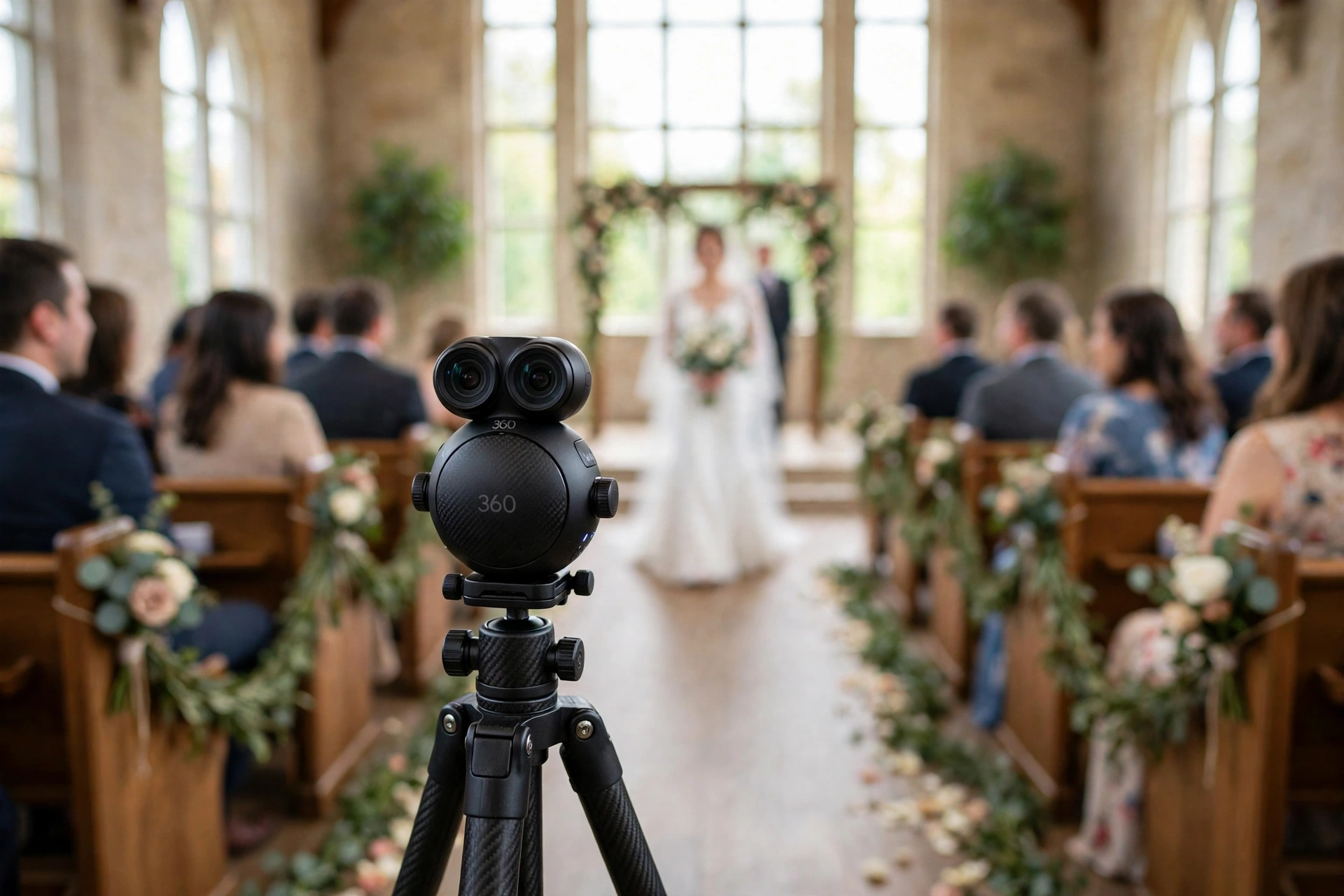
A VR wedding is a ceremony that remote guests attend through virtual reality, and there are two common versions. In the first, the ceremony happens in a real venue while a 360-degree camera near the front films in every direction. A guest at home puts on a headset and watches the live feed, turning to look wherever they like. It is a livestream you can look around in, not a flat video on a screen.
In the second, the whole ceremony takes place inside a virtual venue, with the couple and guests joining as avatars in a computer-made chapel, garden, or beach. Most couples choose a mix: a real ceremony, a 360-degree camera, and far-away relatives joining through headsets while everyone else sits in the pews.
How does a guest join a VR wedding?
Joining is simpler than most people expect. The couple sends an invitation link, much like they would for a video call. The guest opens it, puts on a headset, and arrives at the ceremony.
Most standalone headsets work, and some ceremonies can also be watched on a phone or laptop in a simpler 360-degree view. A 360-degree livestream uses far more data than a normal video call, so steady home broadband matters more than raw speed — test the link the day before with the same headset and network. Join ten or fifteen minutes early to adjust the fit and find the volume controls, and mute your microphone during the vows.
What does the couple need to set one up?
A 360-degree livestream of a real ceremony needs a 360-degree camera, a tripod, a strong internet connection at the venue, and a streaming platform that supports 360-degree video. Many wedding videographers offer this as an add-on, handling the camera, sound, and stream. Good sound matters more than most couples realise — a beautiful picture with muffled vows disappoints everyone.
A fully virtual ceremony needs a virtual venue and avatars; social VR platforms provide ready-made spaces, and a host keeps things moving. Both versions need a rehearsal, with at least one remote guest joining to confirm the view and sound. Cost varies widely, so get a quote first: a simple 360-degree stream is usually the cheaper route, while a fully built virtual venue takes more time and money.
What does a VR wedding feel like for guests?
Guests who have tried it often describe the same surprise: it feels closer to being there than a normal video call. You can look around the room on your own, rather than staring at whatever the camera operator chose to show you. When the bride walks down the aisle, you turn to watch her. That freedom is what makes it feel present rather than remote.
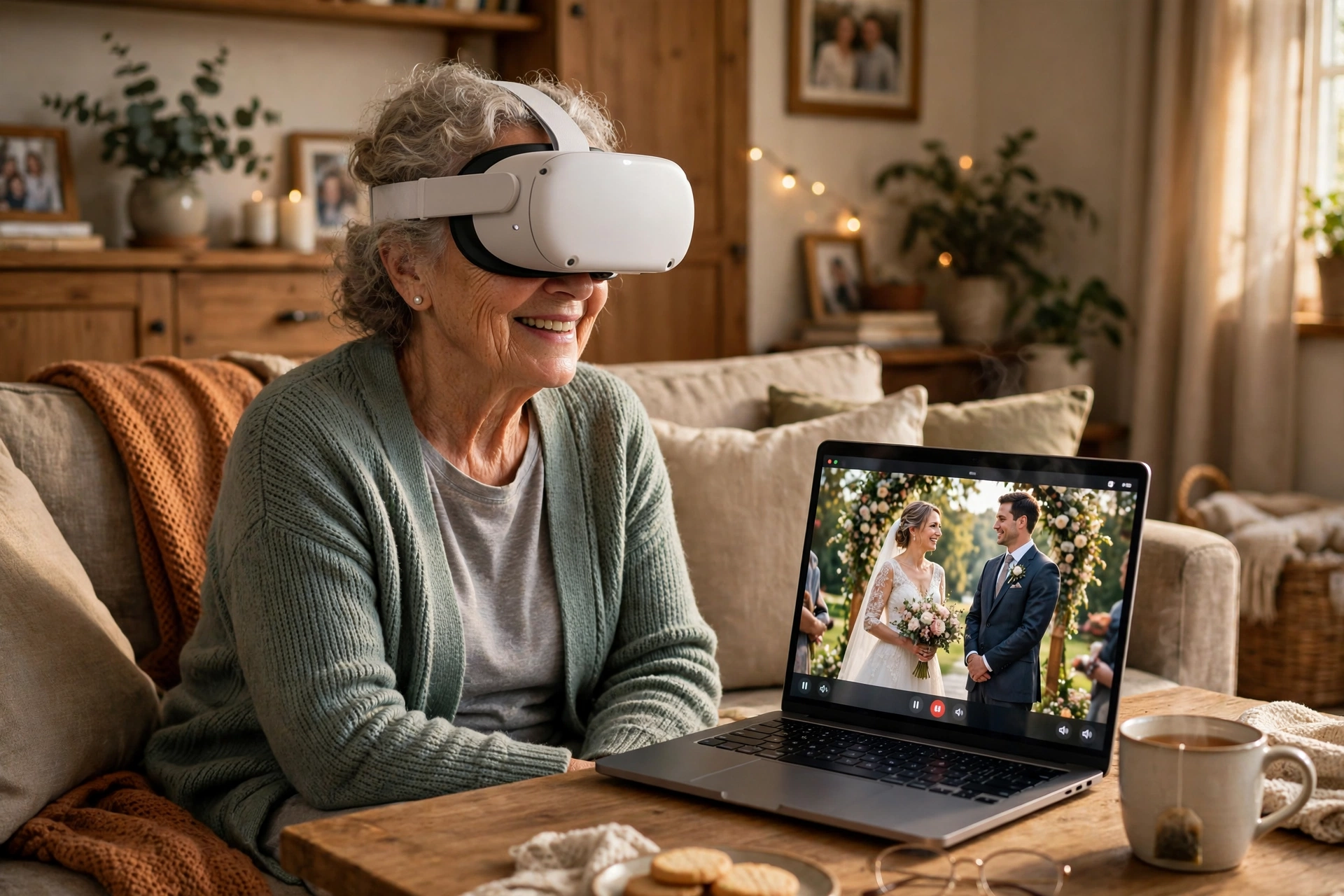
It is not the same as being there, though: no warmth, no flowers, no squeeze of a hand. But for guests who could not have attended at all — a grandparent who cannot travel, a friend posted overseas — a headset beats missing the day entirely. VR weddings serve that group best.
Can a VR wedding be legally valid?
Couples should settle this before anything else, because the answer is not the same everywhere. In most places, a marriage is a legal act, and the law cares about where the couple, the officiant, and the witnesses physically are — not about what guests can see through a headset.
In practice, the legal part usually happens in the real world: the couple, officiant, and witnesses sign the paperwork in person, and the VR stream lets everyone else watch. A ceremony held entirely inside a virtual world is a celebration — but in most places it is not, on its own, a legal marriage. Check with the local registrar or a family lawyer before the day, since rules differ and change.
What are the limits of a VR wedding?
Motion sickness comes first: some guests feel queasy after twenty minutes in a headset, especially if the camera moves or the video stutters. Short ceremonies suit VR better, and guests can always take the headset off and keep watching on a screen.
Internet trouble comes second: if the venue’s Wi-Fi drops, every remote guest loses the ceremony at once. A wired connection at the venue and a recorded backup take the risk down.
Then there is the human side. A headset is solitary, even with a hundred avatars beside you, and remote guests can feel left out of the reception and dancing. A virtual drinks reception afterwards helps. A VR wedding asks more of its guests than a video call, so it works best when guests choose it willingly.
Frequently Asked Questions
Do guests need to own a VR headset to attend a VR wedding?
Usually, yes — but most ceremonies also offer a flat 360-degree view on a phone or laptop.
How long does a VR wedding ceremony last?
About the same as a normal ceremony, often twenty to forty minutes. Shorter works better in VR, because guests in headsets tire faster.
Can guests interact with each other during a VR wedding?
In a virtual venue, guests appear as avatars and can talk and wave. In a 360-degree livestream, guests are usually silent watchers, though many couples add a group chat afterwards.
Is a VR wedding cheaper than a traditional wedding?
Not necessarily. A simple 360-degree stream can be modest, but a fully virtual venue with custom avatars takes real work. The saving comes from guests not travelling.
What happens if the stream fails during the ceremony?
Most couples record the ceremony too, so a guest who loses the connection can watch it afterwards.
Conclusion
VR weddings work best as a way to include people, not as a replacement for the real thing. A 360-degree camera can bring a distant grandparent or an overseas friend into the room on the happiest day of a couple’s life. The ceremony stays real, the paperwork stays legal, and the guests who can travel still travel. If you are planning one, start with a short test: borrow a headset, watch a 360-degree video, and see how it feels after twenty minutes.
Further reading: our guide to how VR headsets work explains the screens, lenses, and tracking inside a modern headset. For shared virtual events, see how VR works for live concerts and how VR works for meetings, and for the wider picture, virtual reality beyond gaming. Britannica’s virtual reality overview and Wikipedia’s virtual reality article explain the background.