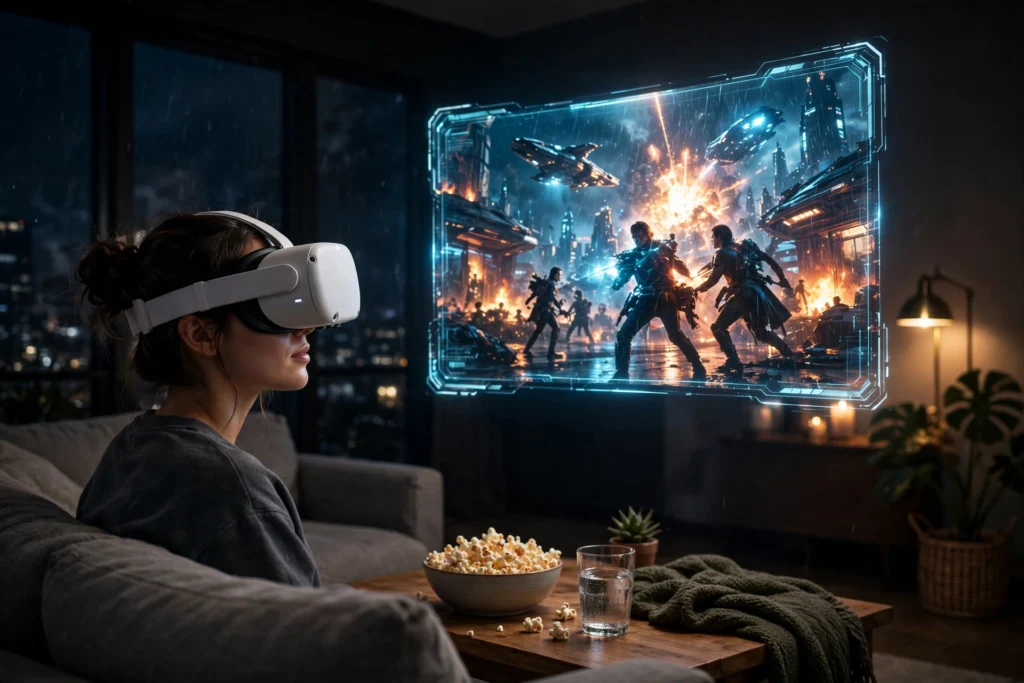
VR cinema turns a virtual reality headset into a private movie theatre. Instead of a television across the room, you put on the headset and a film appears on a large virtual screen inside a digital room. The headset tracks your head, so the screen stays put as you look around, while built-in speakers or headphones add the sound.
Key Takeaways
- VR cinema shows a film on a virtual screen that can feel far larger than a television.
- The headset’s displays and head tracking keep the picture steady as you move.
- Sound, seating, and screen size can be adjusted in most cinema apps.
- Shared virtual cinemas let friends watch the same film from different places.
- A comfortable fit, a charged battery, and regular breaks make long films easier.
What does watching a film in VR actually look like?
When you open a cinema app and put the headset on, you find yourself in a virtual room — perhaps a classic picture house with rows of seats, or a simple dark space with nothing but the screen. Because the screen fills much of your view, it feels closer to sitting in a real cinema than to watching a television at home.
Your body is still on your sofa, of course. But the headset replaces what your eyes see, and that is enough to trick your brain for a while. Most apps also let you change the scene, so if the grand theatre feels too formal you can switch to a cosy living room or a beach at sunset.
How does the headset create such a big screen?
The screen is not a physical object. A VR headset holds a small, high-resolution display in front of each eye, and lenses bend the light so the image looks far away. Your brain combines the two slightly different pictures into one view with depth, so a flat film can appear on a screen several metres across — the same basic idea behind how VR headsets work, used here to draw a very large rectangle in a virtual room.
Resolution matters: early headsets made films look soft, but newer ones pack far more pixels into the same space, so faces and subtitles look sharper. Even so, a VR screen will not match a top-end television for sharpness yet — what it offers instead is size and a sense of place.
What about sound and the feeling of being in a cinema?
A picture alone does not make a cinema; sound does much of the work. Many headsets have small speakers in the head strap, which leave you aware of the room around you. Others work with ordinary headphones, which block out more of the real world and give a fuller sound. Some apps add spatial audio, so a sound seems to come from the direction of the screen or from behind you.
Small details help too: a good cinema app dims the virtual lights when the film starts, just like a real theatre. And comfort matters: adjust the straps until the weight sits evenly, and if you wear glasses, check whether the headset fits over them, because a smeared lens spoils the picture fast.
Can you watch films with friends in VR?
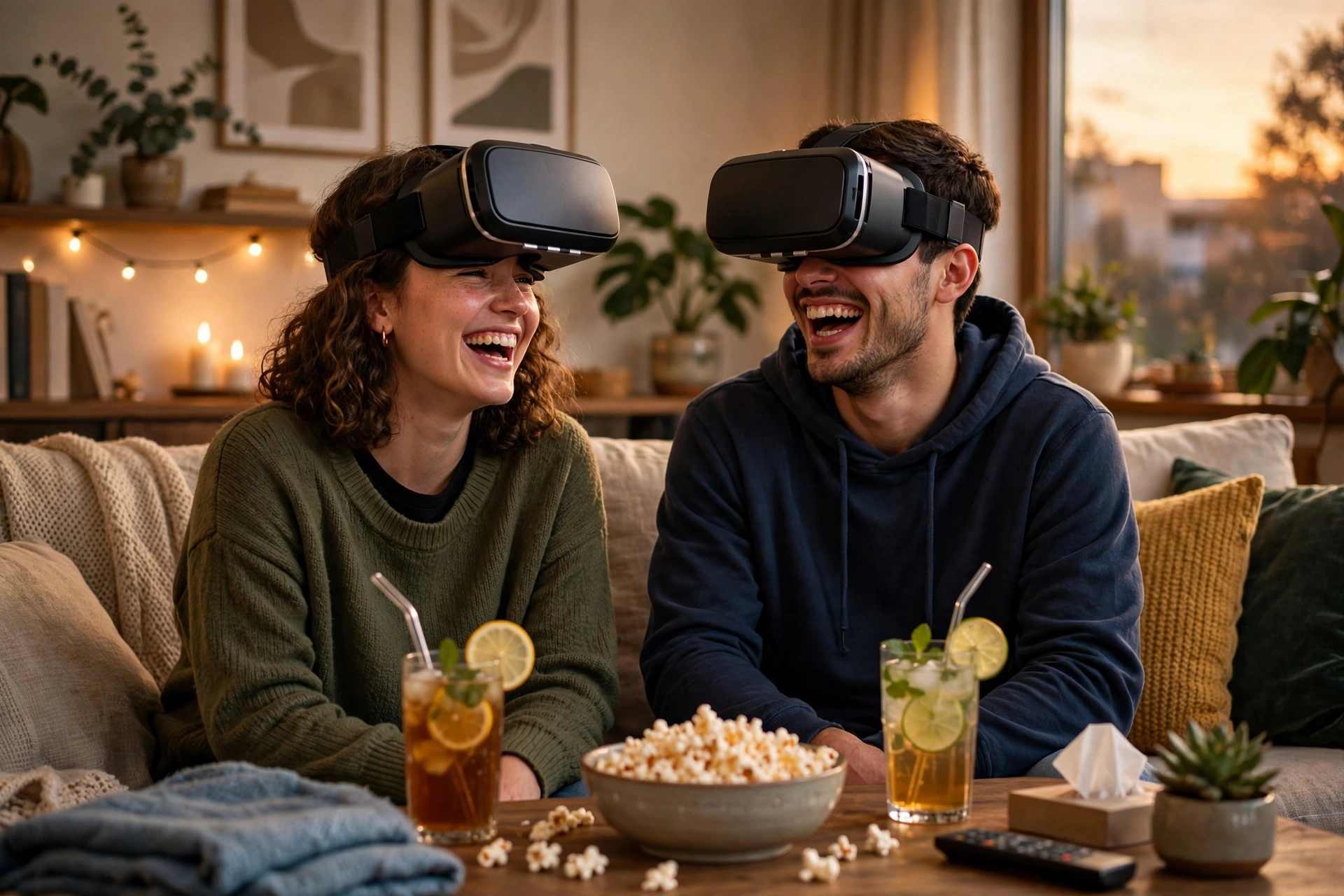
Yes, and for many people this is the best part. Shared cinema apps place you and your friends in the same virtual theatre as avatars, watching the same film on the same screen while you hear each other talk and laugh. One person hosts the room and starts the film, so everyone stays in sync.
These shared rooms work over the internet, so a friend in another city can join as easily as someone in the next room. One check first: if the film comes from a streaming service, each person usually needs their own access, and not every service allows its films to play inside VR.
What do you need to set up a VR film night?
You need less than you might expect: a standalone headset, a charged battery, and a cinema app. Before you start, clear a little space around your seat and set the headset’s safe boundary, the same room-mapping step you use for any VR session, so you do not bump into a table when you reach for a drink.
Controllers come in handy: use them to browse, pause, adjust the volume, and change the screen size, then set them down once the film starts. Charge the headset fully first, because a two-hour film can drain much of the battery, and rest your eyes between films.
What are the downsides of VR cinema?
VR cinema is not for everyone. The headset has weight, and after an hour or two most people feel it on their face and neck. Some viewers feel queasy, especially if the picture stutters or the fit is poor. Others find the picture slightly soft next to a good television, or miss watching with someone beside them in the same room.
Eye strain is another common complaint, usually caused by a poor fit or by watching too long without a break. Cost matters too: a decent headset is not cheap, but if you already own one for games, cinema is one of the cheapest ways to get more from it.
FAQs
Do you need a special headset for VR cinema?
No. Any modern standalone VR headset with a cinema app can show films, and even an older one works well for a first try.
Can you watch your own films in VR?
In most cases, yes. Many cinema apps play video files stored on the headset or streamed from your computer. Films on a streaming service usually play through that service’s app or browser inside the headset, where the service allows it.
Does VR cinema cause motion sickness?
It can, but it is less common than in VR games, since you sit still and the screen stays fixed. If you feel queasy, check the fit, lower the brightness, and take a short break.
How long can you comfortably watch a film in VR?
Most people manage a full two-hour film with a comfortable headset, though beginners may prefer something shorter. Battery life is usually the real limit, at around two hours per charge.
Is VR cinema better than a big TV?
It depends on what you value. A VR screen can feel larger, but a television is sharper, more comfortable for long sessions, and easier to share with people in the same room.
Conclusion
VR cinema is a simple idea done well: a headset, a virtual screen, and a film, with enough sound and atmosphere to make the evening feel special. It will not replace the television for everyone, but as a way to watch a film on a huge screen anywhere, or to share a screening with friends far away, it is already good enough to enjoy. If you own a headset, try a short film first and see whether the big screen wins you over.