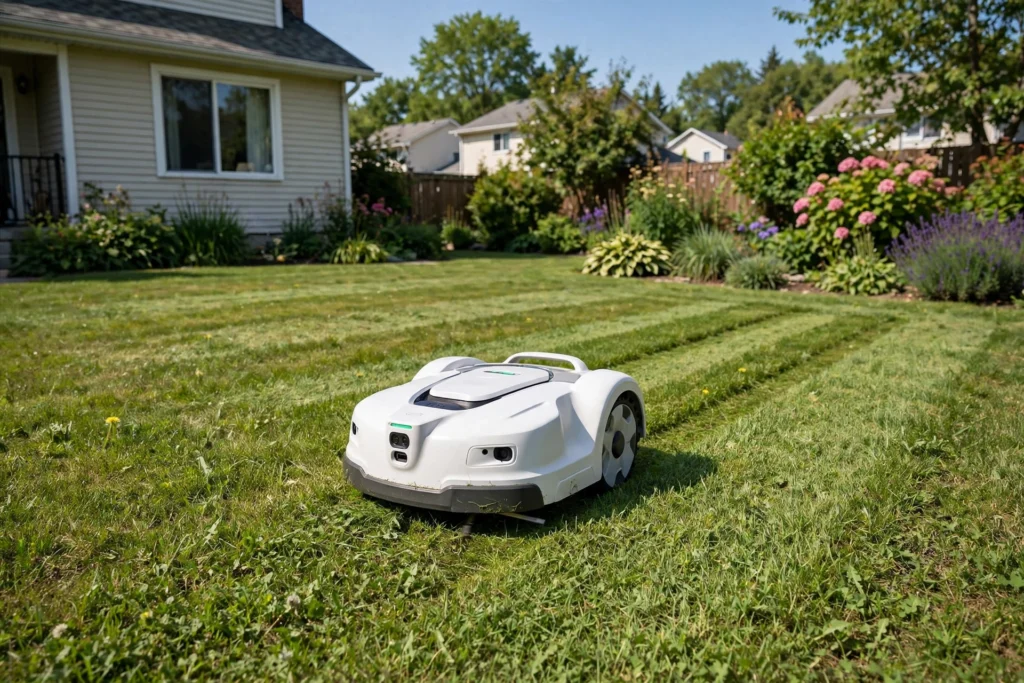
A lawn mowing robot is a small, battery-powered machine that trims your grass a little at a time, on its own. It follows a boundary you set, moves in a pattern across the lawn, cuts with small spinning blades underneath, and returns to its charging dock when its battery runs low or rain is detected.
Key Takeaways
- Robot mowers cut little and often, so clippings stay short and fall back into the lawn.
- Boundaries come from a buried wire, GPS mapping, or camera-based navigation, depending on the model.
- Small blades, lift and tilt sensors, and a low body help keep people, pets, and garden objects safer.
- Most models charge themselves and resume mowing where they left off.
- They work best on fairly even lawns; steep slopes, thick sticks, and loose toys still need a quick tidy first.
How does a lawn mowing robot know where to mow?
It starts with a boundary. Older and simpler models use a thin wire laid around the edge of the lawn and around flower beds, trees, or ponds you want to protect. The mower senses the signal from that wire and turns back when it reaches it. Newer models may use satellite positioning, cameras, or a mix of sensors to build a map of the garden instead, so there is less wire to lay. Either way, the idea is the same: the robot should know what counts as lawn and what does not.
What pattern does it mow in?
Many robot mowers do not mow in neat stripes like a person pushing a mower up and down. Instead, they wander in a random or semi-random pattern, changing direction when they hit the boundary or an obstacle. Over several short sessions, that wandering covers the whole lawn surprisingly evenly. Some higher-end models plan straighter lines once they have mapped the garden, which can look tidier and finish faster.
How does it actually cut the grass?
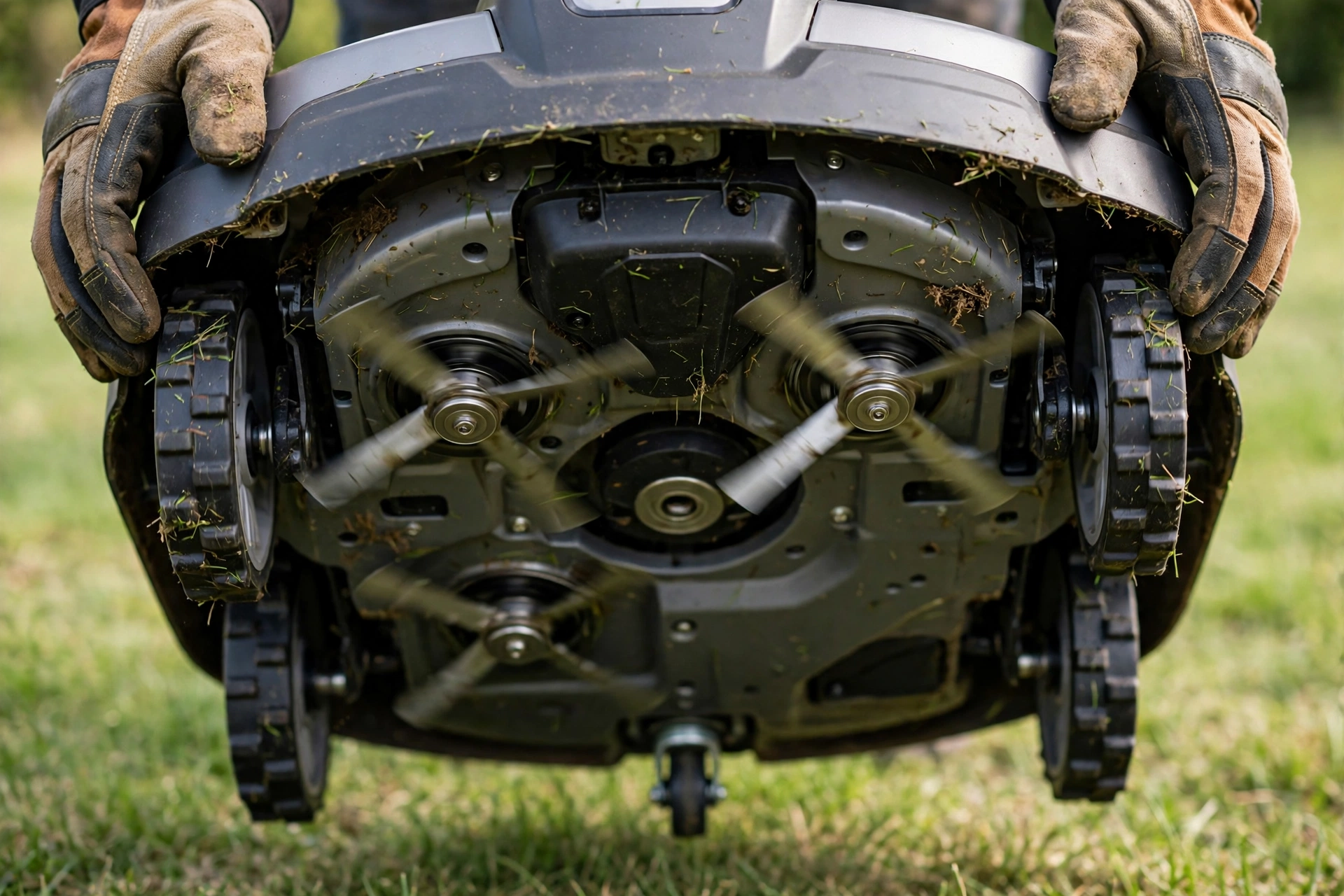
Underneath the mower sits a small cutting disc with short, sharp blades. The blades spin fast and snip only a few millimetres off the tips of the grass each time. That is deliberate. Frequent, light cuts are easier on the grass than one heavy cut, and the tiny clippings are left where they fall. They break down quickly and return nutrients to the soil, so there is usually no bag to empty and no pile of clippings to clear away.
How does it stay safe around children, pets, and obstacles?
Safety comes from several layers working together. Bump sensors tell the mower it has touched something, so it stops and turns away. Lift and tilt sensors stop the blades quickly if the mower is picked up or tips over. Many models also slow down near edges, pause in heavy rain, and will not start if the blades are blocked.
How does it charge itself?
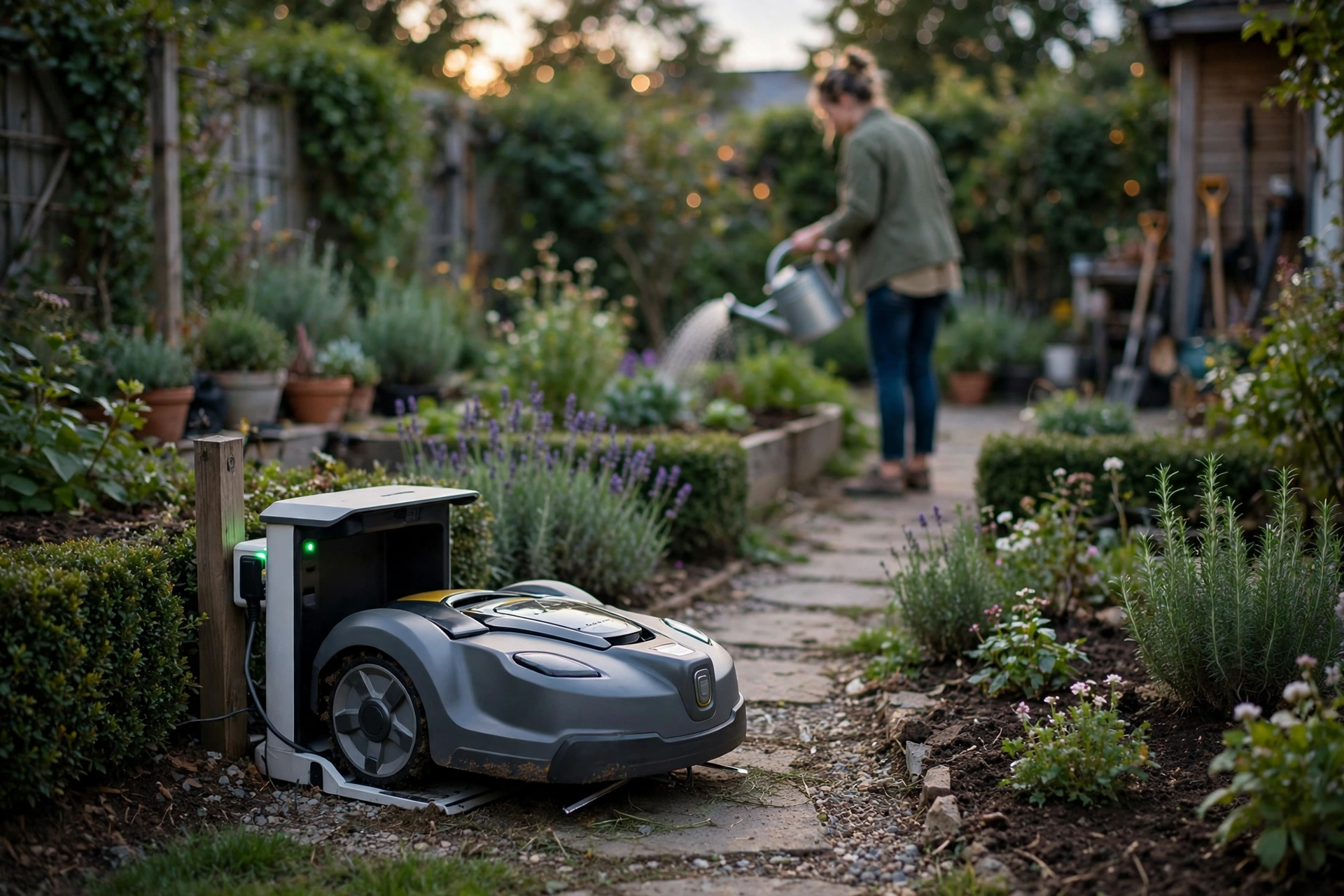
When the battery gets low, the mower follows the boundary wire — or its saved map — back to a small charging dock, usually tucked at the edge of the lawn near a power outlet. It parks itself on the dock, charges, and then heads out again if its schedule still has time left. Rain sensors on many models send the mower home early, and it waits out the shower before resuming.
What kinds of lawns suit a robot mower best?
Flat to gently sloping lawns with clear edges suit robot mowers best. Very steep slopes, deep ruts, long wet grass, and lawns full of low obstacles will test any model. Larger gardens may need a model rated for a bigger area, or a mower that can handle more than one zone. Narrow side passages can also be tricky, since the mower needs enough room to turn around.
What maintenance does it need?
Robot mowers need less maintenance than petrol mowers, but they are not maintenance-free. Blades need replacing, the underside needs brushing clean after wet mowing, and wheels and sensors should be checked for packed mud or grass. The battery will slowly lose capacity over a few years, as rechargeable batteries do, and will eventually need replacing.
Winter care matters too. In cold climates, many owners store the mower and its dock indoors during the off-season, clean it first, and charge the battery as the manual suggests. A ten-minute clean now and then keeps the sensors working and the cut even — small jobs, but they are the difference between a mower that lasts and one that keeps getting stuck.
FAQs
How long does a robot mower take to mow a lawn?
It depends on lawn size, but expect several short sessions rather than one quick pass. Robot mowers cut a little at a time, so they may run for a few hours across a week to keep the whole lawn even.
Can a robot mower work in the rain?
Many models can, but most are designed to pause or return to the dock in heavy rain. Wet grass clumps, sticks to the underside, and cuts less cleanly, so a dry-weather schedule usually gives a better result.
Do I still need to edge and trim?
Yes, usually. Robot mowers can struggle right up against walls, fences, and tight corners. A quick pass with a trimmer every week or two keeps the edges looking tidy.
Will it damage flower beds or garden furniture?
Not if the boundary is set well. Wire boundaries and mapped no-go zones keep it out of beds, and bump sensors help it turn away from furniture. Loose items left on the lawn are still worth picking up first.
Is a robot mower safe for pets?
Generally, yes, with sensible precautions. Lift and tilt sensors stop the blades if the mower is disturbed, and most pets soon avoid it. Supervise the first runs, keep small animals’ outdoor time separate while it mows if you are unsure, and check the manual for your model’s safety guidance.
Conclusion
A lawn mowing robot will not replace every garden tool, but it can quietly take the weekly mow off your list. Set a clear boundary, choose a model suited to your lawn’s size and slope, and keep the blades and sensors clean. Then let it cut little and often while you get on with the rest of the garden.
Practical next step: walk your lawn this weekend, note its slopes, narrow passages, and no-go areas, and measure its rough size. Those notes will make choosing — and setting up — a robot mower far easier, whether you buy this season or next. If you enjoy how home robots take over routine chores, the same logic shows up in warehouse robots, which handle repetitive movement so people can focus on work that needs judgement.
Related reading: How Do Robot Vacuums Work?, How Do Robot Arms Work?, and How Do Window Cleaning Robots Work?.
Further reading: Britannica on robotics and Wikipedia on robotic lawn mowers.