
Noise-cancelling headphones do not block sound by magic. They listen to the noise around you, then play a carefully matched sound that cancels much of it out before it reaches your ears. The result is not total silence, but a much quieter background — especially for steady sounds like an aeroplane engine, a fan, or traffic hum.
That trick, called active noise cancellation, works best on low, steady noise. It is less effective on sudden, sharp sounds such as a door slamming or someone speaking right next to you. That is why these headphones feel wonderful on a long flight, yet you can still hear an announcement if you listen for it.
Key Takeaways
- Active noise cancellation uses tiny microphones to pick up outside sound, then creates an opposite sound wave that reduces it.
- It works best on steady, low-frequency noise such as engines and fans, and less well on sudden or high-pitched sounds.
- The earcups themselves also block some sound passively, just like ear defenders or a good pair of earmuffs.
- Battery life, fit, and the quality of the microphones all affect how well cancellation works in real life.
- You can usually turn cancellation on or off, and many models offer a transparency mode that lets outside sound back in when you need it.
How does active noise cancellation actually work?
It starts with sound waves. Every sound you hear is a wave of pressure moving through the air. When two waves meet, they can add together or cancel each other out, depending on how they line up. If a peak meets a trough of the same size, the two flatten each other. Engineers call this destructive interference, but you can think of it as one wave filling in the gaps of the other.
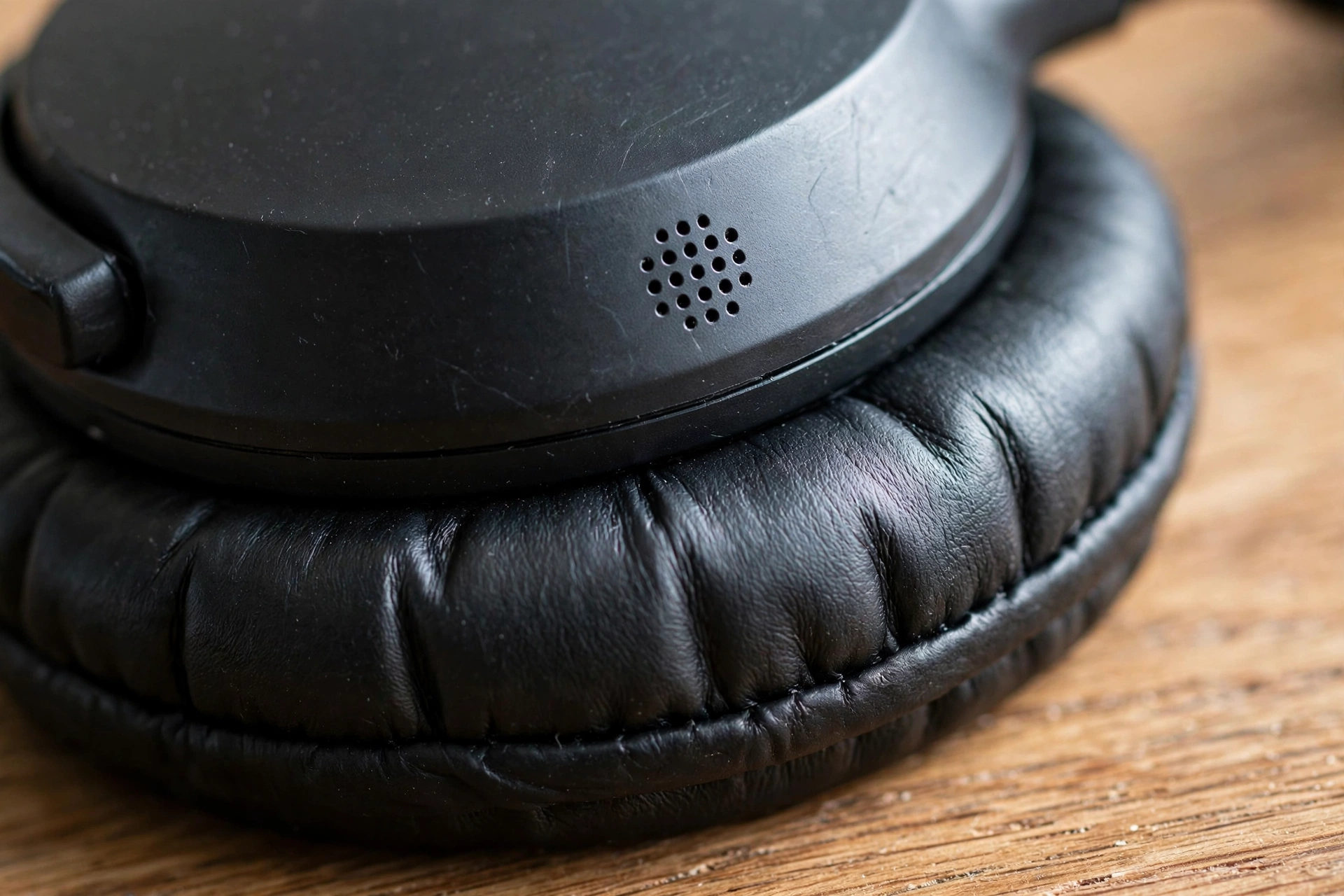
Inside a noise-cancelling headphone, small microphones on the outside of the earcup listen constantly. A tiny processor measures that incoming noise in real time, then works out the exact opposite wave needed to cancel it. A speaker inside the earcup plays that opposite wave, along with your music or podcast, so the two noise waves largely cancel before they reach your eardrum.
All of this happens in a fraction of a second, thousands of times per second. That speed matters. If the opposite wave arrives too late, it will not line up with the original noise, and cancellation will fail. This is one reason steady sounds are easier to cancel than sudden ones: the processor can predict what comes next.
What is the difference between active and passive noise cancellation?
Passive noise cancellation is not electronic at all. It is simply the physical barrier of the earcup. Thick padding, a snug fit around your ears, and closed-back cups all stop some sound from getting through, much like putting your hands over your ears. Every over-ear headphone does this to some extent, whether or not it has active cancellation.
Active cancellation builds on that. It handles the low-frequency rumble that padding alone struggles with — the kind of drone you feel as much as hear on a bus or in an office with air conditioning running. Together, the two layers give you a quieter result than either could on its own.
That also explains why fit matters so much. If the earcup does not seal well around your ear, outside sound leaks in and the electronics have to work harder. Glasses arms, long hair, or a loose headband can all reduce the seal a little, and you may notice the difference straight away.
Why do they work better on aeroplanes than in a busy café?
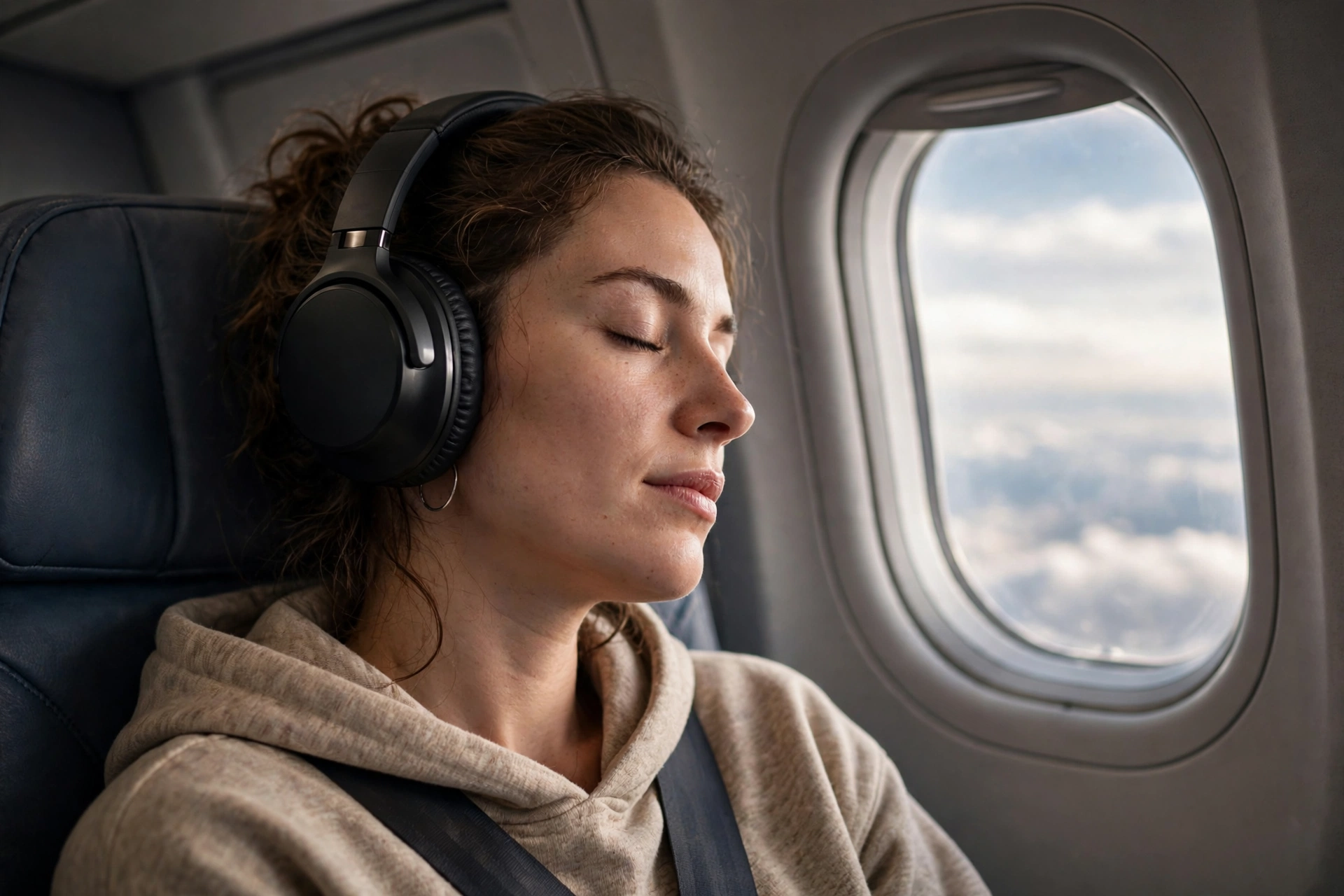
An aeroplane cabin is close to ideal for noise cancellation. Engine noise is steady, low, and predictable, so the processor can track it and cancel a large part of it. Fans, washing machines, and road hum behave in a similar way.
A café is harder. Voices rise and fall, cups clatter, and music changes from moment to moment. Those sounds are irregular and often higher pitched, which makes them harder to predict and cancel. The headphones can still soften the background — the hiss of an espresso machine, for example — but they will not erase a conversation at the next table. If you need to concentrate in a café, pairing the headphones with music or brown noise often helps more than cancellation alone.
What do feedforward, feedback, and hybrid systems mean?
You may see these terms in product descriptions, and they simply describe where the microphones sit. In a feedforward system, microphones sit on the outside of the earcup and listen to noise before it reaches your ear. This reacts quickly, but it cannot check its own work.
In a feedback system, a microphone sits inside the earcup, near your ear, and listens to what actually gets through. The processor can then correct its output, which helps with lower frequencies, but the correction takes a fraction longer.
Most good modern headphones use a hybrid system: microphones both outside and inside the earcup. The outside microphone reacts fast, the inside microphone checks the result, and the processor combines both signals. Hybrid designs tend to cancel more noise across a wider range of sounds, which is why they are common in mid-range and premium models.
Do noise-cancelling headphones affect sound quality or hearing?
They should not damage your hearing on their own, and in some ways they can help. Because background noise is lower, many people listen at a lower volume than they would with ordinary headphones. That is a real benefit on a noisy commute, where the temptation is to turn the volume up to drown out the train.
Sound quality depends on the headphone as a whole, not just its cancellation. The drivers, the tuning, and the fit all shape how music sounds. Some listeners notice a faint hiss when cancellation is on and no music is playing; that is usually the electronics working, and it tends to disappear once music starts. If you hear a loud hiss, buzzing, or pressure that feels uncomfortable, try a different fit, turn cancellation off and on again, or check whether a firmware update is available.
One common feeling deserves a mention: some people describe a slight pressure sensation, almost like being in a lift, when cancellation is switched on. This is not actual air pressure changing in your ear. It is your brain reacting to the sudden absence of low-frequency background sound it had grown used to. Most people stop noticing it after a few uses, but if it bothers you, a transparency mode or a lower cancellation setting can ease the transition.
What about transparency mode and battery life?
Transparency mode, sometimes called ambient or passthrough mode, deliberately lets outside sound back in. The outside microphones pick up the world around you and play it through the speakers, so you can hear traffic, a colleague, or a station announcement without taking the headphones off. It is a safety feature as much as a convenience — especially useful when walking near roads or cycling, where blocking all sound would be risky.
Battery life is the trade-off. Active cancellation needs power, so headphones with cancellation on usually last fewer hours than with it off. The exact difference varies by model, and Bluetooth, volume, and temperature all play a part too. For most travellers, the quieter journey is worth the shorter battery life, and a quick charge over a coffee break often adds several hours. That is also why many models keep working as wired headphones when the battery runs flat, though cancellation itself stops.
How do you choose a pair that suits you?
Start with how you will actually use them. For flights and commuting, strong cancellation on low-frequency noise and a comfortable fit for long wear matter most. For office work, clear transparency mode and a good microphone for calls may matter more than the last few percent of cancellation.
Try the fit before you buy if you can. Over-ear models usually cancel more and feel more comfortable for long sessions, while in-ear models are smaller, lighter, and easier to carry. Neither is automatically better; the pair you will actually wear is the right one.
Check the practical details too: how long the battery lasts with cancellation on, whether the headphones fold flat, whether they charge over USB-C, and whether you can replace the ear cushions when they wear out. Those small things decide whether a pair stays in daily use or ends up in a drawer. And remember that Bluetooth pairing, which most of these headphones rely on, is a separate feature from cancellation — a pair can have excellent Bluetooth and modest cancellation, or the other way round.
Frequently Asked Questions
Do noise-cancelling headphones block all sound?
No. They reduce steady, low-frequency noise a great deal and soften much of the rest, but they do not create total silence. Sudden sounds, voices nearby, and high-pitched noises will still come through to some degree.
Can I use noise-cancelling headphones without music?
Yes. Most models let you switch cancellation on with no audio playing, which many people use for reading, working, or sleeping on a plane. You will still hear some sound, and the battery will drain while cancellation is active.
Are noise-cancelling headphones safe for children?
They are generally used by older children and teenagers, but fit is the main issue: adult-sized earcups may not seal well on smaller heads, which reduces cancellation. Keep volumes moderate, supervise younger children, and follow the manufacturer’s age guidance for the specific model.
Do they work on phone calls?
The same microphones that listen for noise also help with calls, and many models use extra processing to separate your voice from background noise. Call quality still depends on the microphone design and your surroundings, so a quiet room will always beat a windy street.
Is it worth paying more for hybrid noise cancellation?
Often, yes, if you travel a lot or work in noisy places. Hybrid systems usually cancel a wider range of sounds than feedforward-only designs. For occasional use at home, a simpler model may be perfectly adequate — test the difference in a shop if you can.
Conclusion
Noise-cancelling headphones work by listening to the world, then playing back the opposite of what they hear. That simple idea, repeated thousands of times a second, turns engine drone and office hum into something far easier to ignore. They will not silence everything, and they work best when the fit is good and the noise is steady, but for travellers, commuters, and anyone who works in a noisy room, they are one of the most practical everyday gadgets around.
If you are thinking of buying a pair, start with a practical next step: try two or three models in a shop, with cancellation on and no music playing, and walk past a noisy display or a busy street entrance. The pair that feels comfortable after ten minutes, and leaves the background noticeably quieter without an uncomfortable pressure feeling, is the one worth taking home.