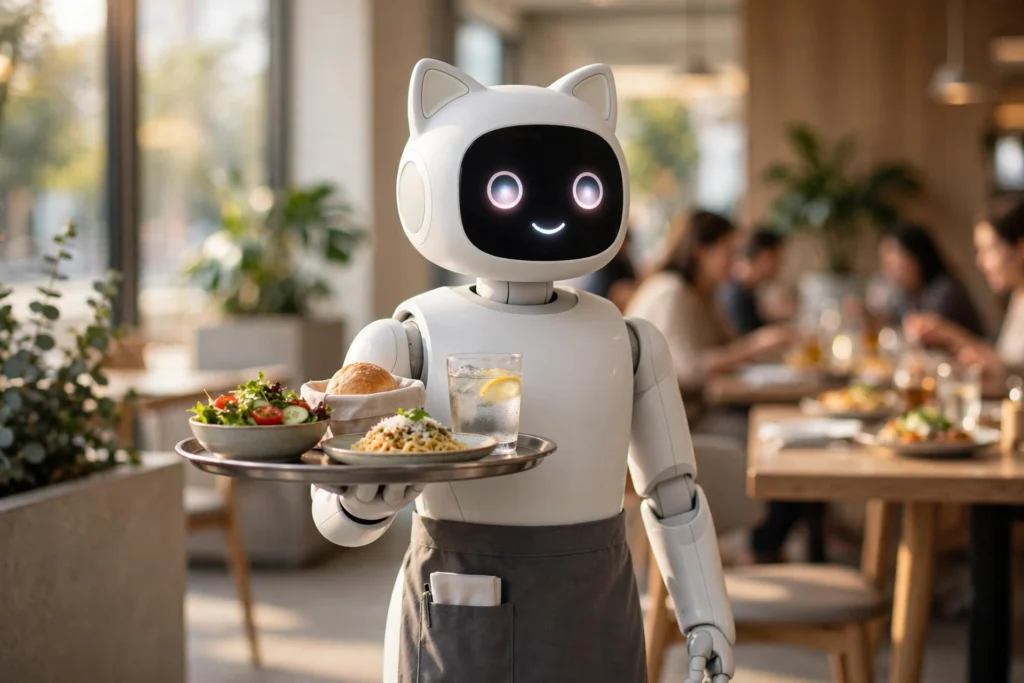
Robot waiters carry food from the kitchen to your table without a human pushing them. They follow a map of the dining room built with lasers and cameras, steer around chairs and people, and keep their trays level. When the food is collected, weight sensors tell the robot the tray is empty, and it rolls back for the next order.
Key Takeaways
- A robot waiter is a self-driving robot that carries food, clears dishes, and sometimes greets guests.
- It navigates with a stored map, LiDAR, cameras, and depth sensors.
- Tray sensors weigh the load and tell the robot when a dish has been picked up.
- They suit busy, open dining rooms and work alongside staff, not instead of them.
- They cannot climb stairs, handle spillages, or deal with complaints.
What is a robot waiter?
A robot waiter is a machine built to do the running around in a restaurant. It carries plates from the kitchen to the table, brings empty dishes back, and in some restaurants greets guests at the door. Most look like a tall trolley on wheels, with trays stacked on top and a screen for a face.
The best-known model is Pudu’s BellaBot, a cat-faced robot with four trays seen in chains and food courts around the world. Robot waiters belong to a wider family of service robots, machines designed to work around people, as explained in What Is Robotics? The outdoor version of the same idea carries parcels to front doors: How Do Delivery Robots Work?
How does a robot waiter find its way?
A dining room is a hard place to drive through: tables move, chairs slide out, and servers cross with loaded trays. A robot waiter copes because it never starts from scratch. Before its first shift, it is driven around the restaurant once to build a detailed map of the floor.
When a job comes in, the robot plans the shortest sensible route, then follows it while its sensors watch for changes. LiDAR, a spinning laser that measures distances, builds a live picture of what is nearby, and depth cameras spot chair legs and bags on the floor. Together they let the robot slow down, stop, or edge around an obstacle, as explained in How Do Robots Avoid Obstacles?
How does it keep the soup in the bowl?
Carrying food is not just about reaching the table. The robot has to arrive with the meal as the kitchen sent it: no sloshing, no sliding plates.
The first trick is smooth movement. It speeds up gently, turns slowly, and brakes in good time, so the trays barely tilt. Many models add suspension that soaks up bumps.
The second trick is knowing what it carries. Weight sensors under each tray measure the load, so the robot knows when a plate has been lifted off, and heads back to the kitchen once every tray is empty.
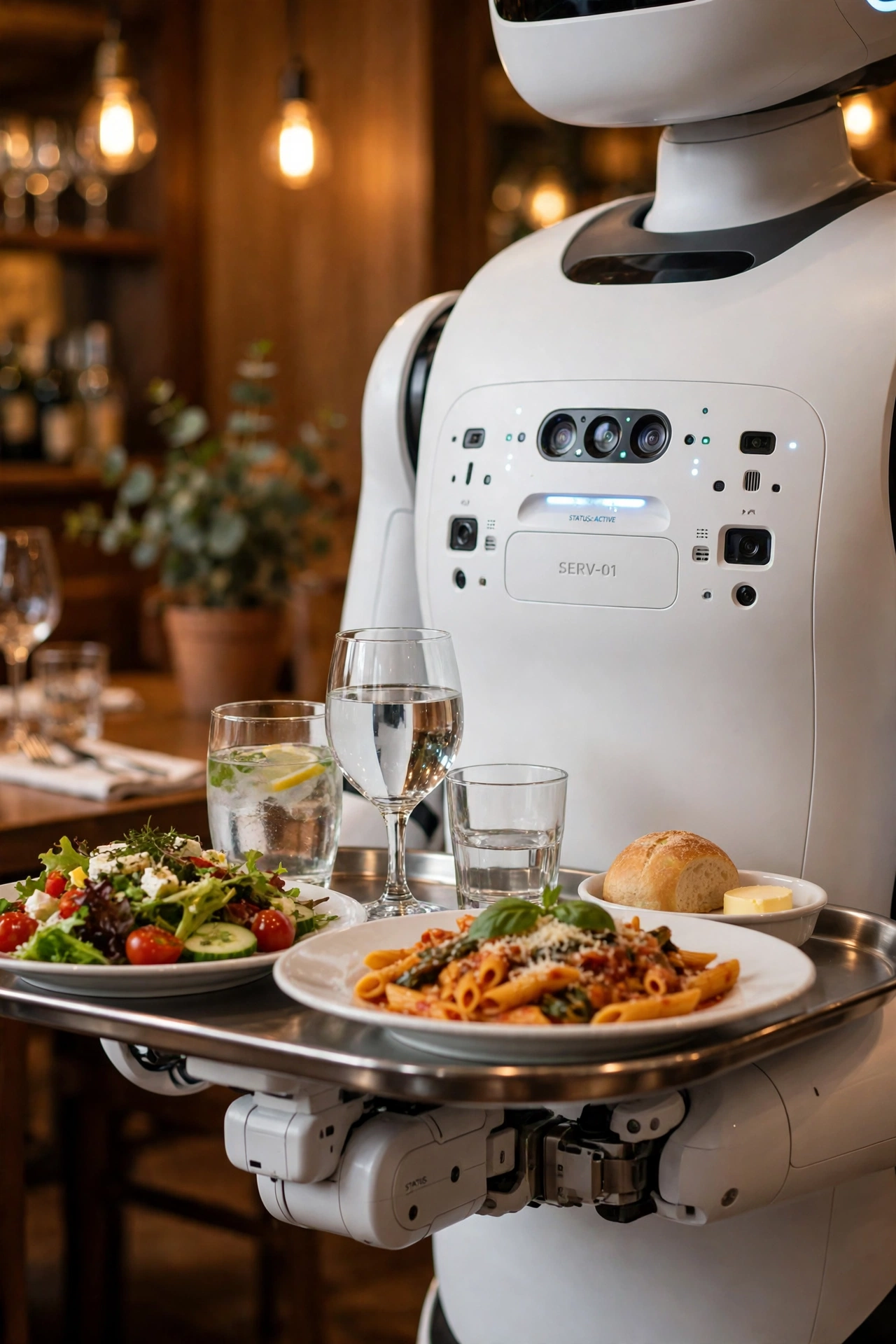
A bowl of soup goes to table 12
Follow one order: a bowl of soup for table 12, a corner table near the window. The cook places the bowl on the top tray, a member of staff taps table 12, and the robot sets off.
Halfway across the room, a server steps out carrying drinks. The robot’s LiDAR spots the movement and it waits for a gap. A chair has been pulled out further than usual, so the robot edges wider around it, the suspension keeping the soup level.
At table 12 it stops, announces the delivery, and a diner lifts the bowl off. The weight sensor notices, the screen says thank you, and the robot glides back to the kitchen.
How does a robot waiter take orders?
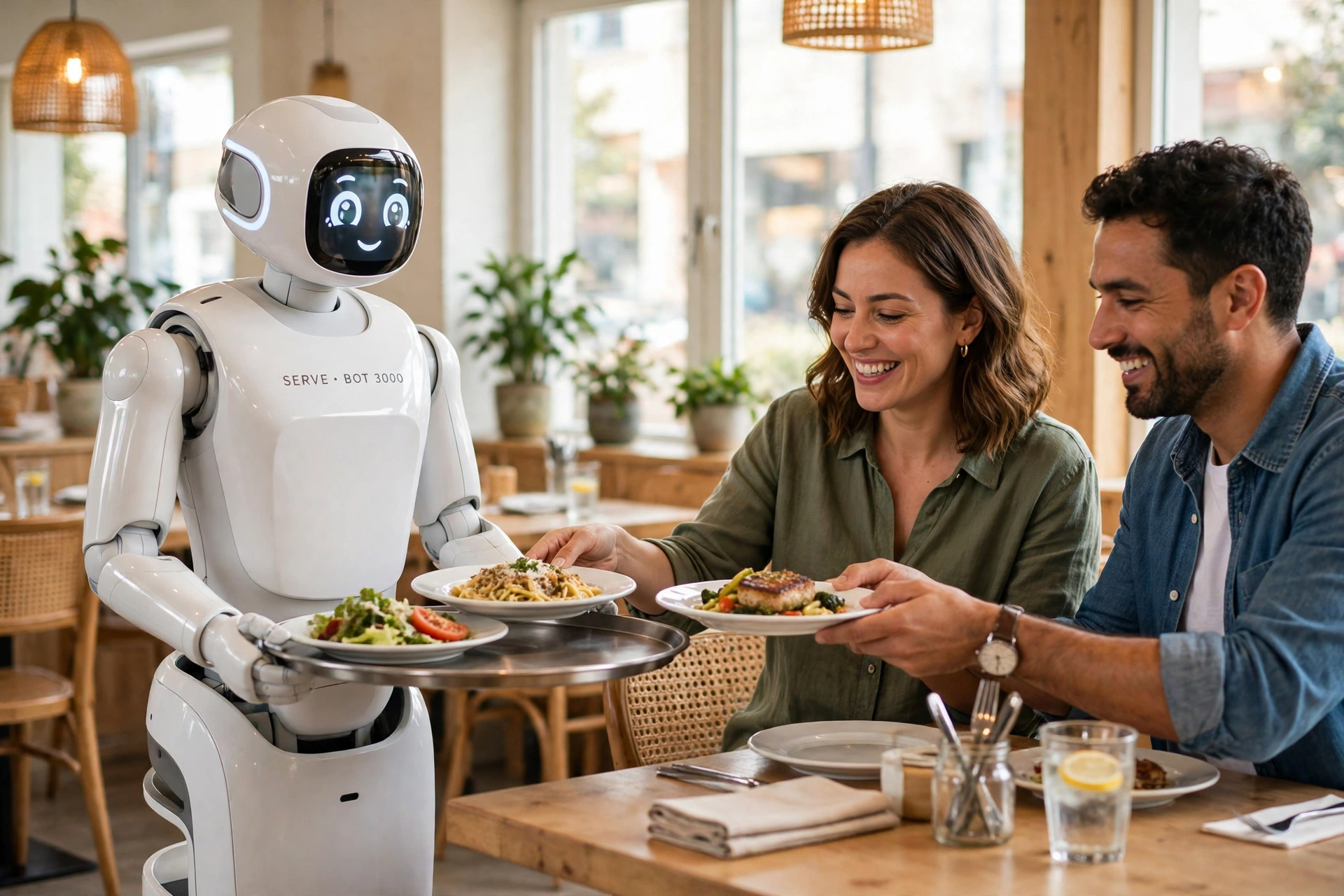
Not every robot waiter takes orders, but many do more than carry plates. The usual setup is a touchscreen on the robot’s chest, where diners can browse a menu or call a server. Some speak, greeting guests and announcing deliveries.
Behind the scenes, the robot is usually linked to the till and kitchen screens. When an order is ready, the kitchen sends it to the right table, and if the room is busy, several robots share the work. What it cannot do is hold a real conversation: it cannot hear a complicated allergy question or calm an unhappy customer. The robot carries; the people talk.
What kinds of robot waiters are there?
Most fall into three groups, and a large restaurant might use more than one.
| Type | Main job | Where it shines |
|---|---|---|
| Food-delivery robot | Carries trays from kitchen to table | Busy dining rooms and buffets |
| Greeting robot | Welcomes guests and shows them to a table | Hotel restaurants and large entrances |
| Dish-return robot | Collects used plates and carries them back | Fast-turnover cafes and food courts |
The food-delivery type is the one most people meet. Greeting robots work near the door, and dish-return robots gather dirty plates so staff can turn tables over faster. Coffee has its own specialist: How Do Robot Baristas Work?
Where do robot waiters work best?
Robot waiters suit places with space, flat floors, and a steady flow of orders: big dining rooms, hotel restaurants, buffets, and hot-pot restaurants. The distances are long and the same trips repeat all evening, so a robot that never tires earns its keep.
Small restaurants are a different story. Tightly packed tables leave little room to pass, and few covers may not justify the cost. The battery is rarely the problem: many models run for a full shift, often 10 hours or more.
What can a robot waiter not do?
They cannot climb stairs, so a restaurant with steps between kitchen and dining room needs a lift or a ramp. They cannot clean up a spillage or reach a table blocked by a crowd.
They also struggle with the unexpected. A fallen chair or a guest who steps in front at the last second brings the robot to a stop. That is by design: stopping is safer than guessing.
And they cannot replace the human side of eating out. A robot can bring the food, but it cannot notice an unhappy guest. The best restaurants treat them as extra hands, not a replacement for people.
FAQs
Will robot waiters replace human waiters?
Not in any restaurant worth eating in. Robot waiters take over the carrying, the most tiring part of the job. Humans still greet guests and handle problems.
How much can a robot waiter carry?
It depends on the model, but many carry several trays at once, and some manage as much as 40 kg across four trays.
What happens if a robot waiter gets stuck or blocked?
It stops and waits. If the way stays blocked, it tries a different route, then calls for help on its screen. It will not push through a crowd.
Can robot waiters take my order?
Some can. Many have a touchscreen for browsing the menu. But most restaurants still take orders the usual way and use the robot only for carrying.
Do robot waiters work in small restaurants?
They can, but they work best where there is room to move. A small dining room leaves little space to pass, and the cost makes more sense when the robot is busy.
Conclusion
A robot waiter is a simple idea done well: a map of the room, sensors that watch for trouble, smooth movement, and trays that know when they are empty.
Next time one glides past your table, watch how it slows for a passing server and waits while someone lifts a plate off its tray. That careful, unhurried way of moving is the whole trick.