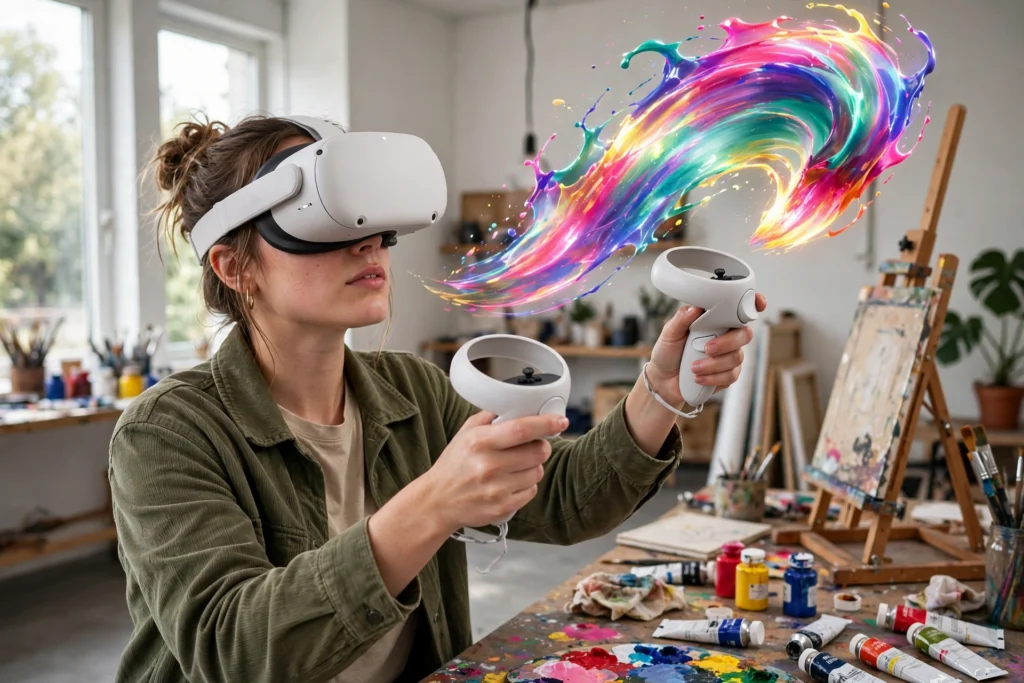
VR art lessons put students inside a virtual studio where they can paint in mid-air, shape digital clay, and walk up to famous paintings without leaving the classroom. A headset tracks their head and hands, controllers act as brushes and sculpting tools, and the teacher sets the task, just like a normal art class.
Key Takeaways
- VR art lessons replace the flat canvas with a 3D space, so students paint, draw, and sculpt all around themselves.
- A headset and two hand controllers are the core kit.
- Painting in VR feels closest to real painting; sculpting takes practice, with no real clay to push against.
- Virtual galleries let students study famous artworks up close, including brushwork a textbook photo hides.
- VR partners traditional art lessons well, but cannot teach the feel of real paint, paper, or clay.
What happens in a VR art lesson?
A typical lesson starts like any art lesson: the teacher explains the task, shows an example, and sets a time limit. Then each student puts on a headset and steps into a virtual studio or gallery, where their brushstrokes appear in the air around them. After a short warm-up, the class moves on to the main task — a portrait, a small sculpture, or a famous artwork recreated — while the teacher watches on a screen and gives feedback.
Because nothing is used up, students experiment more freely than they might with expensive paint or clay. A mistake is undone with a button press, colours swap in seconds, and finished work can be saved or printed.
How does painting in VR actually work?
Each controller becomes a brush. Squeeze the trigger to lay down paint, move your arm to draw a line, and step sideways to paint behind you. The paint hangs in the air where you left it, so a stroke can be walked around and viewed from the side, like a sculpture made of colour. Apps offer brush size, colour, and opacity, plus playful extras such as glowing light.
The honest difference from real painting is the feel. There is no drag of bristles on canvas and no wet paint to blend with a finger. Controllers can vibrate slightly to suggest contact, but they cannot copy the resistance of a loaded brush. So good teachers treat VR as a sketchbook for ideas, and keep real painting alongside it for the hands-on craft. The hand controllers are the key to all of this, and the headset relies on the tracking explained in our guide to how VR headsets work.
Can you really sculpt in virtual reality?
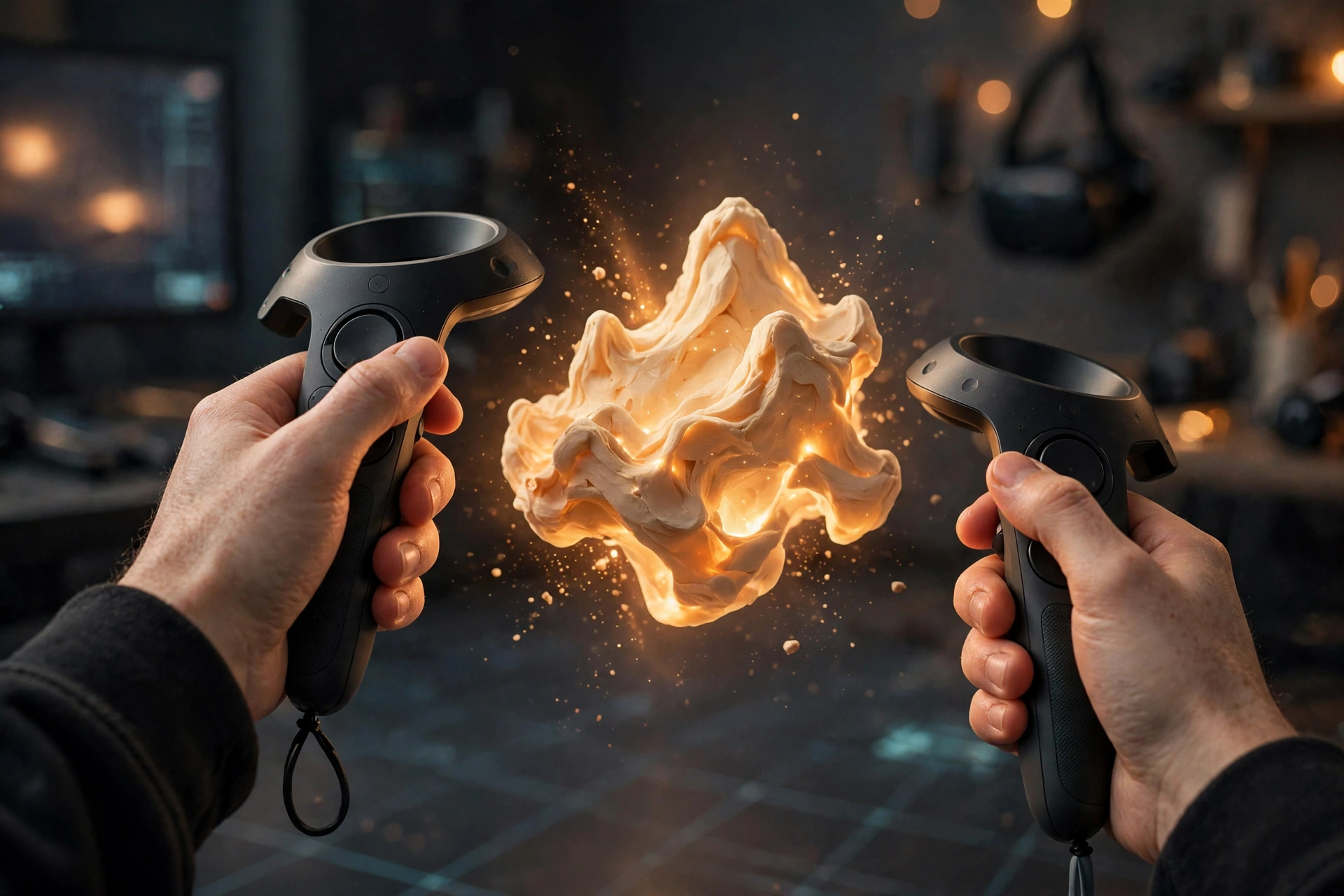
Yes, and for many students it is the most surprising part of the lesson. The controllers become hands that push, pull, smooth, and pinch a lump of virtual clay. The student walks around the finished shape to check it from every side, and undo is instant.
But real sculpting teaches how clay resists, dries, and cracks, while virtual clay has no weight and never breaks — so students can build shapes that would collapse in real life. A good lesson pairs the virtual model with a small real-clay exercise.
What about looking at famous artworks in VR?
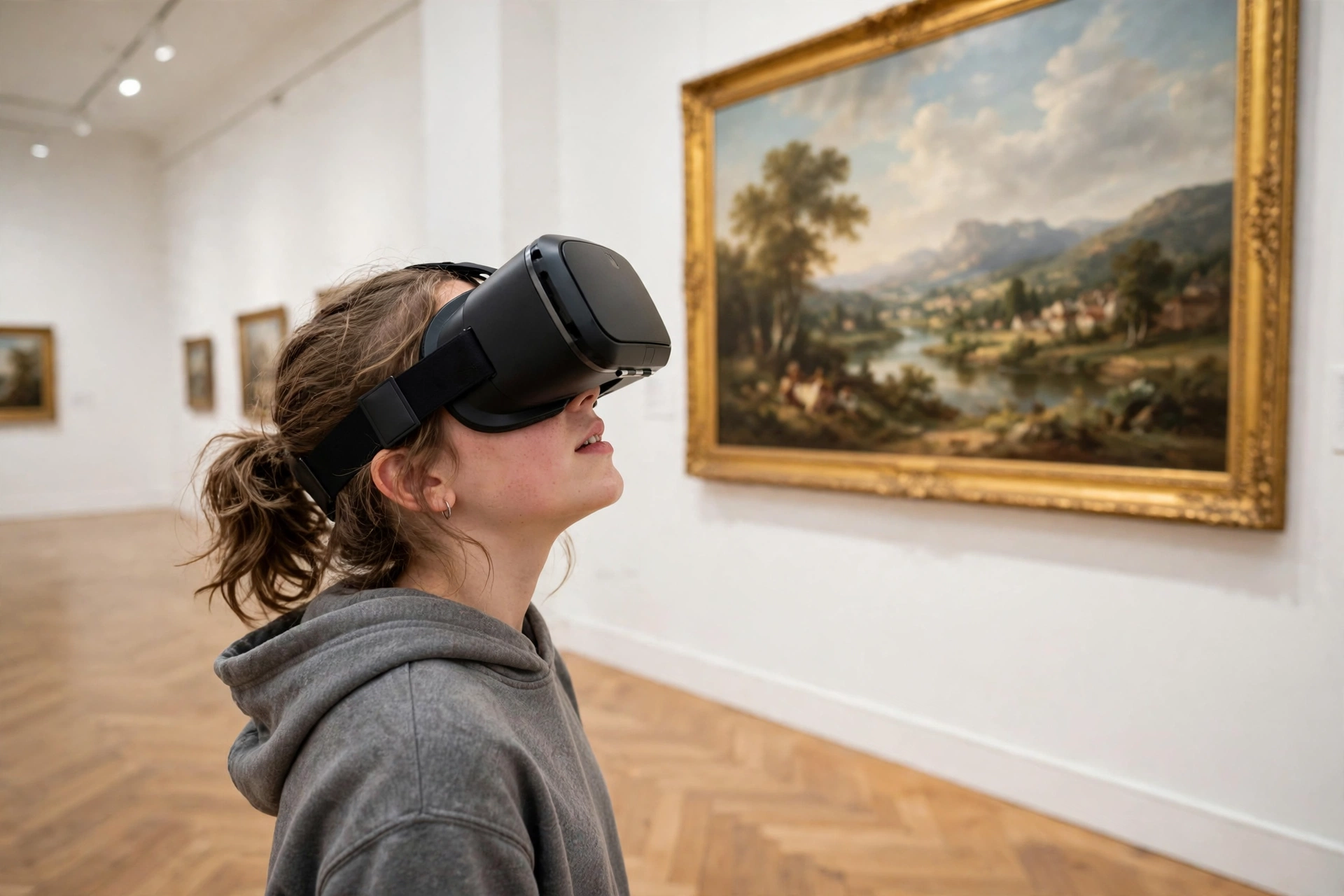
This is where VR quietly does something a textbook cannot. In a virtual gallery, a student can stand in front of a famous painting, lean in close to study individual brushstrokes, and step back to take in the whole composition. Google Arts & Culture offers virtual tours and high-resolution artworks that teachers often pair with these lessons, and Britannica’s guide to virtual reality explains the technology behind the experience.
A virtual copy is still a copy: it cannot match the true scale and texture of the real painting. But for a school far from any major museum, a life-size virtual painting beats a small printed photo by a long way. A good follow-up is to recreate a detail from a painting studied in VR and compare the two.
What equipment does a VR art lesson need?
The core kit is simple: a standalone VR headset, two hand controllers, and enough clear floor space for each student to move their arms safely. Most schools use standalone headsets because they need no computer or cables. A lesson also needs art software — some apps focus on painting, some on sculpting, some on gallery visits — and a large screen so the teacher can show one student’s view to the class.
Safety matters. Students need room to swing their arms without hitting a neighbour, headsets should be wiped between users, and sessions should run 15 to 30 minutes with breaks. Anyone who feels dizzy should stop straight away. One headset can serve a whole class if lessons rotate students through in small groups, with those waiting watching the projected view.
What are the limits of learning art in VR?
VR art lessons are at their best as a complement, not a replacement. The biggest gap is touch: no headset can reproduce the drag of a brush, the cold of wet clay, or the grain of paper. Students who only make art in VR can end up with great ideas and weak hands, so the strongest programmes mix VR with real materials.
Headsets need charging, software needs updating, and a class set is a real budget commitment. Some students get eye strain or feel unwell in VR, so a good teacher keeps an alternative task ready. And a VR painting exists only as a file — printing the best work gives the class something to display. For the wider picture, see how virtual reality is used beyond gaming and how VR works in education.
Frequently Asked Questions
Do you need to be good at drawing to enjoy VR art lessons?
No. The undo button and freedom to experiment make VR art easier to start than a blank sheet of expensive paper.
How long should a VR art lesson last?
A session usually runs 15 to 30 minutes inside the headset, with the rest of the lesson spent planning and reviewing work.
Can VR art be printed or shared?
Yes. Most apps can save a flat image or short video of the finished piece for printing or display, and some sculpting apps export a 3D file for printing.
Is VR art safe for children?
For most children it is, with sensible rules: short sessions, a clear play space, a fitted headset, and an adult watching. Any child who feels unwell should stop immediately.
Will VR replace traditional art lessons?
Not in any serious programme. VR sparks ideas and teaches observation; traditional lessons teach how real materials behave. The two work best side by side.
Conclusion
VR art lessons give students a studio without walls: paint that hangs in the air, clay that never runs out, and galleries they could never visit in person. They work best when a teacher plans around those strengths while keeping real materials in the lesson.
To try it, start small: book one headset, pick a single painting app, and run a 20-minute taster where students recreate a simple landscape. Save the best work and print it for the classroom wall.