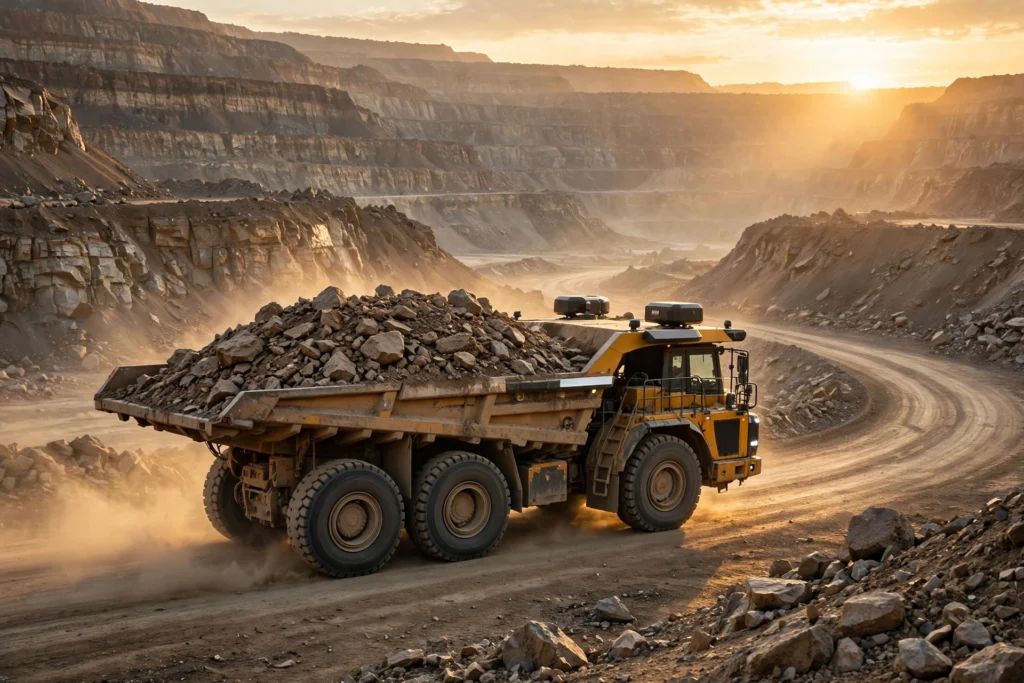
Mining robots work in places that are hot, dusty, deep, and dangerous — and that is exactly why they are there. They dig, drill, haul, and inspect so fewer people have to work at the rock face. In short, mining robots work by combining tough vehicles with sensors, positioning, and software that follows a plan: a truck knows its route, a drill knows its pattern, and a control room watches both.
Key Takeaways
- Mining robots cover several jobs: hauling rock, drilling blast holes, loading broken ore, and inspecting tunnels.
- Open-pit robots follow mapped routes using satellite positioning, while underground robots rely on lasers, cameras, and beacons because satellite signals cannot reach them.
- Sensors for gas, dust, heat, and ground movement help robots spot danger before a person would.
- Remote operation keeps people out of the most hazardous spots, but humans still plan, supervise, and take over when conditions change.
- Robots suit repetitive, well-defined work in known ground. Unstable rock, flooded tunnels, and unexpected failures still need human judgement.
What does a mining robot actually do?
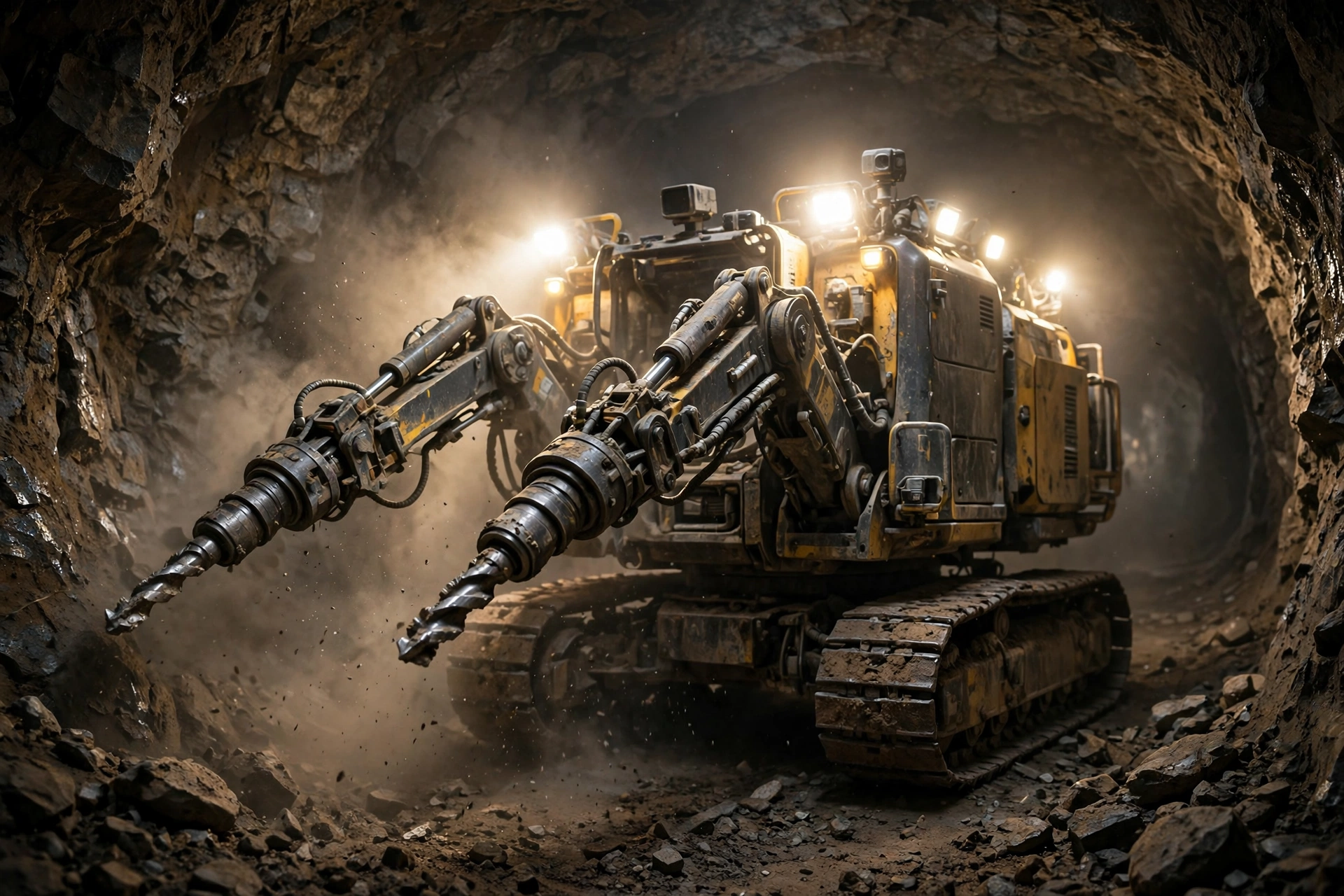
Think of mining robots as a family of machines, not one device. The best-known are autonomous haul trucks: huge driverless trucks that carry broken rock from the pit to a crusher or a stockpile, day and night, along routes planned in advance. Then there are drilling rigs that position themselves and drill holes for blasting in a set pattern, and loaders that scoop up broken ore underground. Smaller robots do quieter jobs: survey drones and crawlers map tunnels, check for cracks, and measure gas levels in areas not yet certified safe for people. After blasting, a robot can enter first and report back before a crew goes in.
How do mining robots find their way?
In an open pit, the sky is open, so satellite positioning works well. Trucks follow a digital map of the pit, with lanes, loading points, and dump points marked out, while wheel sensors measure distance travelled. The control system checks the truck’s position against the plan many times a second, and if the truck drifts off its lane, it slows down or stops.
Underground, satellite signals cannot get through solid rock. Laser scanners build a three-dimensional picture of the tunnel walls as the machine moves, and the robot matches that picture to a stored map to work out where it is. Cameras, wheel sensors, and beacons along the tunnel add extra checks. It is a slower, more careful kind of navigation, because a wrong turn in a narrow tunnel leaves little room to recover.
How do they dig, drill, and haul?
Digging and drilling are about force, applied in the right place. A drilling robot positions its drill over a marked point, checks the angle, and bores a hole to a set depth. The pattern of holes is planned beforehand, so the blast breaks the rock evenly. Sensors on the drill watch for changes in resistance, which can signal a change in the rock, and the machine adjusts or stops rather than forcing its way through.
Hauling is simpler but no less demanding. A loaded haul truck can weigh hundreds of tonnes, so its route avoids steep grades and sharp turns, and it accelerates and brakes gently. At the dump point it tips its load, then returns along a separate lane, while traffic is managed centrally so trucks and loaders do not meet unexpectedly on a narrow haul road.
What sensors keep mining robots — and miners — safe?
Safety is the main reason mining robots exist. Gas sensors watch for methane and other harmful gases underground. Dust sensors track airborne particles, temperature sensors flag hot spots, and vibration sensors can warn of loose rock or ground movement. Cameras and radar watch for people and vehicles nearby, and a robot that detects someone in its path should stop, not swerve.
These sensors also protect the machine itself: a drill hitting unexpectedly hard rock, a truck tyre running hot, or a battery overheating all show up as readings the control system can act on. A mining robot is always watching two things at once — the job it is doing, and the conditions around it. The idea is the same one behind other heavy-duty robots, such as robot arms in a factory, but underground the stakes and the dust are both higher.
How are mining robots controlled?
Most mining robots work in one of three ways. Fully autonomous machines follow a plan on their own, with a control room watching over them. Tele-operated machines are driven live by an operator sitting somewhere safe, often kilometres away. Supervised machines split the difference: the robot handles routine driving or drilling, while a person approves each new step.
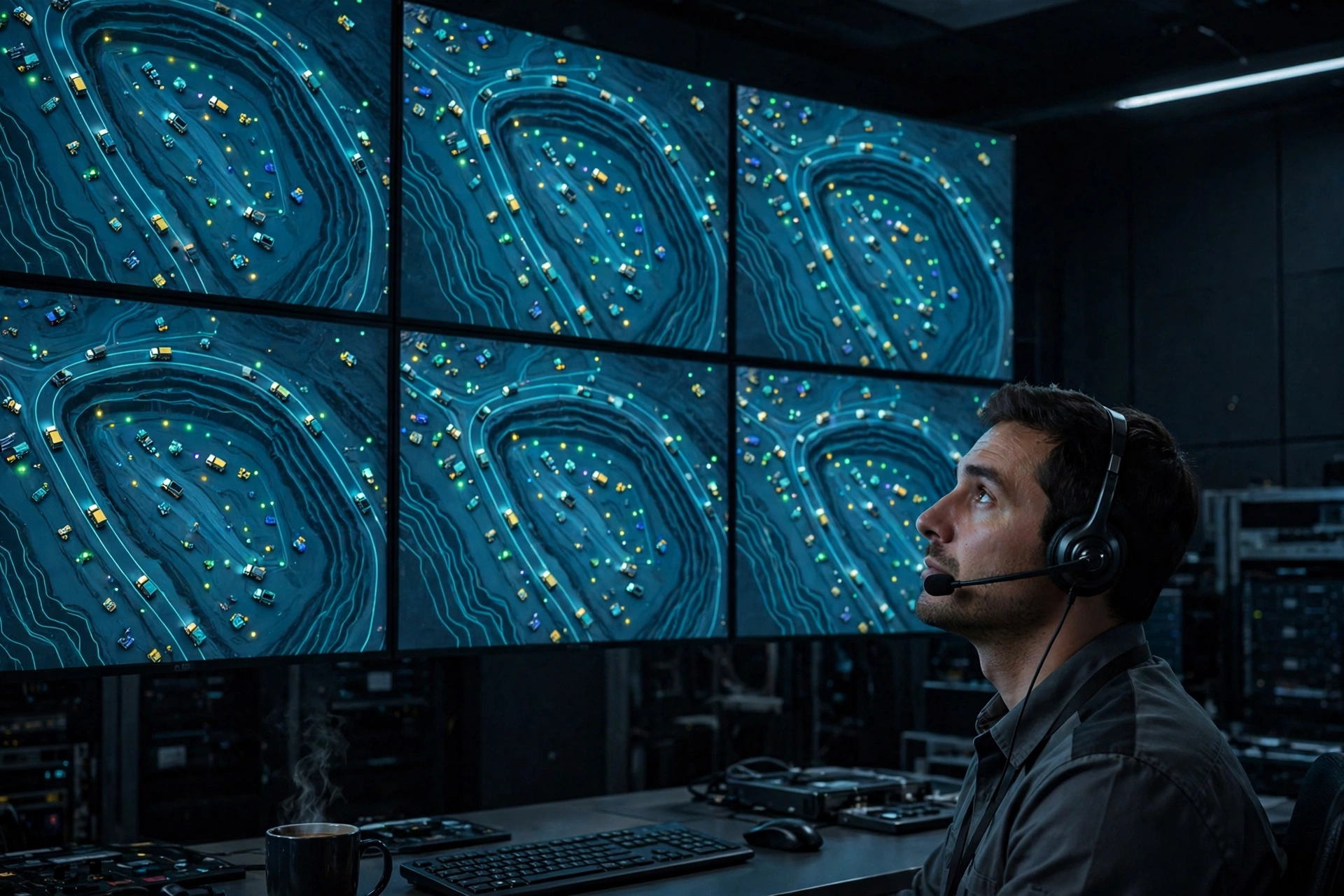
The control room is where it all comes together. Operators watch live maps, camera feeds, and sensor readings for a whole fleet. If a truck reports a fault, or a gas reading climbs, the operator can stop that machine and send a crew to check.
What are the limits?
Mining robots are tough, but they are not magic. Dust gets into everything, so sensors and cameras need regular cleaning, and heat, vibration, and rough roads wear parts out faster than in a factory. Underground, the radio link can drop in a deep tunnel, and a robot that loses contact should stop and wait rather than carry on blindly. Ground conditions are the biggest unknown: a map of a tunnel is only as good as the last survey, and rock can change after blasting or heavy rain. That is why mining robots stop when their readings disagree with the plan, and why a person is always in the loop for anything unusual.
FAQs
Do mining robots replace miners?
No. They take over repetitive and high-exposure tasks, while people plan the work, supervise the fleet, maintain the machines, and handle unusual ground and breakdowns.
How do mining robots navigate underground without satellite signals?
They use laser scanners to map tunnel walls, cameras and wheel sensors to track movement, and beacons placed along tunnels as reference points, matching what they sense against a stored map.
Are mining robots safe to work near?
They are designed to stop for people and vehicles in their path, using cameras, radar, and proximity sensors. Even so, mines keep clear rules about who can enter a robot’s working area, and those rules are part of the safety system.
Can a mining robot work in any mine?
No. Robots suit mines with mapped routes, stable ground, and repeatable work. Small, irregular workings, flooded tunnels, or ground that changes often may not suit automation, and a trial is needed before committing to a fleet.
What happens if a mining robot loses contact with its control room?
It should stop in a safe place and wait for the link to return or for a crew to reach it. Continuing without guidance in a tunnel or on a haul road would be unsafe.
Conclusion
Mining robots work by pairing heavy, rugged machines with sensors, positioning, and software that follows a careful plan — then stopping, logging, or asking for help when the ground or the readings do not match. They are strongest on repetitive work in known ground: hauling the same route, drilling the same pattern, or checking the same tunnel.
If you are following this field, watch for supervised trials in real mines rather than showpiece demos, and start with one well-defined job if you are considering automation for a site.
Related reading: Robot Arms, Warehouse Robots, Rescue Robots, Underwater Robots.
Further reading: Britannica on robotics, Mining Technology on robots in mining.