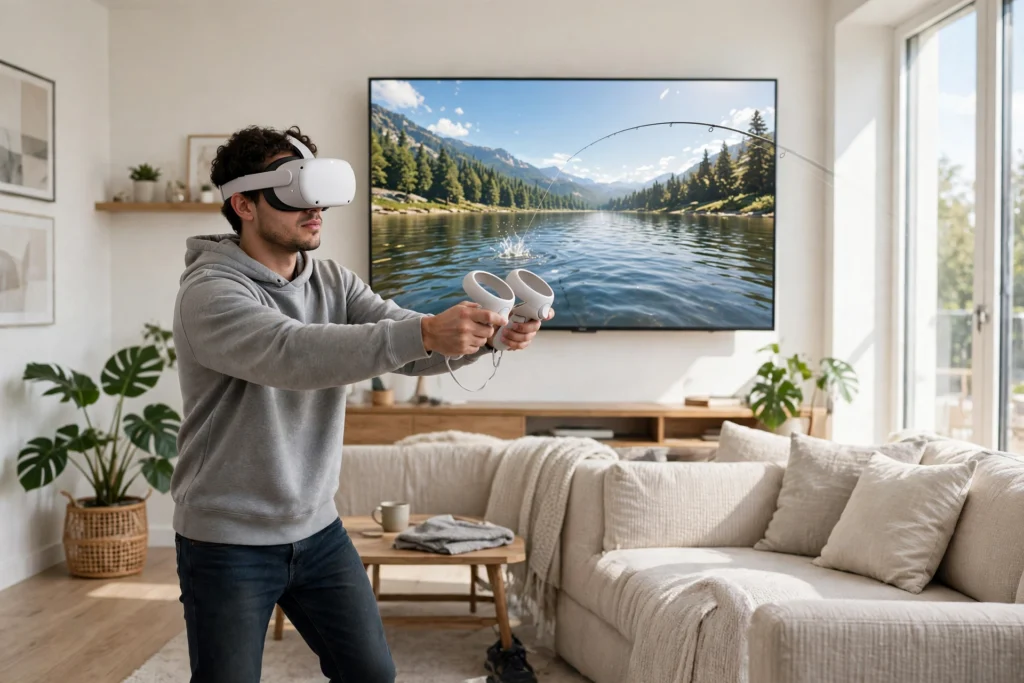
VR fishing puts you on a quiet lake without leaving your living room. You wear a headset, hold a controller like a rod, and cast into a virtual lake — the game tracks your arm, simulates the line and the fish, and lets you reel it in.
Key Takeaways
- VR fishing turns your controllers into a rod and reel, using motion tracking to read every cast.
- The headset builds a 360-degree lakeside scene, so looking around feels like standing on a real shore.
- Haptics and sound sell the catch: you feel the tug, hear the reel, and watch the line bend.
- You need a standalone headset, two controllers, and about two square metres of clear floor.
- It is a gentle way to relax — but take breaks, because long sessions can strain your eyes and neck.
The headset builds the lake
A standalone headset tracks your head in six directions, so when you turn to look at the reeds or glance down at the water, the scene moves with you. Your brain accepts the lake because the view changes exactly as it would on a real shore. If you want the hardware background first, our guide to how VR headsets work explains the screens, lenses, and tracking inside the headset.
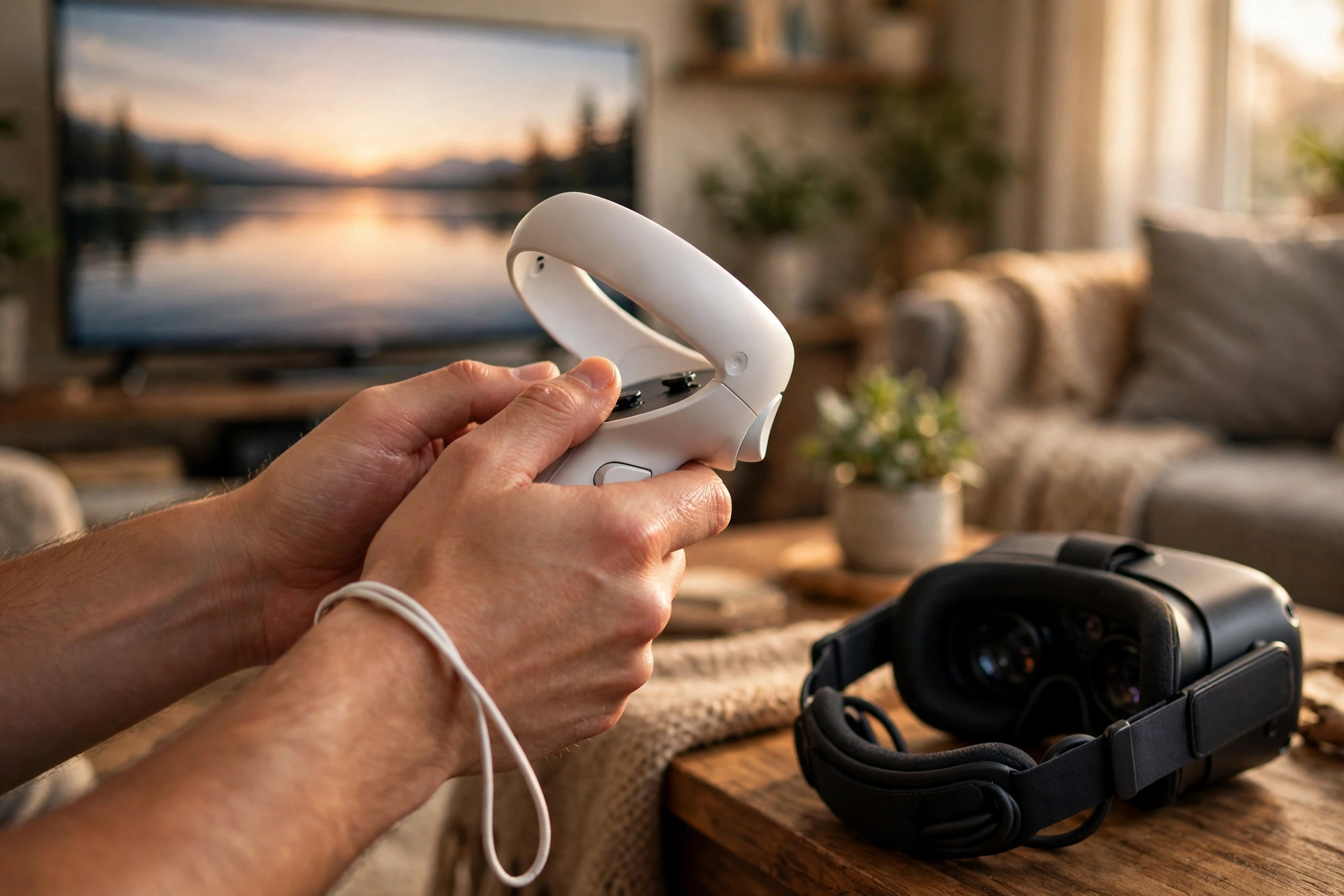
Your controllers do the rest. The game treats one controller as the rod and the other as the reel handle, reading their position dozens of times a second. Flick your wrist forward and the line sails out; the game measures the speed and angle of that flick to decide how far your cast lands. Hold the trigger to grip the rod and squeeze a button to reel. Our guide to how VR controllers work covers the buttons, tracking, and haptics behind those gestures.
Casting, waiting, and the fight
The line has weight and tension, so it arcs through the air and drops with a small splash. The water is a physics model: ripples spread from your lure, currents drift it sideways, and fish behave differently depending on the spot, the time of day, and the bait you picked.
Then there is the fight. When a fish bites, the controller buzzes in your hand and the rod bends on screen. Reel too fast and the line snaps; too slow and the fish spits the hook. The tension meter on screen is your only warning. It is a simple loop, but the feedback makes it feel surprisingly close to the real thing.
Sights and sounds that sell the scene
The scene is built from 360-degree environments, often photographed or scanned from real lakes, rivers, and coastlines. You can hear birds, wind in the reeds, and water lapping at the shore, and the sound shifts as you turn your head, because the audio is spatial — it comes from the direction it should. Some games add a day-night cycle, weather, and other anglers fishing nearby, so the lake feels lived in rather than empty.
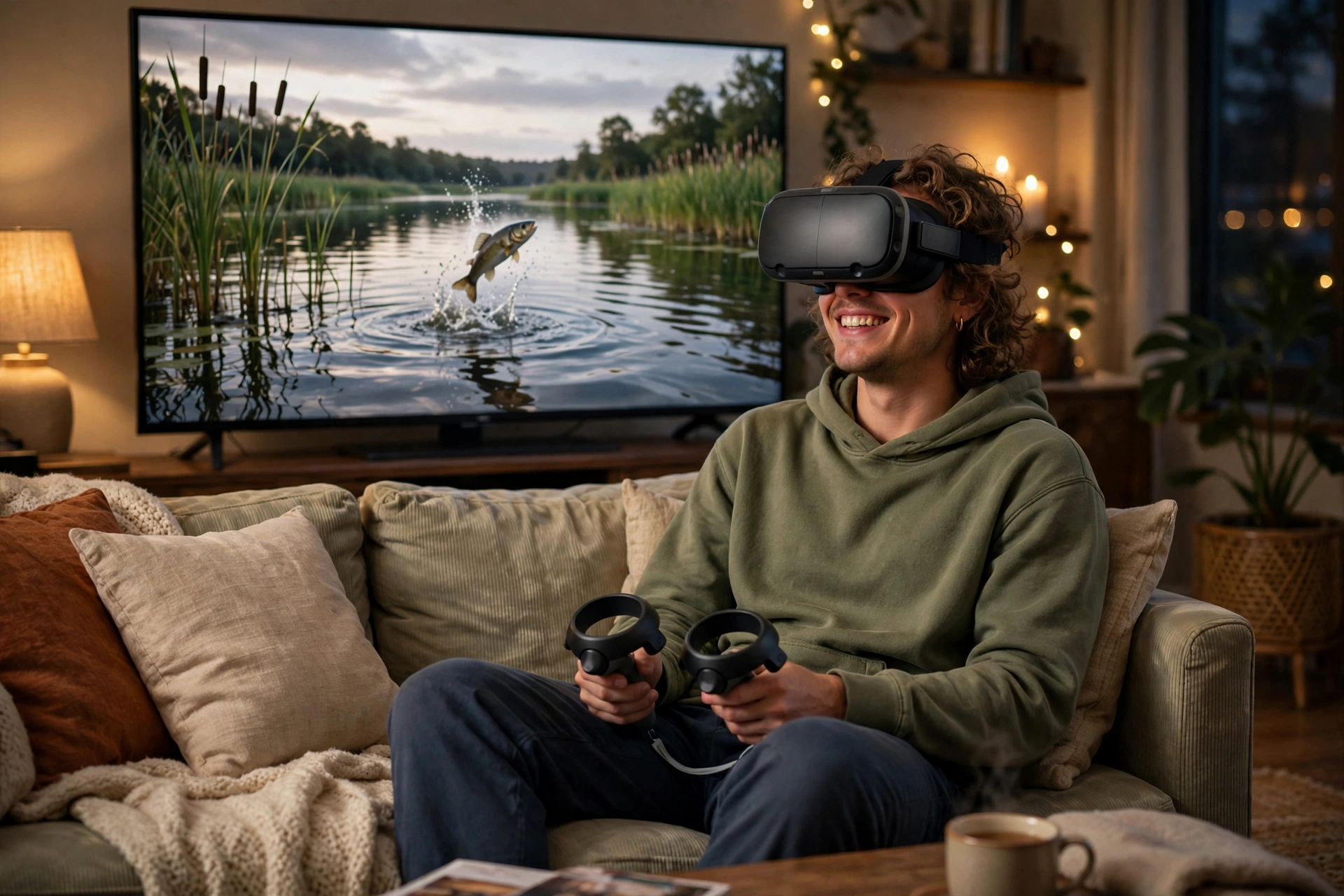
That atmosphere is also why many people play it to unwind. You can sit on the sofa, cast a few times, and just watch the water for a while.
Getting started: gear and space
A standalone headset and its two controllers are enough — no PC, no base stations, no extra sensors. Most fishing games work standing or sitting, so a small clear space of about two square metres is fine.
A few extras help. Use the wrist strap on each controller, because an enthusiastic cast can send one flying, and a small mat under your feet helps you feel where the centre of your space is without looking down.
Virtual fishing vs the real thing
The honest answer: it is the calm, easy version. There is no early start, no bait to handle, no weather to dress for, and no fish to clean. What it keeps is the rhythm — the cast, the wait, the sudden tug — and the quiet. What it cannot copy is the cold air or the weight of a real fish on the line.
That trade-off is fine for most players. VR fishing is a game, not a replacement for the real thing, and the best games lean into the relaxing side: beautiful locations you could never visit and none of the mess. If you have ever enjoyed a sports simulation, the appeal is familiar — our look at how VR works for golf shows the same idea applied to a very different sport.
Fishing with friends, and first-timer tips
Most fishing games let you join a shared lake with other players, where you can chat, compare catches, and fish side by side. Some run friendly competitions with leaderboards. It works because the game is slow enough for conversation — you are mostly waiting together, which is half the fun. Our guide to how VR works for live sports covers another corner of that same shared-experience idea.
It is also one of the friendliest ways into VR. The controls are simple — cast, wait, reel — and there is no motion sickness from fast movement, because you mostly stand still. Tutorials usually walk you through your first cast in a couple of minutes, and the games are forgiving: a bad cast just means you reel in and try again. Start with short sessions of 20 to 30 minutes, and clear the floor before you play. For a broader sense of what the technology can do, Britannica’s overview of virtual reality is a solid starting point, and Real VR Fishing shows what one of the best-known fishing games looks like in practice.
FAQs
Do I need a real fishing rod for VR fishing?
No. The controllers act as your rod and reel. Rod-shaped controller attachments exist, but they are optional.
Does VR fishing feel like real fishing?
The rhythm feels similar, and the haptics sell the tug of a bite surprisingly well. What is missing is the cold air and the real weight of a fish — so think of it as a relaxing game inspired by fishing, not a copy of it.
Can VR fishing make you feel sick?
It is one of the least likely VR games to cause motion sickness, because you mostly stand or sit still. If you feel queasy, take a break and try a shorter session next time.
How much space do I need for VR fishing?
About two square metres of clear floor is enough, and many games work fine while seated. Clear away anything you could trip over before you start.
What is the best VR fishing game to start with?
Real VR Fishing is the usual first pick: it is easy to learn, has realistic locations, and includes multiplayer. Try its free trial first if you want to test whether the slow pace suits you before buying.
Conclusion
VR fishing keeps the best parts of fishing — the cast, the wait, the tug — and leaves the cold mornings and tangled lines behind. A headset, two controllers, and a little clear floor are all it takes to stand on a quiet lake whenever you like. Try a free trial first, play one short session, and see whether the calm hooks you before you buy the full game.