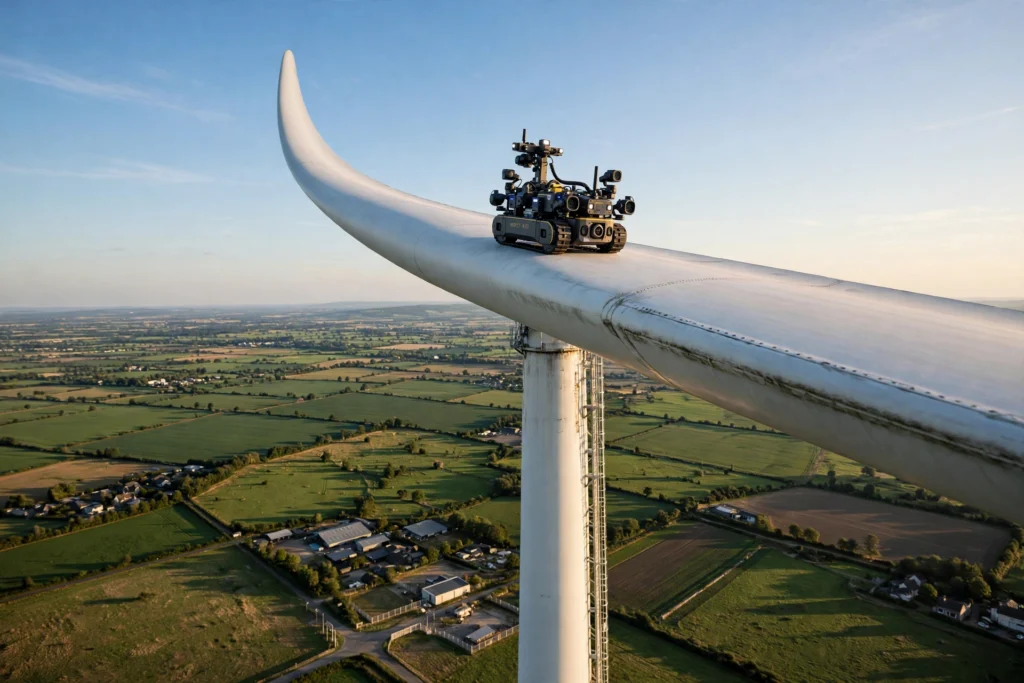
Wind turbine robots are machines that climb, crawl, or fly around wind turbines to inspect blades, clean surfaces, and spot damage — jobs that once meant a technician dangling from ropes high in the air. They carry cameras and sensors, sending pictures and measurements to the ground so engineers can decide what needs fixing without climbing.
Key Takeaways
- Wind turbine robots inspect blades and towers using cameras, thermal sensors, and ultrasonic probes.
- Crawlers grip the blade with suction pads or magnets, while drones fly around it and photograph every side.
- The main benefit is safety: fewer rope-access climbs, fewer hours at height, and fewer weather delays.
- Robots find cracks, erosion, lightning damage, and loose bolts earlier than a check from the ground.
- They assist technicians rather than replacing them — a person still makes the repair decisions.
Why turbines need robots at all
A modern wind turbine works in all weather, and its blades take the hardest punishment. Rain, hail, dust, and insects wear away the leading edge, while lightning and constant flexing can open small cracks. Left alone, a small crack grows, and a damaged blade costs far more to repair than the inspection that would have caught it.
Technicians once inspected turbines by climbing the tower and abseiling down the blade on ropes, slow, skilled, risky work that needs calm weather. A gusty day — exactly when turbines are busiest — is the worst day to hang from one. Robots can work in windier conditions, cover a whole blade in one session, and record everything they see. Wind power now supplies a growing share of electricity, so keeping turbines running matters more than ever.
Crawlers that climb the blade
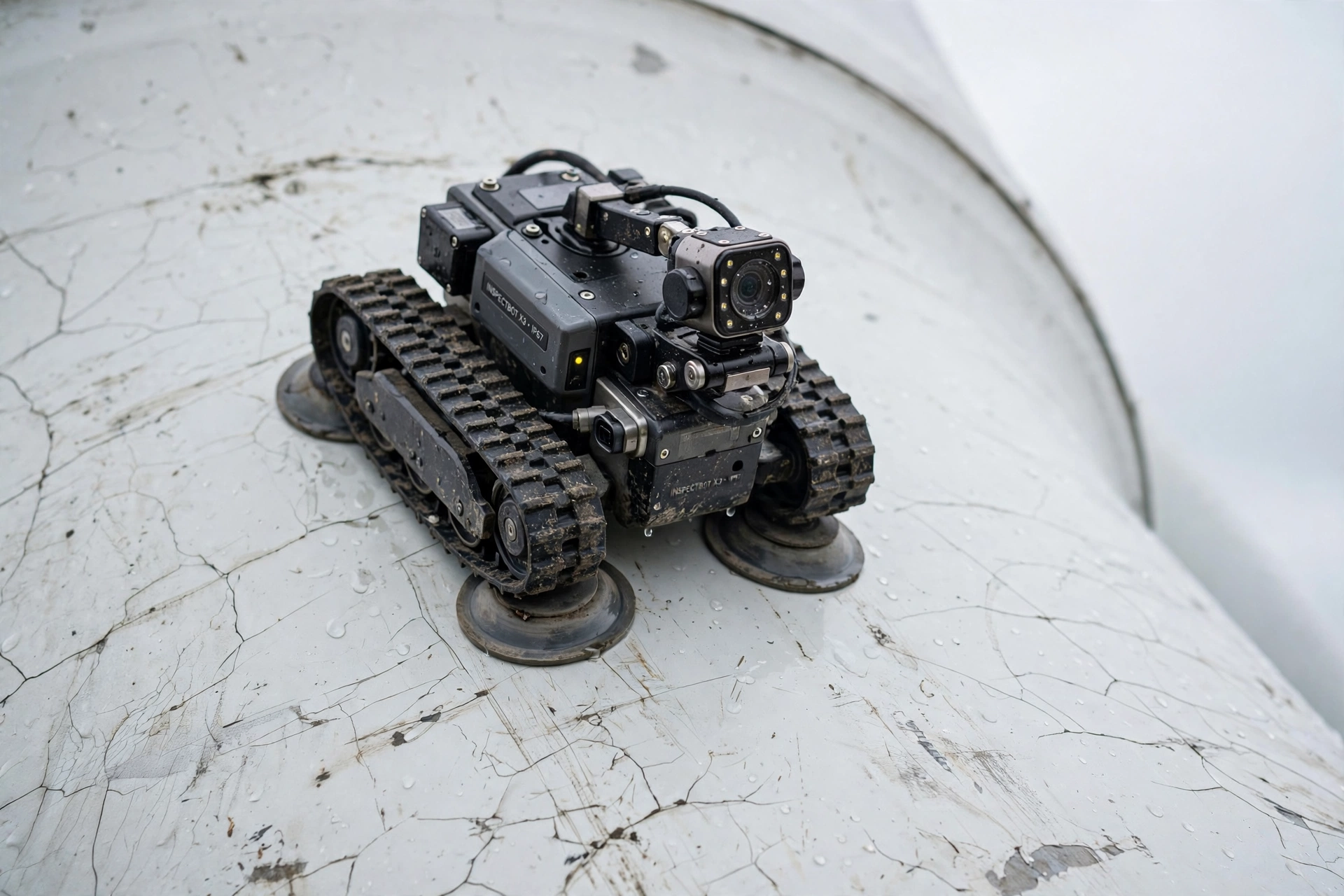
The most striking are the crawlers: small, flat machines that grip the blade and inch along it. Some use suction pads, others magnets on steel parts, and a few use both. Once attached, it moves slowly along the blade, cameras recording the surface in close detail and sensors checking what the eye cannot see.
Thermal cameras are a good example. A crack or trapped water inside a blade shows up as a warm or cool spot on a thermal image, even when the surface looks fine. Ultrasonic probes do the same for depth, sending sound into the blade and listening for the echo of a hidden flaw. The crawler carries these tools across the whole blade, stopping for readings at set points, and beams the results to an operator watching on a screen. Slow work, but thorough — and nobody is hanging off a rope to do it. The gripping hardware borrows ideas from robot arms, which coordinate motors, joints, and sensors in the same way.
Drones that circle the tower
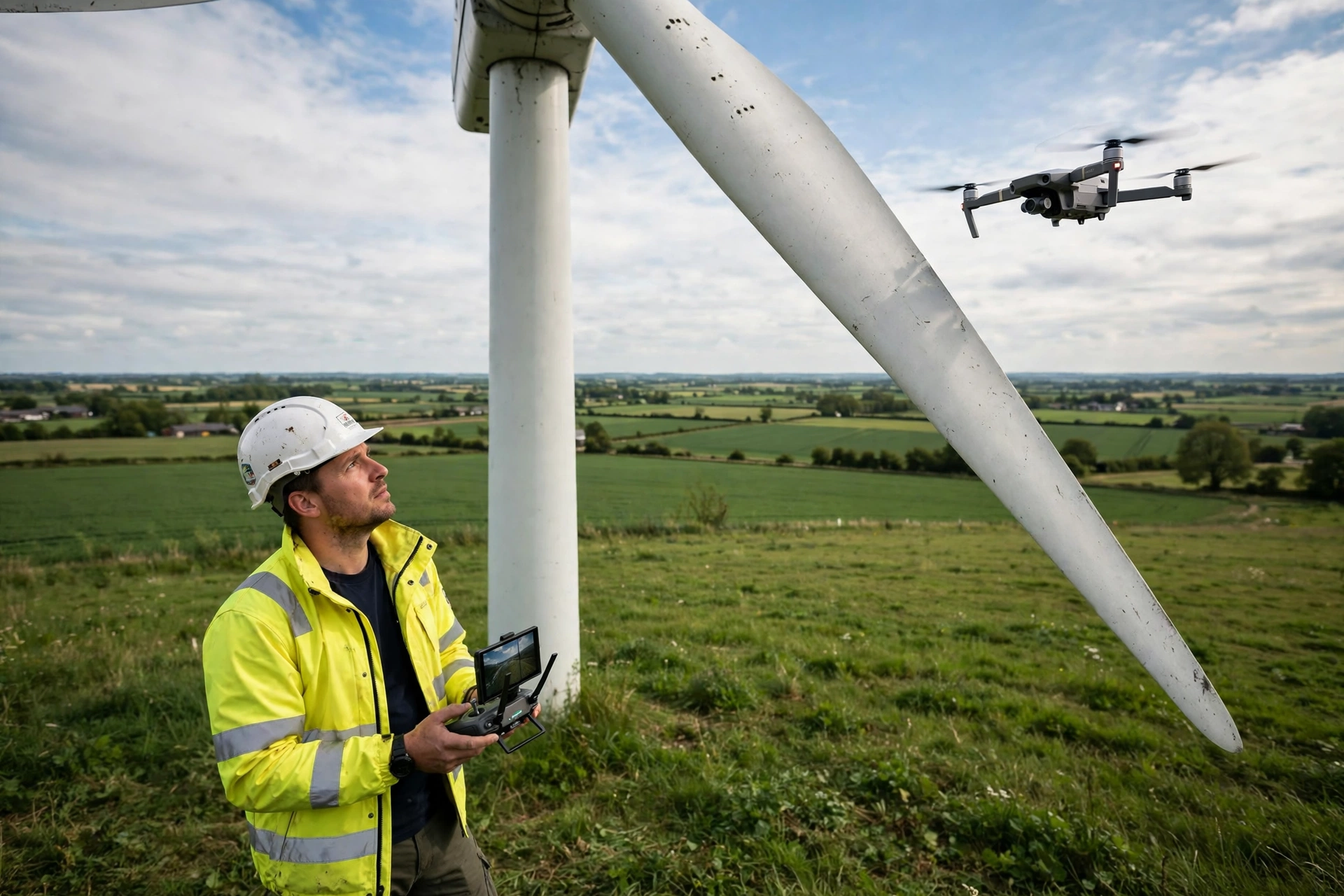
Not every inspection needs a robot stuck to the blade. Drones are the quickest way to look at a turbine, especially when the question is simply whether anything looks wrong. A drone launches from the ground, flies a programmed path around the tower and blades, and photographs every surface from a safe distance — one flight can cover a whole turbine, and the photos are sharp enough to show cracks, chips, and erosion.
Drones are also useful after storms, for a fast check of a whole wind farm before deciding which turbines need a closer look. The trade-off is detail: a drone sees the surface, but it cannot press a sensor against the blade or feel for a loose bolt like a crawler can. The two work as a pair — drones for the quick sweep, crawlers for the close examination.
Cleaning and small repairs, not just looking
Inspection is the main job, but some wind turbine robots do more than look. Blade-cleaning robots wash the leading edge, where dirt and dead insects reduce how efficiently the blade cuts the air. Others carry small repair kits: a nozzle that applies filler or coating to a worn edge, or a tool that sands a rough patch smooth. These are light repairs, not structural fixes — a badly damaged blade still needs a human crew — but they keep small problems small.
Turbine robots are built for the weather: sealed against rain and dust, cameras kept clear by wipers or air jets, batteries sized for a full inspection without a mid-climb recharge. When the wind passes a safe limit, the robot returns to base or parks itself safely rather than fighting the gusts.
Where the limits still sit
Wind turbine robots are improving quickly, but they have clear limits. A crawler cannot inspect a blade that is wet, iced over, or covered in heavy grime: its pads need a clean grip and its cameras a clear view. Offshore turbines are harder still — the robot travels by boat, the sea state limits working days, and salt spray corrodes everything it touches.
Then there is cost: an operator must weigh the robot’s price, maintenance, and training against the rope-access inspections it replaces. For a large wind farm, the numbers usually favour the robot; for a single turbine in a remote spot, a human crew may still be simpler. No robot removes the technician entirely, though — someone still interprets the readings, plans the repair, and signs off that the turbine is safe to run again. Like collaborative robots, these machines are built to work alongside people rather than replace them.
Frequently Asked Questions
How do wind turbine robots stay attached to the blade?
Crawlers grip the blade with suction pads, magnets, or both. Grip is checked constantly; if it weakens, the robot stops and alerts its operator rather than risking a fall.
Can a drone really spot blade damage?
Yes, for surface damage: a good camera on a steady drone shows cracks, chips, and erosion clearly enough for an engineer to judge them. Hidden internal damage needs a crawler with thermal or ultrasonic sensors instead.
Do wind turbine robots work offshore?
Some do, but offshore work is harder: the robot travels by boat, copes with salt spray and stronger winds, and works in short weather windows. Many offshore inspections still rely on drones from a service vessel.
How long does a robot inspection take?
A drone can photograph a turbine in one flight; a crawler takes longer, moving slowly and stopping for readings. Either way, the job is usually faster than organising a rope-access team and waiting for a calm day.
Will robots replace turbine technicians?
No. Robots take over the climbing and the close-up looking, the riskiest parts. Technicians still analyse the results, decide what needs repairing, and carry out the repairs.
Conclusion
Wind turbine robots work by putting cameras and sensors where people should not have to go — on a blade high above the ground, in wind and weather. Crawlers check the surface in close detail, drones sweep the whole turbine quickly, and together they catch damage early, cut rope-access climbs, and keep turbines running longer. They have limits, especially offshore, but the logic is hard to argue with: safer inspections, better records, and smaller problems caught sooner. If you run or maintain turbines, trial a drone survey on one turbine first, compare the findings with your last rope-access report, and see how much the robot catches that the climb missed.