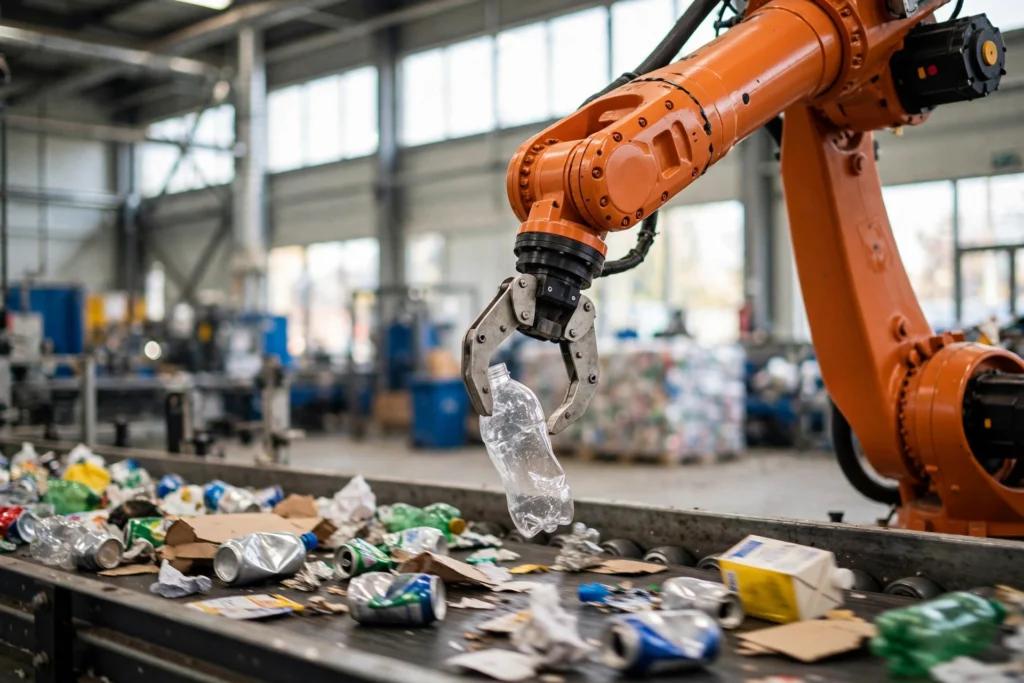
Recycling robots are machines that pick through mixed waste on a fast-moving conveyor belt, identify each item by material and shape, and move it into the right pile. Cameras and sensors do the looking, software does the deciding, and a robotic arm or a jet of air does the moving — all in under a second per item.
Key Takeaways
- A recycling robot combines cameras, sensors, and a robotic arm to sort waste on a conveyor belt.
- Computer vision identifies materials such as plastic, metal, cardboard, and glass by colour, shape, and texture.
- The robot picks items with a gripper or pushes them off the belt with a burst of air.
- These systems work best on clean streams of common materials and struggle with dirty, tangled, or unusual items.
What does a recycling robot actually do?
Picture the belt at a recycling plant. Bottles, cans, cardboard boxes, and food containers tumble past in a jumbled stream, and the belt never stops. A person could pick out the obvious pieces, but not quickly enough, and not for a full shift without tiring. That is the job a recycling robot takes on.
The robot watches the belt, spots an item it has been told to collect — say, a clear plastic bottle — and removes it before it passes. Sorted items land in separate bins, where they are pressed into bales and sent on for reprocessing. The rest of the stream carries on to the next station, where another robot, or a person, picks a different material. Most recycling robots are fixed above a belt; their skill is speed and consistency, not travel.
How does a recycling robot see what it’s picking?
Seeing is the hardest part of the job, and it starts with cameras mounted above the belt. Ordinary colour cameras record what each item looks like, while extra sensors add information the human eye cannot see. Near-infrared sensors, for example, can tell one type of plastic from another even when both look identical, because different plastics reflect infrared light differently.
All of that feeds into software trained on thousands of labelled images. The software has learned what a crushed aluminium can looks like from many angles and what a cardboard box looks like when it is wet. When a new item passes, the software compares it with those patterns and decides what it is and where it belongs.
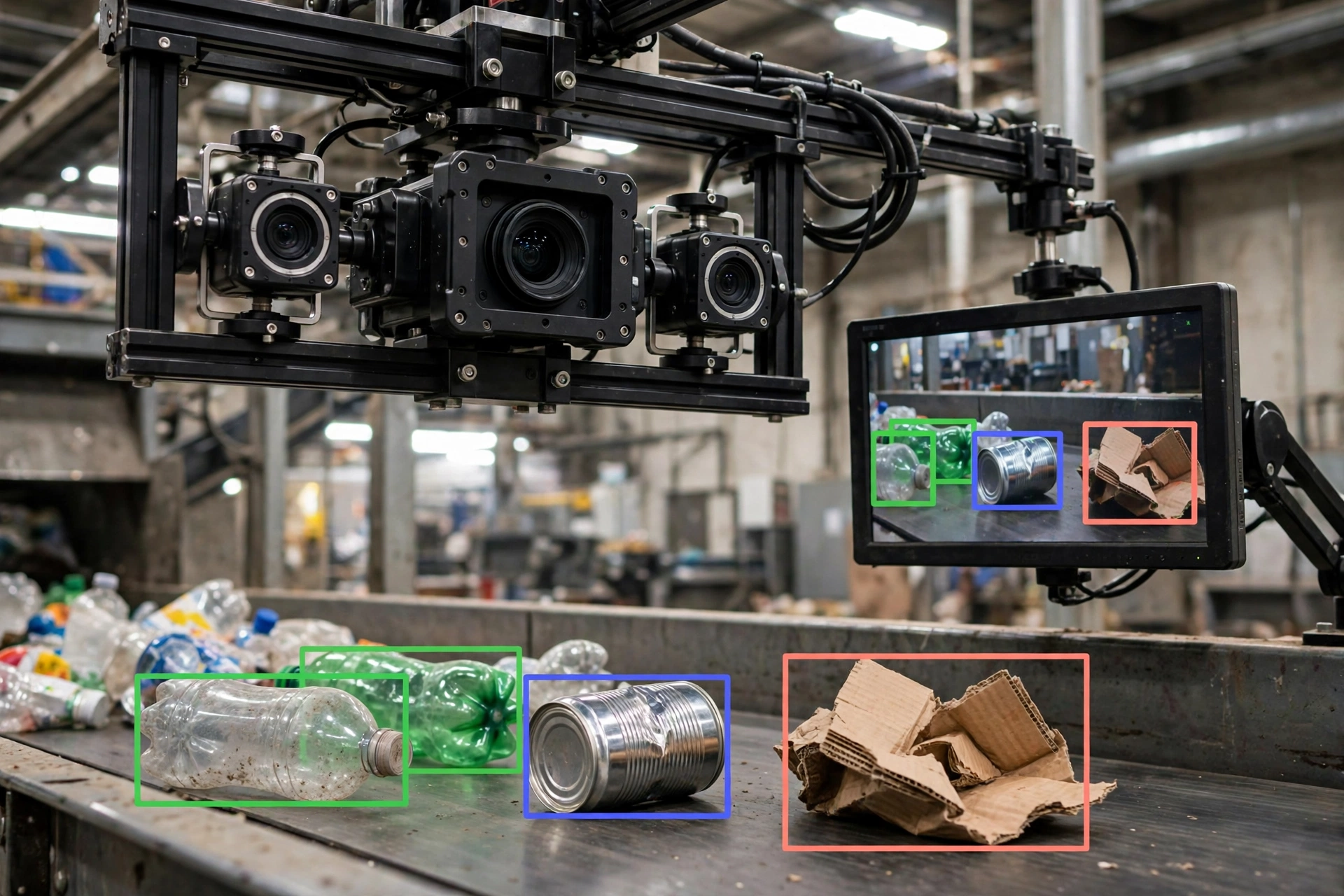
Speed matters here. The belt moves quickly, so the system has only a fraction of a second to identify each item and tell the arm where to reach. If the software is unsure, it usually leaves the item alone rather than guessing wrong — a missed bottle is cheaper than a contaminated bale.
How does the robotic arm pick and place items?
Once the software has chosen a target, it sends the item’s position to the arm. Most recycling arms resemble the arms used in factories: several joints, a motor at each one, and a gripper or suction cup at the end. The arm swings over the belt, closes on the item, lifts it, and drops it into the right chute — then snaps back for the next one. A single arm can make dozens of picks a minute and does not slow down at the end of a shift.
Some systems skip the gripper entirely. Instead of picking items up, they use short, precisely timed bursts of compressed air to blow light items off the belt into a bin. Air jets are cheaper and faster than an arm, but less precise, so they suit broad jobs such as separating paper from heavier objects. Our guide to how robot arms work explains joints, motors, and grippers in detail.
Where do recycling robots work best — and where do they struggle?
Recycling robots shine where the stream is predictable: household recycling with familiar items such as bottles, cans, and boxes. They are also useful for repetitive, unpleasant work. Sorting waste by hand is dusty, smelly, and sometimes hazardous, with sharp metal and broken glass in the mix. A robot does not mind the conditions, and it keeps the same pace all day.
But there are limits. Tangled items — a plastic bag wrapped around a bottle, for instance — confuse the cameras. Black plastic is a known problem too: it absorbs the infrared light the sensors rely on, so the system often cannot tell what it is. Dirty items are harder to identify, and unusual objects the software has never seen are simply left on the belt. That is why most plants run robots alongside people rather than instead of them.
What happens to the sorted material?
Sorting is only the first step. Once a robot has pulled out the plastic bottles, the metal cans, or the cardboard, each stream is checked, pressed into a dense bale, and loaded onto a truck. The bales go to reprocessors, who wash, shred, and melt the material into something new: bottles become bottles again, cans become cans, and cardboard becomes fresh packaging. The same idea applies in factories, where packaging robots handle boxes at high speed.
Quality is everything at this stage. A bale of plastic that contains too much paper or metal is worth less, and a buyer may reject it outright. That is why the robot’s accuracy matters as much as its speed: one wrong pick can contaminate a whole bale.
Do recycling robots replace human workers?
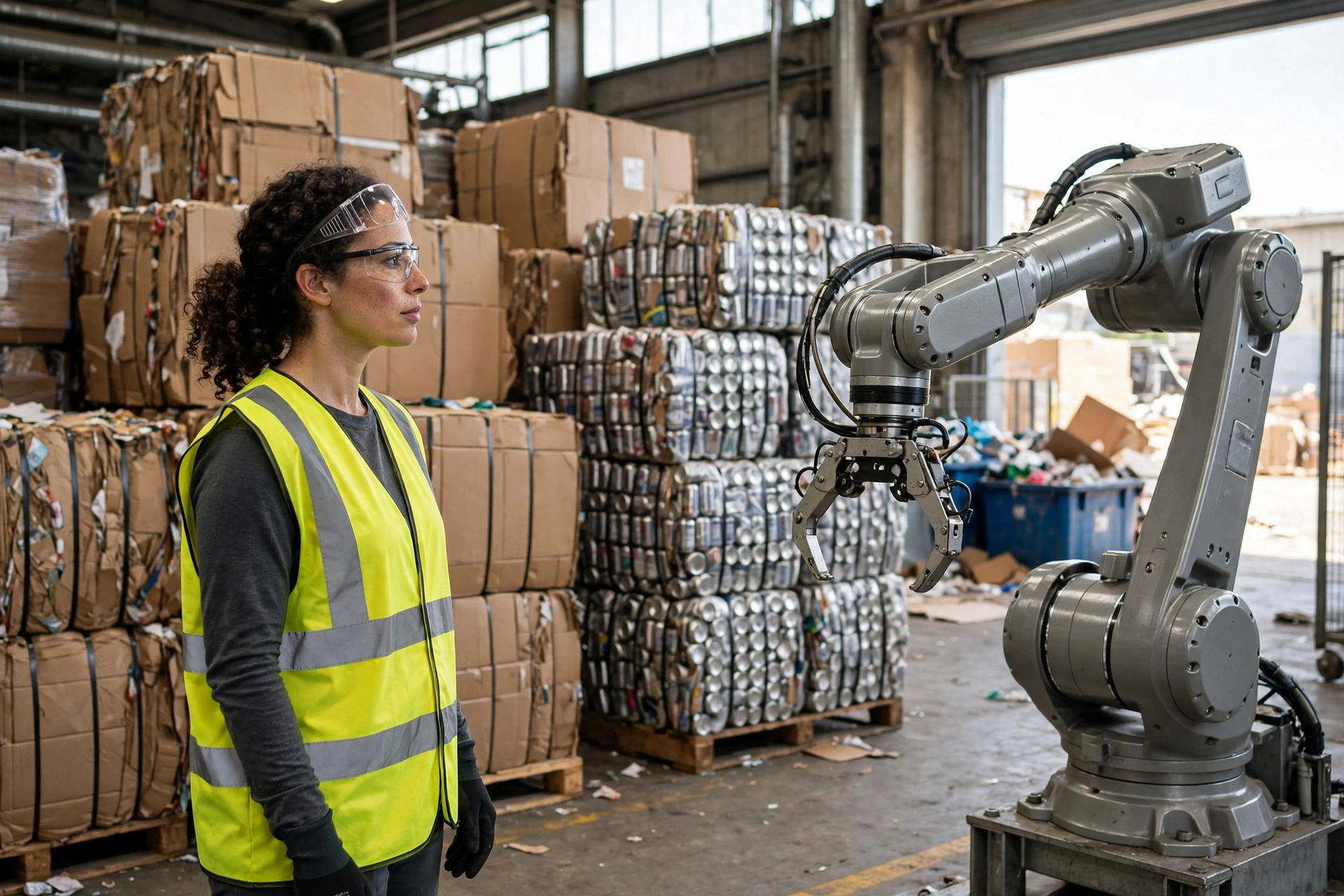
Not entirely, and not yet. In most plants, robots take over the fastest, most repetitive picking, while people move into different roles: watching the quality of the sorted streams, clearing jams, maintaining the machines, and handling the awkward items robots skip. The work changes rather than disappears.
There is a useful parallel in agriculture, where agricultural robots pick fruit and tend fields while people supervise and handle the exceptions. Recycling plants follow the same pattern: machines do the volume, people do the judgement.
Frequently Asked Questions
How fast can a recycling robot sort waste?
A single robotic arm typically makes dozens of picks per minute, and air-jet systems can separate even more items. The belt speed and the mix of materials set the real limit.
Can recycling robots sort black plastic?
Usually not well. Black plastic absorbs the infrared light that many sensors use to identify materials, so it often goes unrecognised and stays on the belt.
Do recycling robots use AI?
Yes — most modern systems use machine-learning software trained on labelled images of waste. It learns to recognise materials by shape, colour, and texture, and improves as it sees more examples, much like the vision systems in warehouse robots.
What should I do to help recycling robots work better?
Rinse food containers, keep plastic bags out of the recycling bin unless your local service accepts them, and do not put black plastic or tangled items in with the rest. Cleaner waste is easier for both robots and people to sort.
Conclusion
Recycling robots work by combining fast cameras, sensor data, and trained software to recognise waste, then using an arm or a jet of air to move each item into the right pile. They are at their best with familiar materials on a steady belt, and they still need people for quality checks, maintenance, and the items they cannot identify.
If you want to see the difference good sorting makes, check what your local recycling service accepts and rinse your containers before they go in the bin — the cleaner the stream, the better the robots, and the people beside them, can do their job.