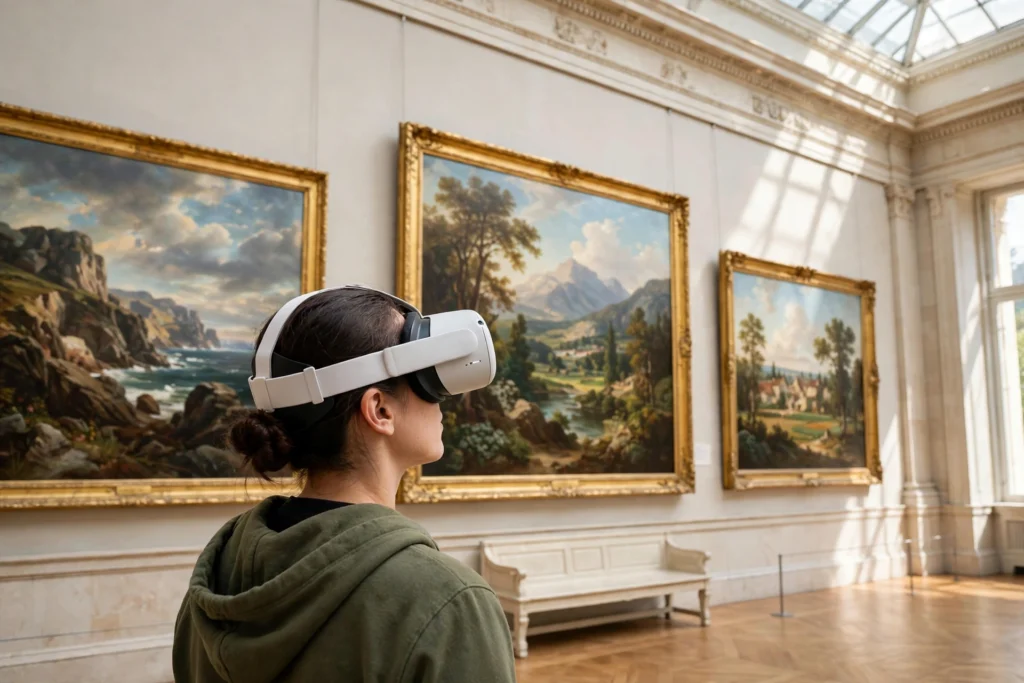
VR for museums lets you step inside a visit instead of just looking at it. A headset replaces your view with a three-dimensional scene, tracks your head and hands, and lets you walk around a recreated room or examine a fragile object up close. The museum still curates the story; VR simply brings you closer to it.
Key Takeaways
- Museum VR is a guided, interactive exhibit, not just a video played in a headset.
- It helps most with scale, detail, distance, and fragile objects that cannot be handled in real life.
- Recreated rooms and close-up artifacts work best when they are tied to a clear story, not shown as a novelty.
- Virtual tours widen access for people who cannot travel, but they do not replace the real building, light, and atmosphere.
- Check comfort, session length, accessibility options, and whether the content is based on real research before judging a VR exhibit.
What does a VR museum visit actually look like?
It depends on where you are. Inside a museum, VR is often one station in a gallery. You put on a headset, sometimes for only a few minutes, and join a short scene: a workshop as it might have looked centuries ago, a ship’s cabin, or a painter’s studio. Staff are nearby, the area is clear, and other visitors can often watch a screen version of what you see.
At home, a virtual tour is usually longer and more open. You move from room to room with a controller or by looking at points to move forward, stopping at exhibits that interest you. Some tours are faithful copies of real galleries, made from photographs and scans. Others are reconstructions, built from research when the original room no longer exists or cannot be visited. Both can be useful, but it helps to know which kind you are looking at, because a reconstruction involves choices and educated guesses.
The best museum VR keeps the visitor’s task simple. Look, listen, compare, and choose what to explore next. If you need a long tutorial before the story starts, the technology has taken over the exhibit.
How do headsets, controllers, and room mapping help here?
The headset creates depth by showing a slightly different image to each eye, and head tracking keeps the scene steady as you look around. That matters in a museum, where looking up at a ceiling, down at a floor mosaic, or around a corner is part of the experience. Without good tracking, the illusion breaks and the visit feels like a shaky video.
Controllers give you hands in the scene. You can point at an object to open its label, pick up a virtual tool, or turn an artifact to see its other side. That is a big change from a traditional gallery, where most objects sit behind glass and touching is out of the question. In VR, a visitor can handle a copy, test how it might have been used, and put it back without any risk to the original.
Room mapping matters when the exhibit invites walking. In a gallery, the system marks a safe area and warns you before you reach its edge, which protects both you and nearby visitors and cases. Many museum stations use seated VR instead, which is simpler and safer in a crowded space. Either way, a clear floor, a staff member nearby, and a short session help the exhibit feel welcoming rather than chaotic.
Why do museums use VR for artifacts?
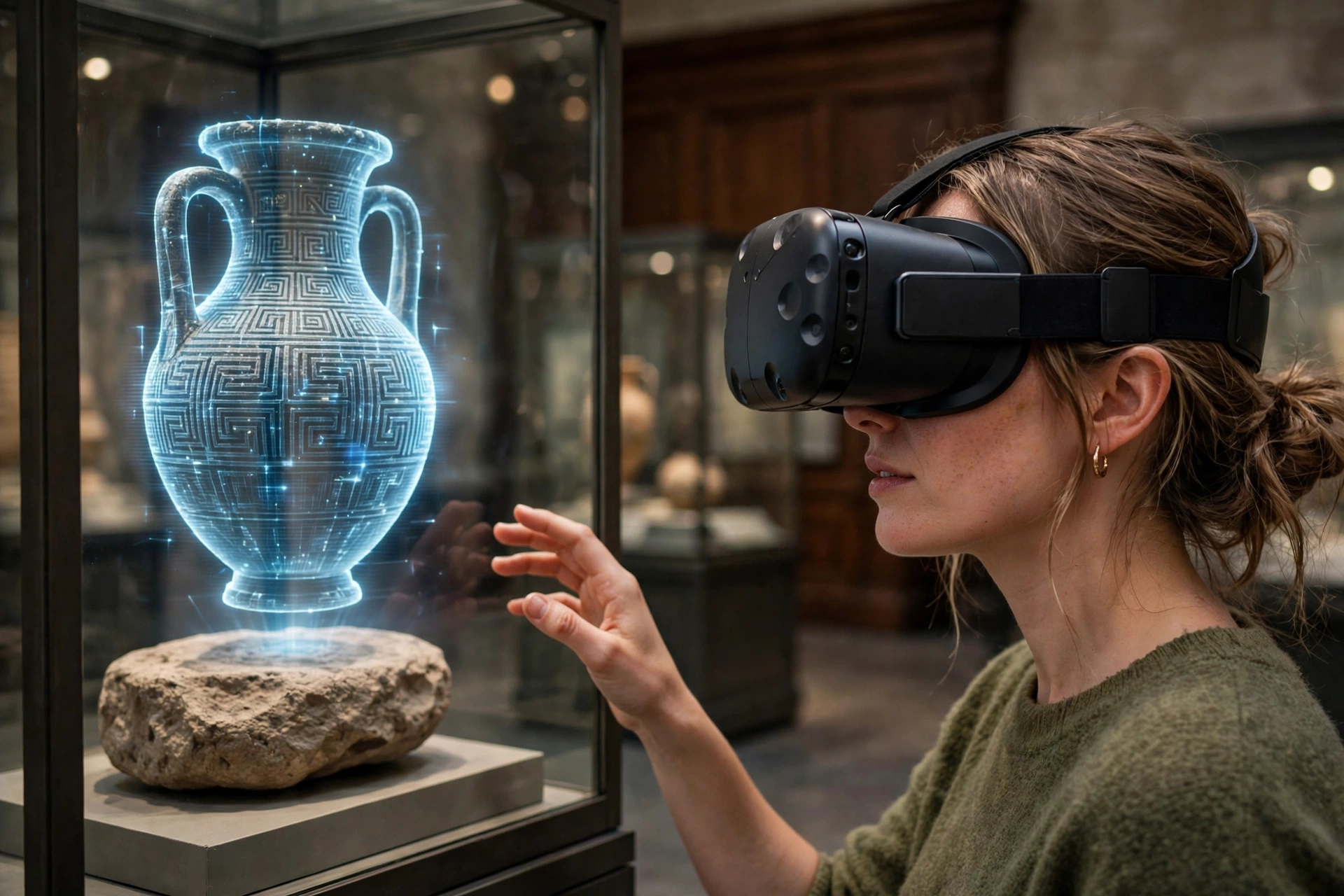
Fragile, rare, and incomplete objects are a natural fit. A real vase, manuscript, or textile may be too delicate for bright light, handling, or long display. A digital copy can be lit, enlarged, and turned over, showing marks, joins, and wear that a visitor behind glass would miss. A curator can also show the object in context: a pot beside the kiln where it was fired, or a tool in the hands of the person who used it.
VR can also rebuild what is missing. A ruined temple, a demolished house, or a ship that sank can be presented as a careful reconstruction, with labels explaining what is known, what is uncertain, and what is an educated guess. That honesty matters. A reconstruction should invite curiosity, not pretend that every detail is certain. When a museum shows its sources and gaps, visitors learn how history is pieced together, not just what it looked like.
Another benefit is comparison. A virtual gallery can place objects from different collections side by side, even if the real items live in different countries. A visitor can compare styles, materials, and sizes in one view, which would be impossible on a single physical trip. That kind of comparison turns looking into thinking, which is the point of a museum visit.
What can virtual tours do that a real visit cannot?
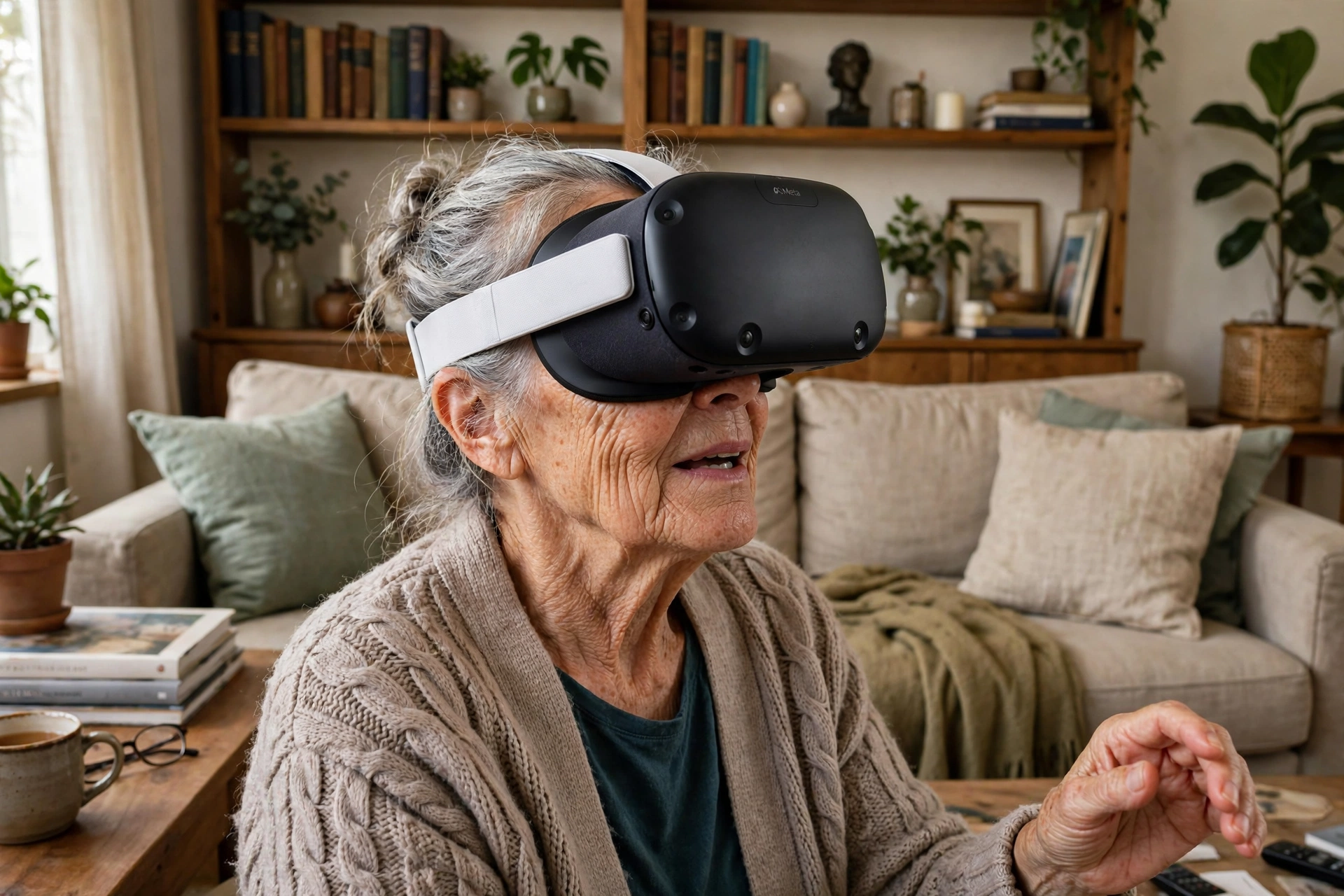
The clearest benefit is access. Someone who lives far away, has limited mobility, or cannot afford travel can still explore a collection. A virtual tour can also be paused, replayed, and explored at a person’s own pace, without crowds, queues, or closing times. For schools, that means a whole class can visit the same exhibit together, with the teacher guiding discussion as they go.
Virtual tours can also offer layers that a physical gallery cannot fit on a wall label. A painting can be shown beside early sketches, an X-ray view, or a short explanation of technique. A historic room can be shown in different periods, so visitors can see how it changed over time. Those layers work best when they are optional: a visitor who wants a quiet look should not be forced through a long narration first.
The International Council of Museums has encouraged museums to use digital tools, including virtual reality, to broaden access, while also stressing accessibility, ethics, and responsible use. That balance is a useful test for any VR exhibit: does it open the collection to more people, and does it treat the objects, makers, and communities behind them with care?
What are the limits of a virtual museum visit?
A virtual visit is not the same as standing in a real gallery. You miss the size of a room, the texture of stone, the hush of a large hall, and the chance to notice something unexpected on the way to another exhibit. Colours on a screen can also differ from colours in real light, and a digital copy, however detailed, is still a copy. Museums are right to present VR as a companion to real objects, not a replacement for them.
Comfort is another limit. Some visitors feel dizzy, especially if the virtual camera moves quickly while they stay still. Short sessions, seated options, and slow, steady movement help. Visitors should always be able to stop, remove the headset, and continue with a screen version, a printed guide, or the physical gallery itself.
There is also a practical limit: headsets need charging, cleaning, and staff time. A small museum may find a single well-run VR station more useful than a large virtual tour that no one maintains. Content can also age quickly if links break, software updates change controls, or research moves on. A museum that keeps its VR simple and well supported will usually serve visitors better than one that chases the newest device.
How should you get the most from a VR museum exhibit?
Start by reading the short introduction, not skipping straight to the headset. Knowing what you are about to see — and what is real, copied, or reconstructed — makes the virtual scene far more interesting. Then choose one or two exhibits to explore deeply, rather than rushing through every room. In a virtual gallery, as in a real one, a few careful looks beat a hurried tour.
Use the interactive features with a question in mind. Turn the object over. Compare it with a similar one. Check what it was made from and how it was used. If the exhibit offers a guided narration, listen to a short section, then explore on your own for a while. That mix of guidance and freedom usually leads to better recall than either alone.
Finally, step out of VR and look at something real. Talk about what surprised you, what you would like to see in person, and what the virtual version could not show. That conversation, whether with a friend, a teacher, or a museum guide, is where a virtual visit becomes real learning.
FAQs
Do I need my own headset for a virtual museum tour?
Not usually. Museums that offer VR in the gallery provide headsets at the exhibit, and many virtual tours also work on a computer, tablet, or phone without a headset, though the experience is less immersive. Check the museum’s website before visiting to see what is offered and whether booking is needed.
Is a virtual artifact the same as the real object?
No. A virtual artifact is a digital copy, often made from scans and photographs. It can show detail and context that a glass case cannot, but it cannot replace the real object’s material, age, and history. Good exhibits say clearly when you are looking at a copy or a reconstruction.
Can children use museum VR?
It depends on the exhibit, the headset maker’s age guidance, and the museum’s own rules. Short, seated, staff-supervised sessions suit younger visitors best, and a screen or printed version should be available for anyone who does not want to wear a headset.
Does VR make a museum visit better for people with limited mobility?
It can help, especially for virtual tours that can be explored seated and at home. However, not every VR exhibit is accessible by default, so check for seated options, captions, audio description, and other access features before planning a visit.
What should a museum check before adding VR?
Start with the story and the audience, not the device. A strong VR exhibit answers a clear question, fits the collection, and can be maintained by staff. Comfort, hygiene, accessibility, and a non-VR alternative matter just as much as visual quality.
Conclusion
VR works for museums when it helps visitors look closer, understand context, and reach collections they could not otherwise visit. A headset, controllers, and careful room mapping can turn a fragile artifact into something you can examine, a ruined room into a place you can enter, and a distant gallery into a visit from home.
It works less well as a substitute for real objects, real buildings, and real conversation. The strongest museum VR is honest about what is copied or reconstructed, short enough to stay comfortable, and paired with a way to explore without a headset.
If you are planning a visit, try one VR exhibit with a question in mind, explore a few objects in depth, and then spend time in the physical gallery too. That combination — virtual closeness plus real presence — is where museum VR earns its place.